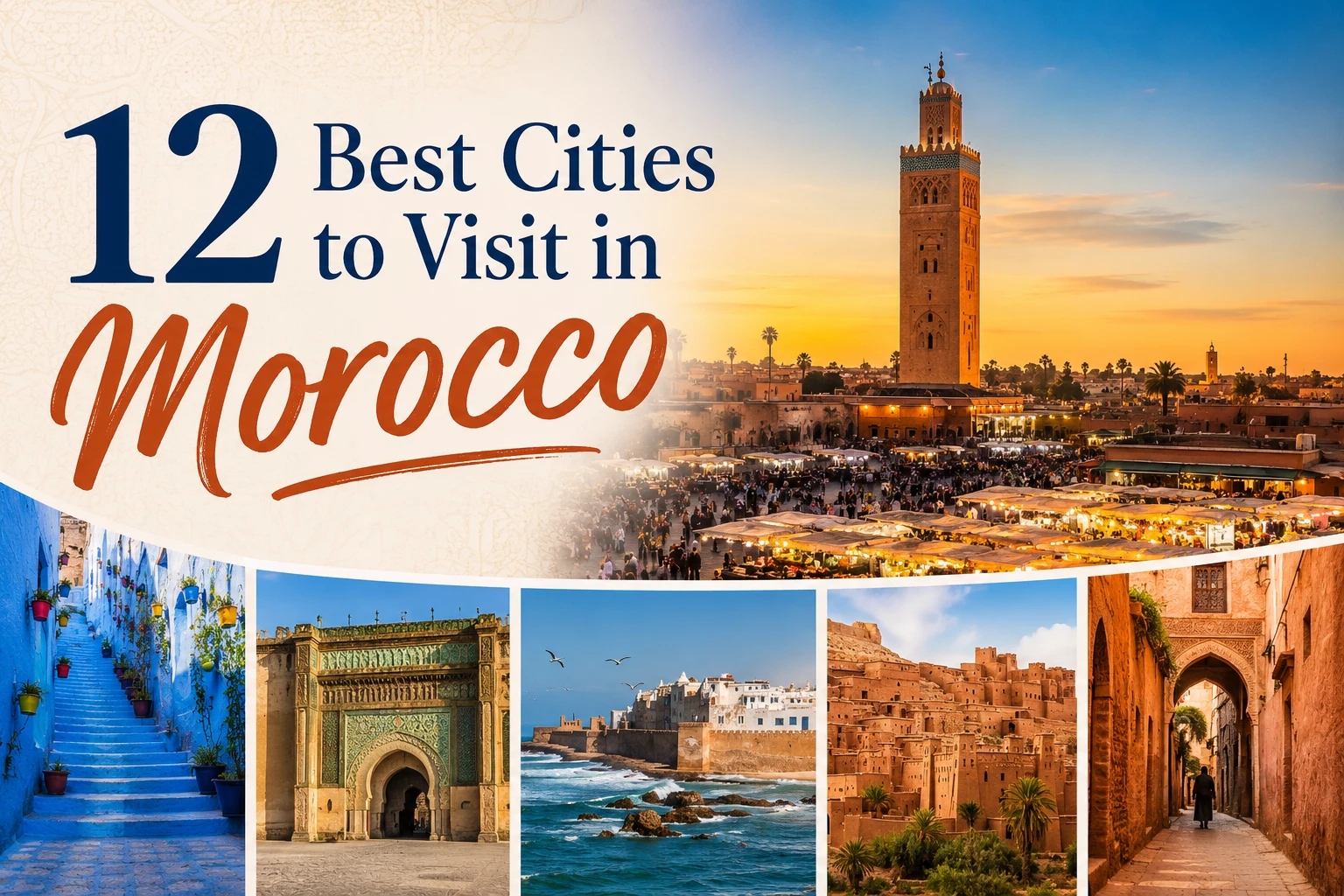
12 Best Cities to Visit in Morocco (2026)
Morocco is a country where two cities can feel like completely different destinations. Marrakech is energetic and atmospheric, Fes is deeply rooted in history, Essaouira has a relaxed Atlantic character, and Tangier brings together influences from both sides of the Mediterranean. Beyond the most famous names, cities such as Meknes, Tetouan and El Jadida offer a quieter look at Morocco’s history and coastal life.
Choosing where to go depends largely on the kind of trip you want. Some cities are best for first-time visitors, others are better for history, food, beaches, architecture or a slower pace. This guide covers 12 of the best cities to visit in Morocco in 2026, with practical ideas on what to see, how long to stay and what makes each destination worth adding to your itinerary.
1. Marrakech

Marrakech is one of the easiest places to start a first trip to Morocco. The city combines a historic medina, traditional markets, gardens, palaces and a lively central square, while the newer parts of the city offer restaurants, hotels and a very different atmosphere.
The historic Medina of Marrakesh has been a UNESCO World Heritage Site since 1985. Among its best-known landmarks are the Koutoubia Mosque, the Bahia Palace, the Saadian Tombs and Jemaa el-Fnaa.
What to see in Marrakech
Jemaa el-Fnaa is the natural starting point for exploring the old city. During the day it connects the surrounding souks and streets, while in the evening the square becomes one of the busiest gathering places in the medina.

The souks are worth exploring without a strict route. You will find leather goods, woven products, lanterns, spices, ceramics and other traditional crafts.
Outside the main square, the Bahia Palace is known for its courtyards and decorative details, while the Koutoubia dominates the skyline of the old city. The Majorelle Garden offers a much quieter setting and is particularly useful when you want a break from the crowded medina.
How long should you stay?
Two or three full days are enough for a first visit. Travelers using Marrakech as part of a wider Morocco itinerary may want four days if they also plan day trips into the High Atlas or surrounding countryside.
Best for
First-time visitors, food, traditional markets, architecture, nightlife and travelers who want a lively introduction to Morocco.
2. Fes
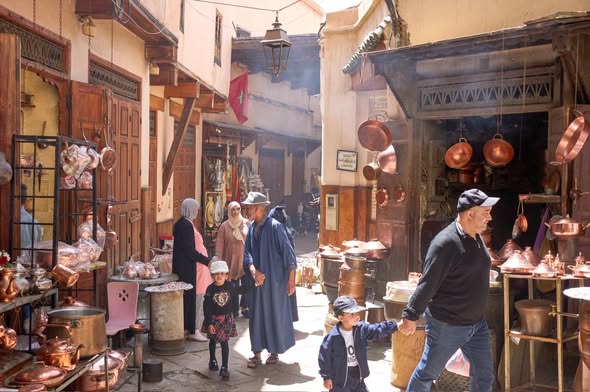
Fes is the city to choose when history and traditional urban life are at the centre of your trip. Its old medina is larger and more intricate than many visitors expect, with workshops, mosques, historic schools, markets and narrow streets that still form part of everyday life.
The Medina of Fez is listed as a UNESCO World Heritage Site, reflecting the city’s long historical and cultural importance.
What to see in Fes
Start with Fes el-Bali, the oldest part of the city. Bab Boujloud is one of the most recognisable entrances, and from there the streets lead into a dense network of shops and historic buildings.
The Bou Inania Madrasa, Al Attarine Madrasa and Nejjarine Museum are among the places worth adding to a walking route. The Chouara Tanneries are another well-known stop, where traditional leather-processing methods remain part of the city’s craft heritage.
Fes is also a good city for simply walking without trying to see everything. Some of the best moments come from finding small workshops, bakeries and residential streets away from the main tourist routes.
How long should you stay?
Allow at least two full days. Three days work better for travelers who want to explore the medina at a slower pace.
Best for
History, architecture, crafts, food and travelers looking for a more traditional urban experience.
3. Chefchaouen
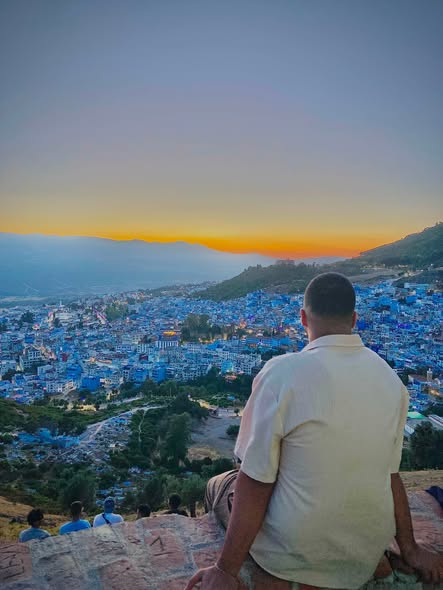
Chefchaouen is one of Morocco’s most recognisable destinations because of the blue-painted buildings of its old town. But its appeal goes beyond photography. The city sits in the Rif Mountains and has a noticeably slower rhythm than Marrakech or Fes.
The Moroccan National Tourist Office places Chefchaouen among the country’s destinations for nature, rural heritage and cultural discovery.
What to see in Chefchaouen
The medina is the main attraction. Its steep lanes, blue walls, small squares and craft shops make walking the best way to experience the city.
The Kasbah at the centre of the medina is worth visiting, while Ras el-Ma provides a different setting just beyond the old streets. For a wider view over Chefchaouen, walk up towards the Spanish Mosque area around sunset.
Chefchaouen also works well as a base for short walks in the surrounding mountains.
How long should you stay?
One full day is enough to see the main sights, but two nights are a better choice for travelers who want to slow down and explore the surrounding area.
Best for
Photography, mountains, relaxed travel, couples and travelers who prefer smaller destinations.
4. Rabat
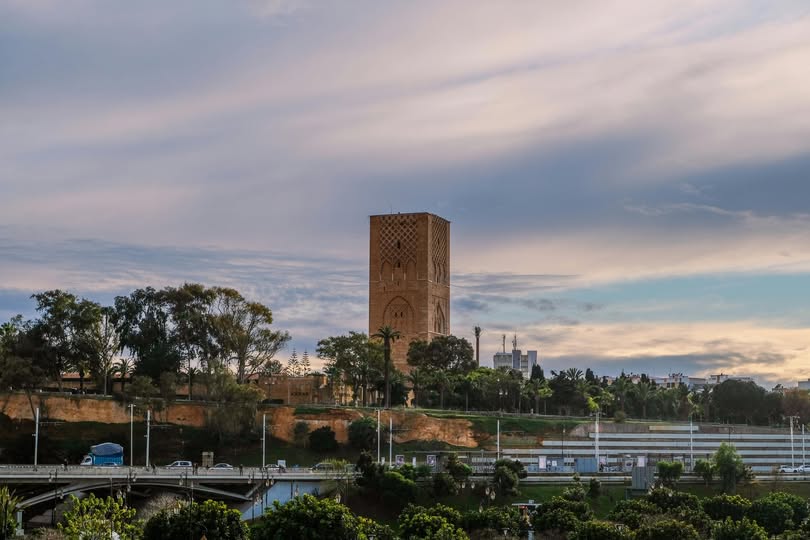
Rabat is often overlooked by visitors who rush between Marrakech, Fes and the desert. That is a mistake. Morocco’s capital is one of the country’s easiest cities to explore, combining historic monuments with modern neighbourhoods, coastal views and a more relaxed atmosphere.
Rabat’s modern capital and historic city were inscribed together on the UNESCO World Heritage List in 2012.
What to see in Rabat
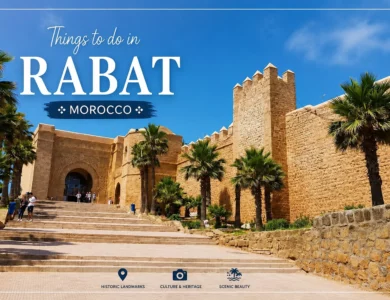
The Kasbah of the Udayas is one of the city’s most appealing areas, with whitewashed streets overlooking the Bou Regreg and Atlantic coast.
The Hassan Tower and the Mausoleum of Mohammed V form another important part of the city’s historic landscape. Nearby, the Chellah offers a quieter archaeological setting with Roman and medieval remains.
Rabat’s medina is smaller and easier to navigate than the old cities of Marrakech and Fes, which makes it a good option for travelers who want historic Morocco without spending hours in dense souks.
How long should you stay?
One to two days is enough for most visitors.
Best for
History, architecture, coastal walks, families and travelers who prefer a calmer city.
5. Essaouira
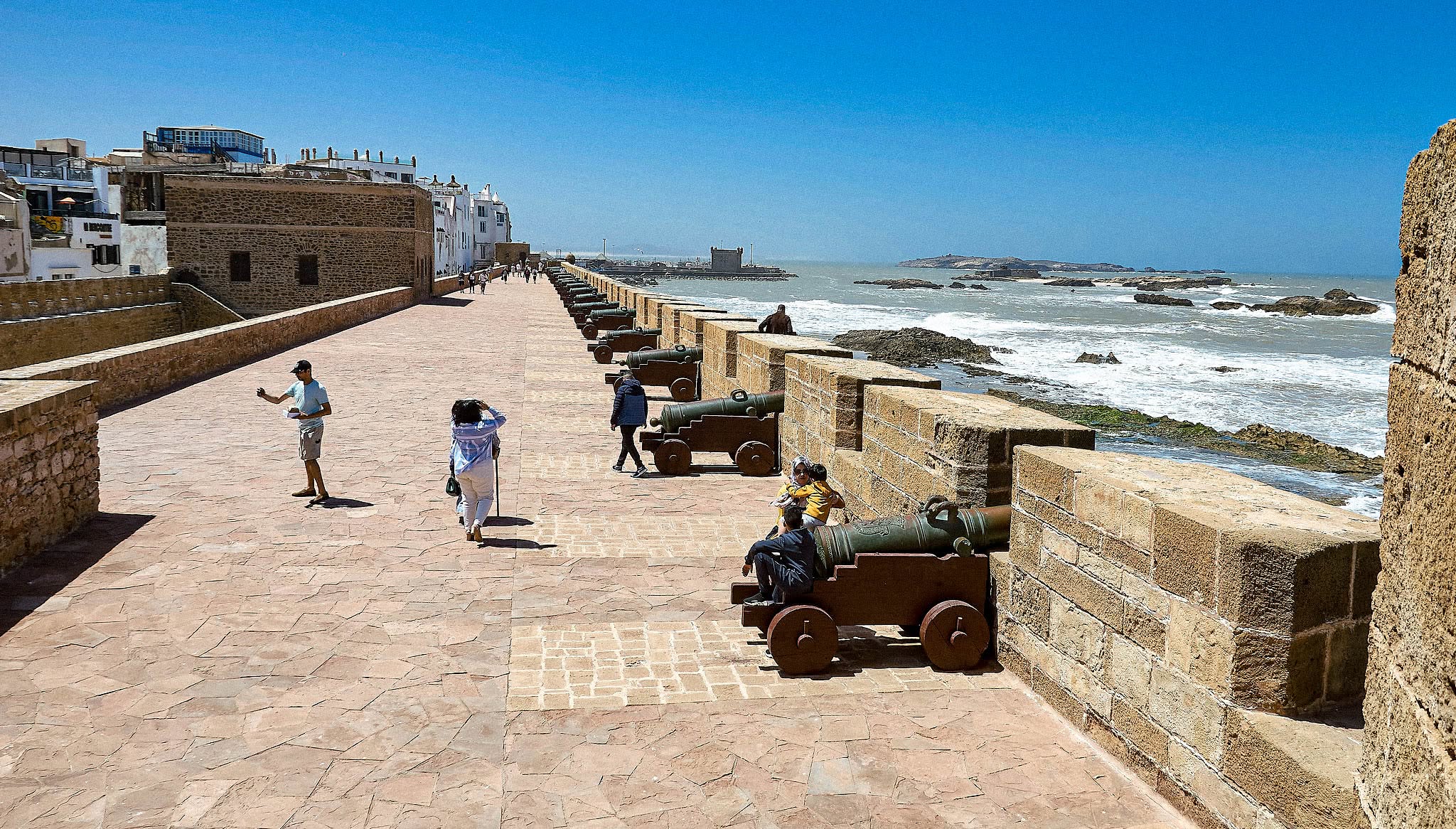
Essaouira is a strong choice for travelers who want Morocco with a slower pace. The Atlantic coast, whitewashed buildings, blue fishing boats and fortified walls give the city a distinct identity.
The Medina of Essaouira is a UNESCO World Heritage Site and remains the heart of the city.
What to see in Essaouira
Walk along the Skala and the old fortifications before exploring the medina’s narrow streets. The port is another essential stop, especially in the morning when fishing activity gives the waterfront a more local character.
Essaouira is also known for its seafood and windy coastline. The conditions attract visitors interested in surfing, kitesurfing and other water activities.
The city is easy to explore on foot, making it a particularly good destination for a relaxed two- or three-day stay.
How long should you stay?
Two days is ideal for a first visit. Three days suit travelers who want more time by the coast.
Best for
Coastal scenery, food, photography, surfing and slow travel.
6. Casablanca
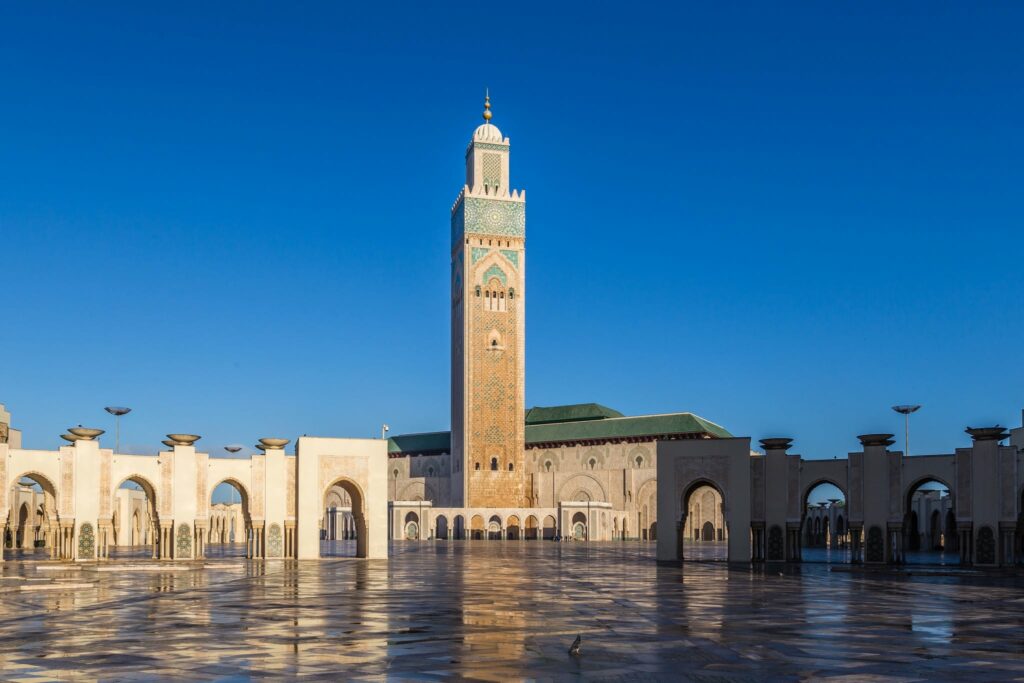
Casablanca is not the city to choose if your idea of Morocco revolves entirely around traditional medinas. It is the country’s largest city and an important economic centre, with broad avenues, modern districts and a strong Atlantic character.
The city also has an important architectural heritage that reflects several periods of Moroccan history.
What to see in Casablanca
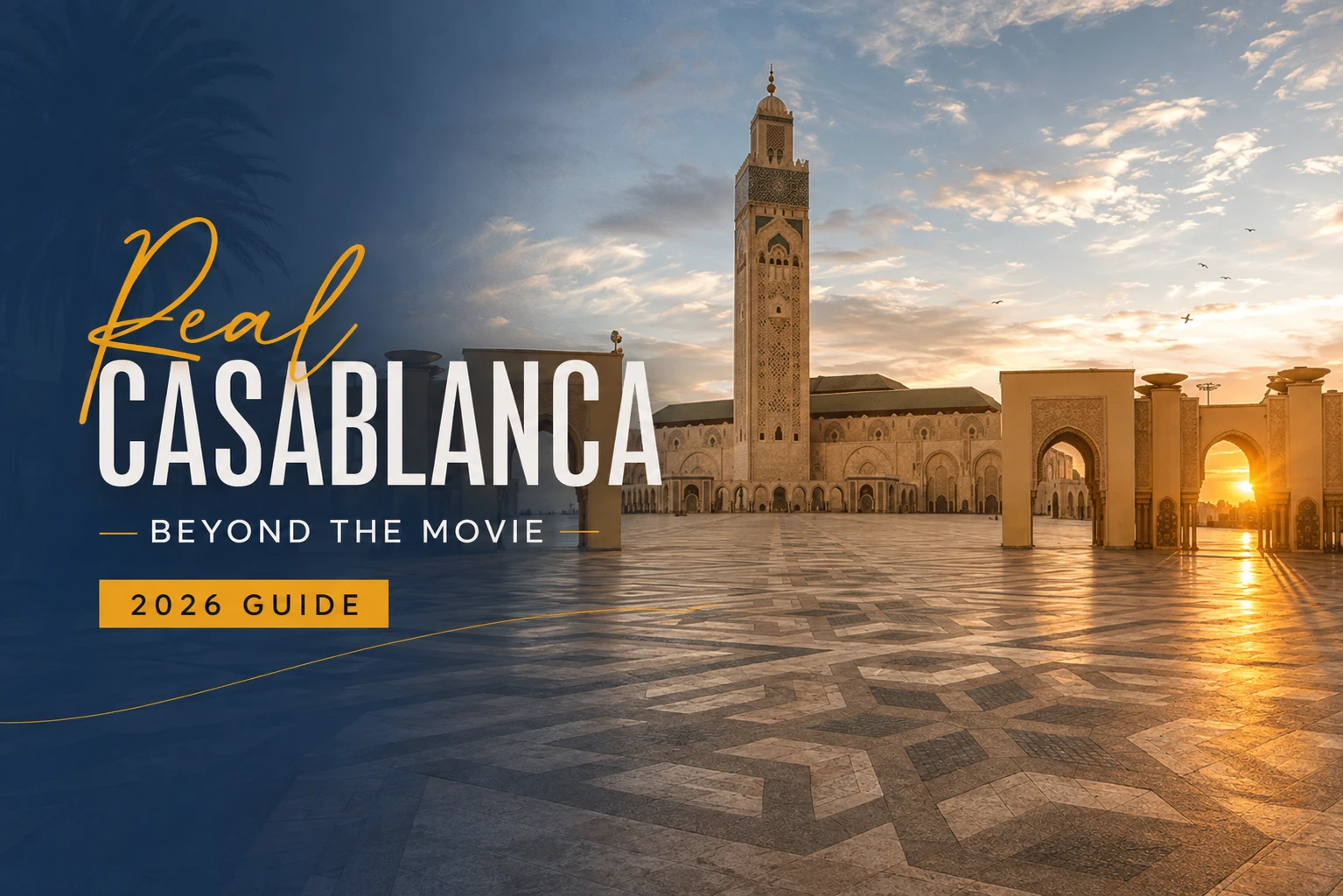
The Hassan II Mosque is the city’s best-known landmark and one of the most striking buildings on the Atlantic coast. Its location beside the ocean makes it particularly impressive.
The Art Deco buildings of the city centre are worth exploring for travelers interested in architecture. The Habous district provides a different atmosphere, with markets and architecture inspired by traditional Moroccan urban design.
Casablanca also works well as an arrival or departure point because of its international connections.
How long should you stay?
One full day can cover the main sights. Two days are better for travelers who want to explore the city’s architecture and food scene.
Best for
Architecture, contemporary Morocco, business travel, food and short stays.
7. Tangier
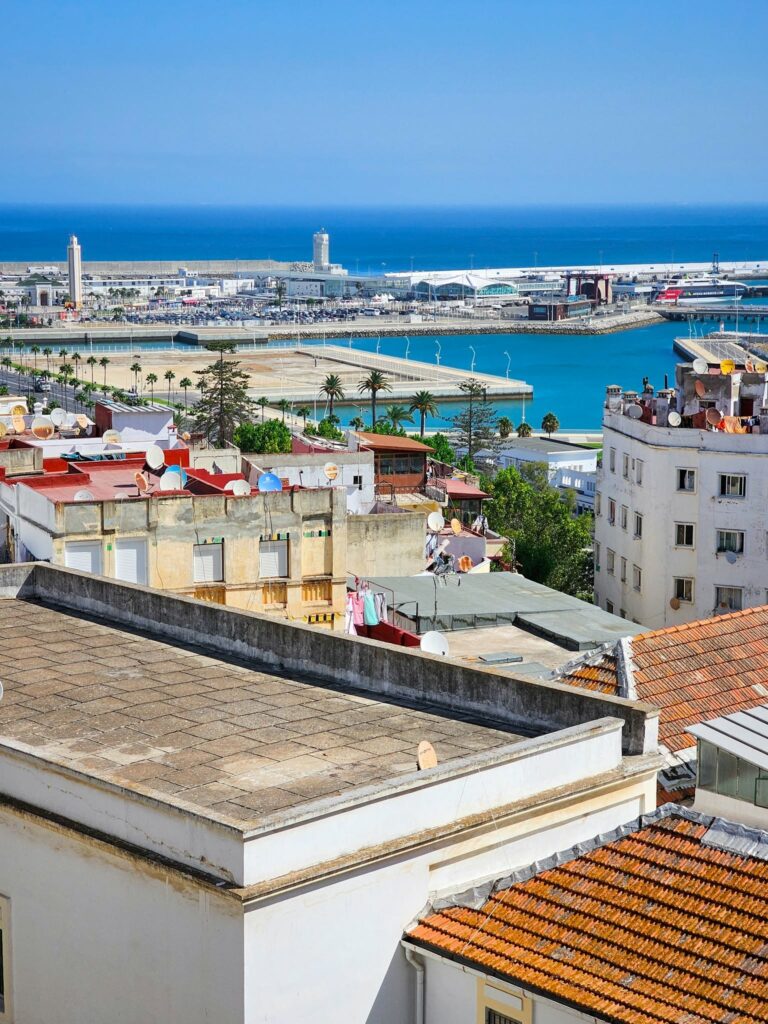
Tangier occupies a unique position at the northern tip of Morocco, where the Mediterranean meets the Atlantic. Its location has shaped the city for centuries and contributed to a cultural mix that feels different from southern Moroccan destinations.
The city is also one of Morocco’s main northern gateways and is included among the country’s official coastal and medina destinations.
What to see in Tangier
The Kasbah and old medina are the best places to begin. From the higher parts of the old city, you can look across the Strait of Gibraltar.
The Grand Socco connects the old and newer parts of Tangier, while the American Legation Museum offers an unusual link to the city’s international history.
Outside the centre, Cap Spartel and the nearby Hercules Caves make useful additions to a longer stay.
How long should you stay?
Two days are enough to explore the main areas. Three days allow more time for the coastline and nearby attractions.
Best for
History, coastal scenery, Mediterranean atmosphere and travelers visiting northern Morocco.
8. Meknes
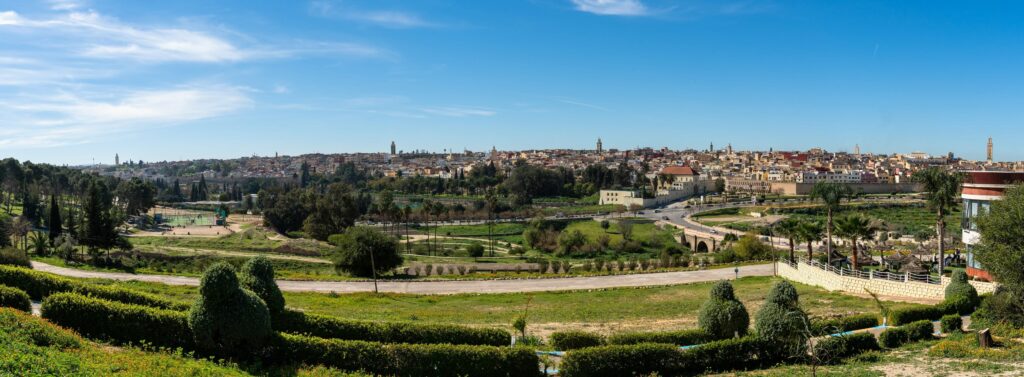
Meknes is one of Morocco’s four historic imperial cities, but it usually receives fewer visitors than Marrakech and Fes. That makes it an interesting option for travelers who want major historical sites without the same level of tourist activity.
The Historic City of Meknes has been on the UNESCO World Heritage List since 1996.
What to see in Meknes
Bab Mansour is the city’s most famous monumental gate and a natural starting point for exploring the historic centre.
Place el-Hedim sits nearby, while the old royal quarter and the enormous Heri es-Souani granaries reveal the scale of the city under Sultan Moulay Ismail.
Meknes is also a practical base for visiting Volubilis, one of Morocco’s most important Roman archaeological sites.
How long should you stay?
One full day works for the city itself, while two days are more comfortable when combined with Volubilis and nearby Moulay Idriss.
Best for
History, architecture, archaeology and travelers looking for a quieter imperial city.
9. Agadir
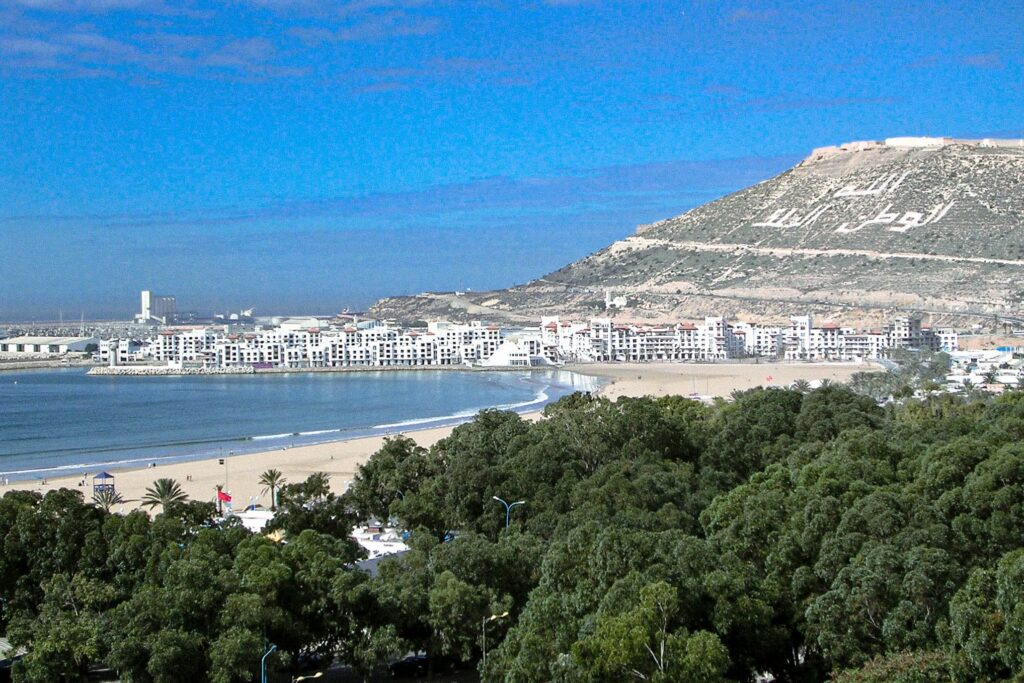
Agadir offers a different experience from Morocco’s historic inland cities. It is primarily a coastal destination, known for its long seafront, beaches, resorts and easygoing atmosphere.
The official tourism office presents Agadir and nearby Taghazout as a destination focused on beaches, leisure and outdoor activities.
What to see in Agadir
The beachfront is the centre of the modern city and works well for long walks, restaurants and relaxed afternoons.
The hilltop Agadir Oufella area provides views over the city and coastline. The old kasbah itself was heavily affected by the 1960 earthquake, but the site remains important to the city’s history.
For travelers interested in surfing, Taghazout is close enough to combine with an Agadir stay.
How long should you stay?
Three days are a good starting point. Beach-focused travelers may want four or five days.
Best for
Beaches, sunshine, surfing, families and resort-style holidays.
10. Tetouan
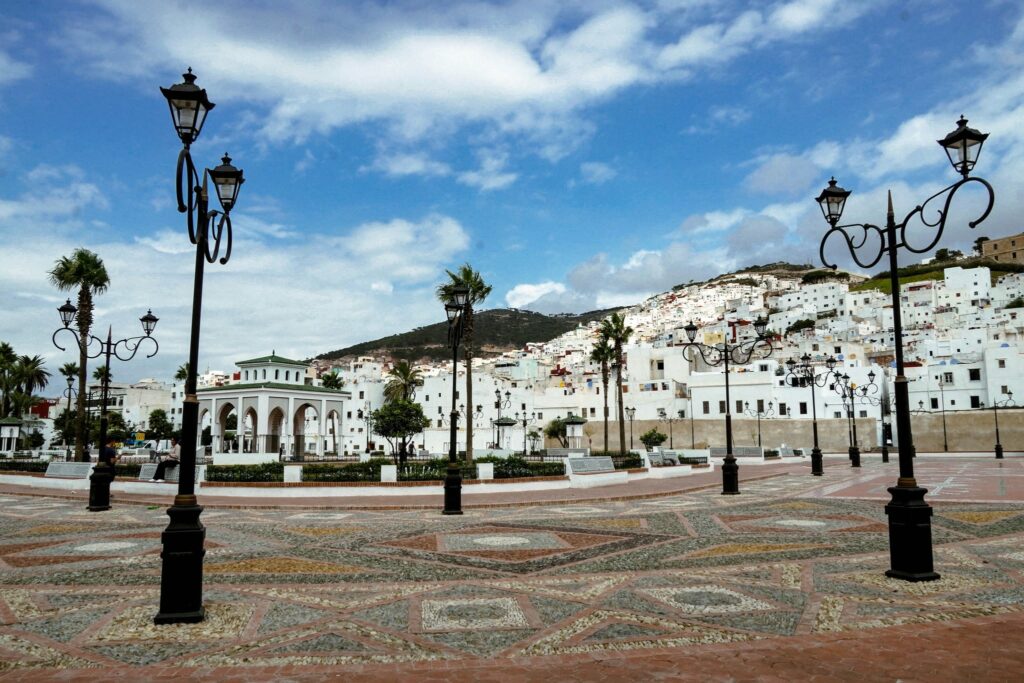
Tetouan is one of northern Morocco’s most interesting cultural destinations. The city combines Andalusian influences, traditional Moroccan architecture and a mountain setting close to the Mediterranean coast.
The Medina of Tetouan is a UNESCO World Heritage Site and is recognised for its historic character and cultural connections with Andalusia.
What to see in Tetouan
The medina is the main reason to visit. Its streets are less commercialised than those of Morocco’s biggest tourist cities, making it a good place to observe local crafts and daily life.
The Royal Palace area, the Kasbah and the traditional markets are worth including in a walking tour. The nearby coastal town of Martil can also be added if you want time by the Mediterranean.
Tetouan is particularly useful when combined with Chefchaouen and Tangier.
How long should you stay?
One full day is enough for a first visit, although two days allow a more relaxed experience.
Best for
History, architecture, culture and northern Morocco itineraries.
11. Ouarzazate
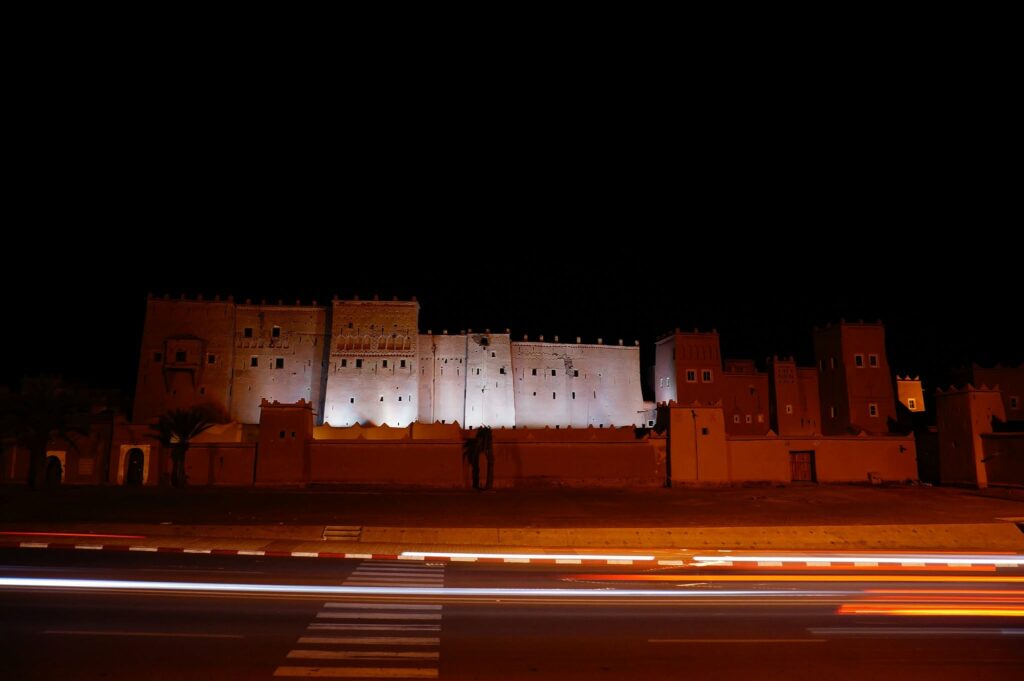
Ouarzazate is very different from Morocco’s coastal and imperial cities. Located between the High Atlas and the desert regions of the south, it is closely associated with kasbahs, dramatic landscapes and the historic routes leading deeper into the Sahara.
The Moroccan National Tourist Office describes Ouarzazate and the surrounding region in connection with kasbahs, oases, mountains and the country’s film industry.
What to see in Ouarzazate
The Taourirt Kasbah is one of the city’s principal landmarks. Its architecture provides an introduction to the earthen construction found throughout southern Morocco.
A short drive from Ouarzazate brings you to Ait Benhaddou, a fortified village and UNESCO World Heritage Site that has become one of Morocco’s most recognisable cultural landmarks.
The surrounding Draa Valley, Skoura oasis and road through the Valley of Roses can also be incorporated into longer journeys.
How long should you stay?
One night is enough for a quick visit, but two days work better if you want to explore the surrounding area.
Best for
Kasbahs, road trips, film history, desert routes and landscape photography.
12. El Jadida
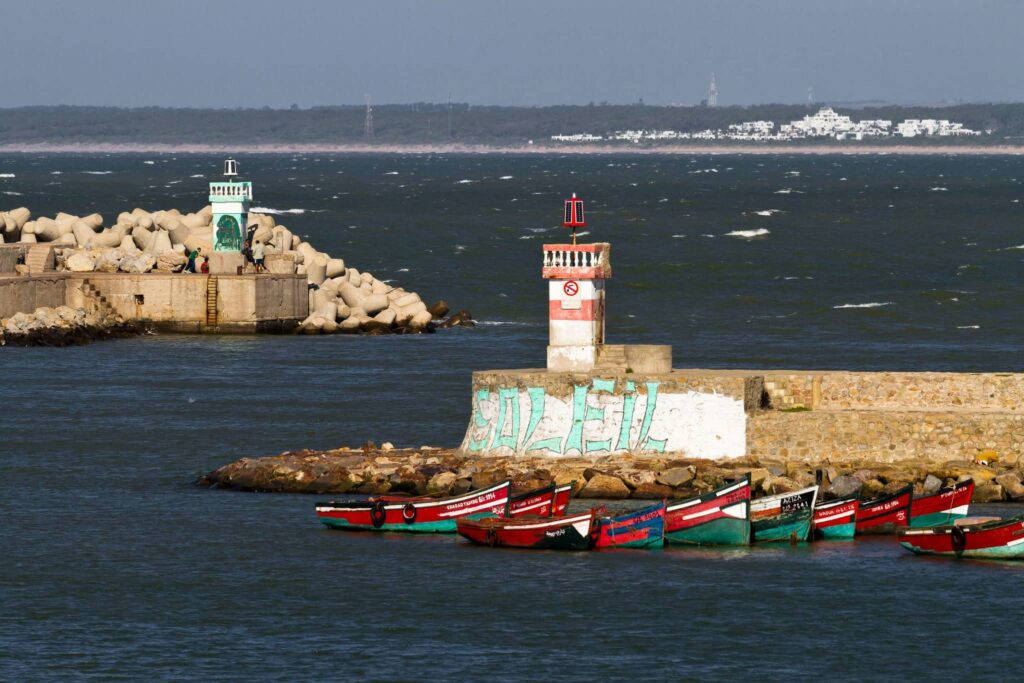
El Jadida is a good choice for travelers who want to add a less obvious coastal stop to their Morocco itinerary. Formerly known as Mazagan, the city has a distinctive Portuguese heritage alongside its Moroccan coastal character.
The Portuguese City of Mazagan, part of modern El Jadida, has been a UNESCO World Heritage Site since 2004.
What to see in El Jadida
The Portuguese fortified quarter is the main attraction. Walk along the old ramparts, explore the cistern and spend time around the harbour before heading into the newer parts of the city.
El Jadida is particularly appealing because it feels less demanding than Morocco’s major tourist centres. It can also work as a short coastal stop between Casablanca and other destinations on the Atlantic side.
How long should you stay?
One day is enough for the historic centre. An overnight stay is worthwhile for travelers who prefer a quieter coastal itinerary.
Best for
History, architecture, coastline and travelers looking for a less crowded destination.
How to Choose the Best City in Morocco
There is no single best city for every traveler. The right choice depends on what you want from the trip.
For a first visit, Marrakech is one of the easiest places to begin because it combines major landmarks, food, shopping and access to nearby destinations.
For history and traditional architecture, Fes is difficult to beat. Its medina requires more time and patience, but it offers one of the deepest cultural experiences in Morocco.
For a coastal trip, choose between Essaouira, Agadir, Tangier and El Jadida depending on the atmosphere you prefer. Essaouira is smaller and more relaxed, Agadir is more focused on beaches and resorts, Tangier has a stronger Mediterranean and international character, while El Jadida is a quieter historical option.
For northern Morocco, Chefchaouen and Tetouan work especially well together. For historical sites and imperial architecture, Meknes and Rabat are strong choices.
Travelers interested in desert landscapes should consider Ouarzazate as part of a longer southern itinerary rather than treating it as a substitute for a Sahara destination.
How Many Days Do You Need in Morocco?
The answer depends on how much of the country you want to cover.
For a short trip of three to four days, it is better to focus on one area rather than trying to cross the country. Marrakech alone can fill several days, while Fes can be paired with Meknes.
With one week, you can combine two or three major destinations. For example, Marrakech and Essaouira provide a good contrast between inland culture and the Atlantic coast.
With 10 to 14 days, you have enough time to create a more balanced route covering several cities and adding the High Atlas, southern valleys or a desert journey.
Trying to visit all 12 cities in one trip is not necessary. The goal should be to choose destinations that complement one another rather than collecting as many names as possible.
Getting Around Morocco
Morocco is relatively straightforward to travel around, but the best transport depends on the route.
Trains are particularly useful between major cities in the north and centre of the country. They are a practical option for routes such as Casablanca, Rabat, Meknes, Fes and Tangier.
For smaller destinations and areas without direct rail connections, buses, grand taxis and private transfers can be more convenient.
A private vehicle becomes especially useful when travelling through the High Atlas, visiting Ait Benhaddou, exploring the Draa Valley or connecting several southern destinations in one itinerary.
Inside the larger cities, petit taxis are commonly used for short urban journeys, while many historic medinas are best explored on foot.
Best Time to Visit Morocco
Morocco can be visited throughout the year, but the ideal period depends on where you are going.
Spring and autumn are generally comfortable for city sightseeing and longer road trips, with milder conditions than the hottest summer months.
Summer can be very hot in inland cities such as Marrakech and Fes, while Atlantic and Mediterranean destinations such as Essaouira, Tangier and parts of the northern coast can feel more comfortable.
Winter can be pleasant in many cities during the day, but temperatures drop in the evenings. Mountain and desert areas can be particularly cold at night.
Rather than choosing a season based only on the country as a whole, build your travel dates around the regions you plan to visit.
A Practical 10-Day Morocco Route
A 10-day itinerary can combine several of the destinations above without trying to squeeze every city into the same journey.
Days 1-2: Marrakech
Explore the medina, Jemaa el-Fnaa, Bahia Palace and the main historic sights.
Day 3: Marrakech to Essaouira
Travel west to the Atlantic coast and spend the afternoon exploring Essaouira’s medina and port.
Day 4: Essaouira to Marrakech or onward to Casablanca
Depending on your route, return inland or continue north.
Day 5: Casablanca and Rabat
See the Hassan II Mosque in Casablanca before continuing to Rabat.
Day 6: Rabat to Fes
Explore Rabat’s historic centre before travelling towards Fes.
Days 7-8: Fes and Meknes
Spend a full day in Fes and use the following day for Meknes and, if time allows, Volubilis.
Day 9: Fes to Chefchaouen
Head north to Chefchaouen and spend the evening in the blue medina.
Day 10: Chefchaouen to Tangier
Finish in Tangier and explore the old city before departure or onward travel.
This route is only one option. Travelers who prefer beaches can spend more time on the Atlantic coast, while those interested in desert landscapes can replace some northern stops with Ouarzazate and a southern route.
Final Thoughts
Morocco is best experienced through its contrasts. Marrakech introduces you to the energy of the medina, Fes offers a deeper look at the country’s historic and craft traditions, Essaouira slows the pace beside the Atlantic, and cities such as Rabat, Tangier, Tetouan and Meknes reveal other sides of Moroccan history.
The most useful way to plan a trip is not to ask which city is the best in absolute terms, but which one fits the experience you want. Once you make that choice, building the rest of your Morocco itinerary becomes much easier.
For many travelers, the strongest trip is not the one that visits the largest number of cities. It is the one that leaves enough time to walk, eat, explore and experience each place at its own pace.