Luxury Private Tours Morocco: A Bespoke Journey Through the Kingdom
A Private Journey Through Morocco
Luxury Private Tours Morocco: A Bespoke Journey Through the Kingdom
True luxury in Morocco was never about the hotel brand on the door. It is about who opens that door for you, how easily your plans can change, and how many places on the map are willing to let you in.
Morocco does not reward travelers who try to see everything in a week from the back of a shared minibus. It rewards patience, and it rewards having someone beside you who already knows which riad owner will unlock the rooftop early, which craftsman will let you sit at his workbench, and which mountain pass to avoid after rain. That is the real difference behind luxury private tours Morocco: not a longer list of five star hotels, but a trip built entirely around how you actually want to move through the country.
At Distinctive Experience, we plan these journeys the way a well connected local friend would, if that friend happened to know every riad courtyard in Fes and every dune camp worth the drive into the Sahara. This guide walks through what separates a genuinely private, tailor made Morocco trip from an ordinary group tour, and how the pieces fit together once you start planning your own.
What Luxury Actually Means Here
A trip is only as luxurious as its weakest part. You can book the finest riad in Marrakech and still end up rushed through the Sahara in a battered van with a driver who does not speak your language, and the whole experience collapses around that one weak link. This is the part most people miss when they compare prices between operators offering luxury private tours Morocco: the value sits in three places at once, and all three have to hold.
The first is how you move through the country. The second is where you actually sleep at night, beyond the marketing photos. The third, and usually the one that matters most once you are there, is who is sitting next to you in the front seat. Get those three right and the rest of the trip tends to arrange itself.
Private Transport and Signature Stays
The vehicle matters more than people expect. Long drives through the Atlas passes or out toward Merzouga are simply easier in a late model, air conditioned 4×4, the kind built for the terrain rather than adapted to it. That comfort is not a luxury detail, it is what keeps a six hour drive from feeling like six hours.
Your private guide matters even more. A good one is fluent in your language, knows the geography without checking a map, and can rework an afternoon on short notice. It is not unusual for a private guide to reroute an entire day around a closed mountain road, taking travelers through a village most visitors never see, simply because he knows someone there. That kind of flexibility rarely survives on a fixed group itinerary. Airport pickups, city transfers, everything in between, all of it gets arranged around your schedule rather than a printed timetable.
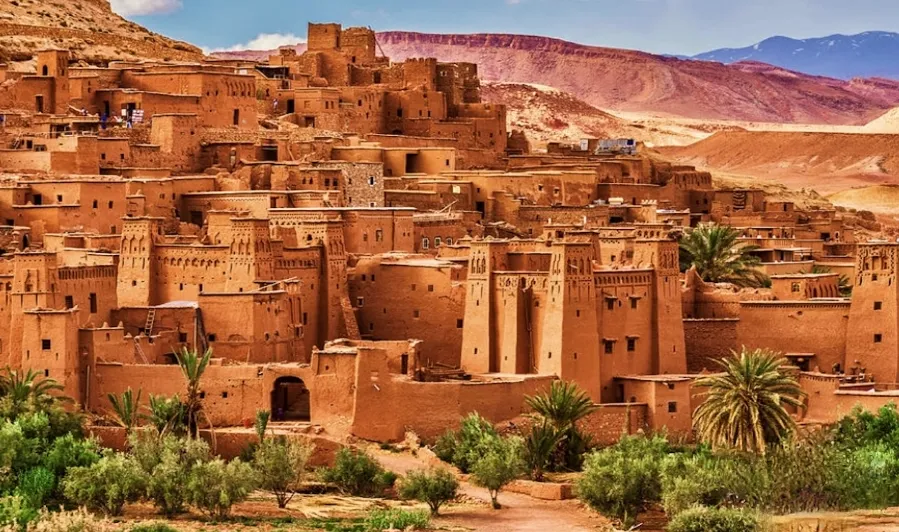
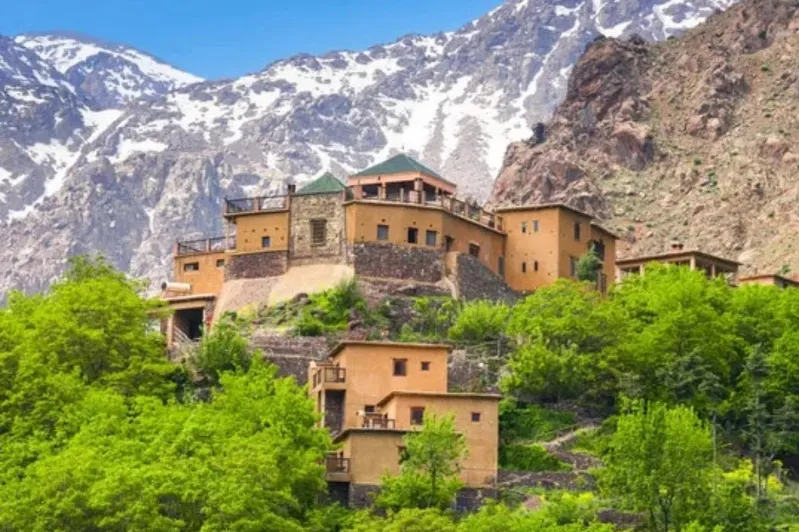
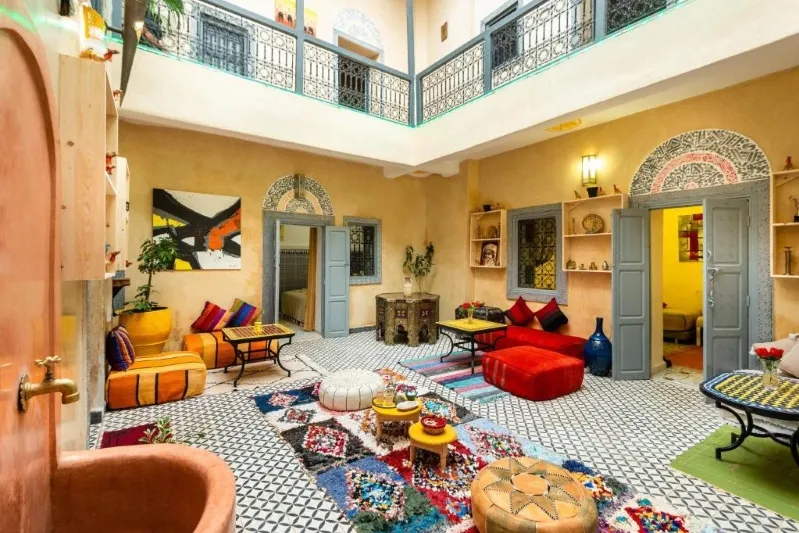
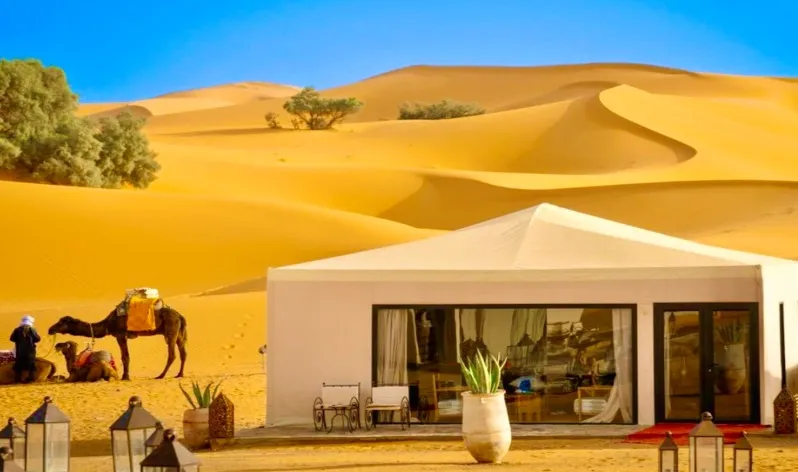
Where you stay tells the rest of the story. Boutique riads in Marrakech and Fes, usually under fifteen rooms, built around a quiet courtyard with zellige tilework and cedar ceilings, offer something a five hundred room resort simply cannot: a rooftop terrace that feels like it belongs to you. In the mountains, restored kasbahs turn centuries old fortified structures into small lodges, often with an infinity pool looking out over the Atlas Mountains valley below. And deep in Erg Chebbi or Erg Chigaga, the best private desert camps now come with proper en suite tents, hot water included, which is what turns a night in the dunes from an endurance test into the highlight of the whole trip.
Access You Cannot Book Yourself
This is really where a tailor made trip earns its name. Instead of a rushed stop at a crowded tannery, a private arrangement can get you into a master craftsman’s own studio in the Fes medina, watching techniques that have barely changed in four hundred years, at a pace that lets you actually ask questions.
The best afternoons in Morocco rarely show up on any published itinerary.
The souks reward the same kind of access. Walking them with a knowledgeable local guide, often someone with a background in art history, changes the whole exchange: you shop with a sense of what things are actually worth, and the bargaining stays friendly rather than exhausting. Food works the same way. A private cooking lesson in a riad kitchen with a Dada, the traditional Moroccan house chef, teaches the slow logic behind a proper tagine or hand rolled couscous in a way no restaurant meal can, though a table at one of the city’s quieter, harder to book restaurants has its own appeal for an evening you would rather not spend cooking.
Mountains, Balloons and Quiet Wellness
The Atlas Mountains deserve more than the standard day trip out of Marrakech. With a private hiking guide, the route can push further, ending with lunch inside a Berber family’s own home rather than a set stop on a bus route, which tends to be the part travelers remember longest.
A sunrise hot air balloon ride over the Atlas foothills is the other obvious splurge, and it earns the reputation: watching the light hit the mountains from above, then landing to a proper champagne breakfast, is hard to overstate until you have actually done it. Back at ground level, a private hammam session booked exclusively for your party, using locally sourced oils rather than a standard spa menu, is the quieter way to end a day that started before dawn.
Choosing Your Route
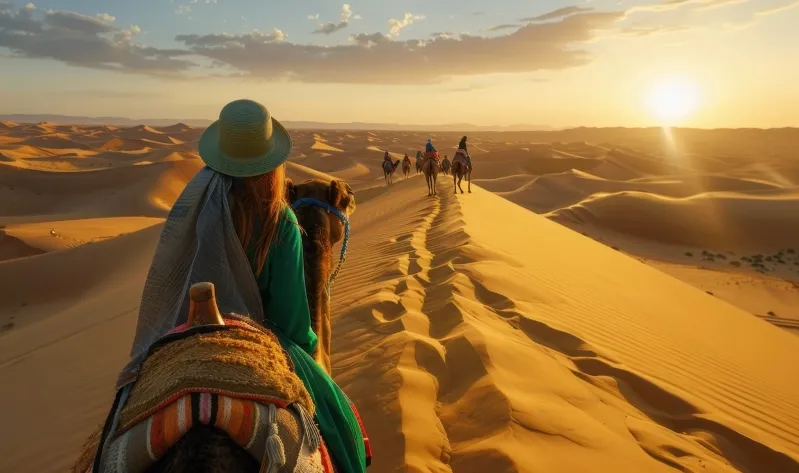
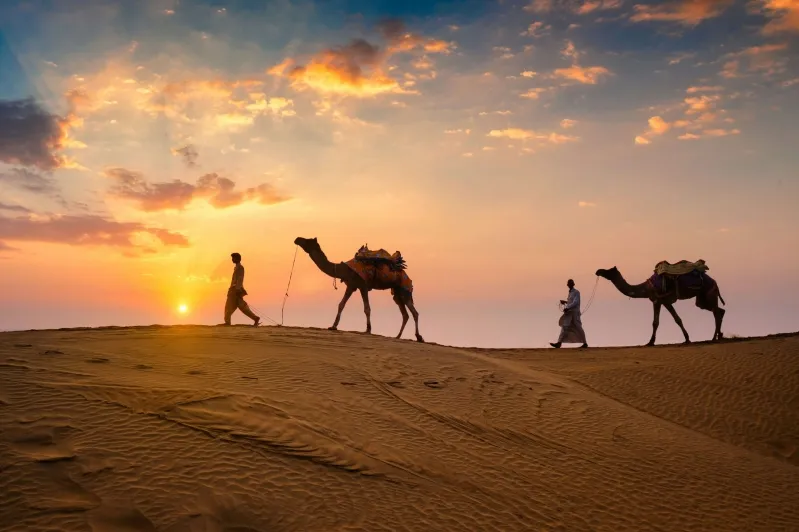
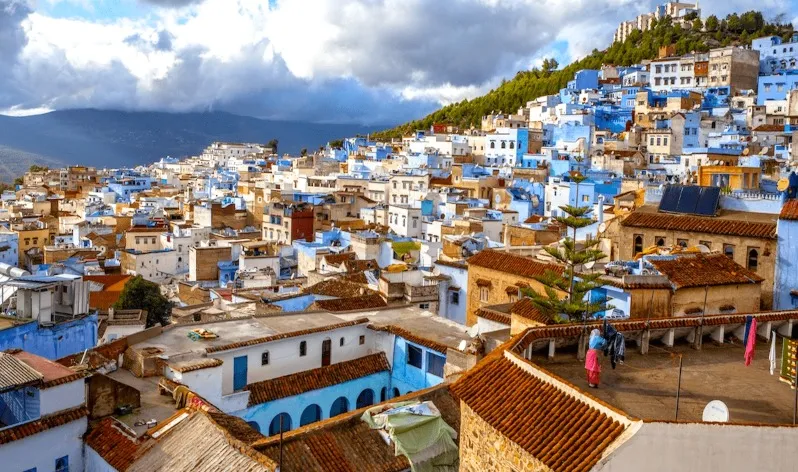
The freedom to set your own pace is really what separates a private trip from everything else, and this is the piece worth spending the most time getting right. A well built longer route through Morocco tends to open in Marrakech, with a few unhurried days for the Medina, the Majorelle Garden and a first cooking class, before moving on to Fes for a historian led walk through the old city. From there, a detour north to Chefchaouen for an early morning photography walk fits naturally, followed by the long, worthwhile drive into the desert for a couple of nights in Erg Chebbi, complete with a sunset camel ride and a night spent properly looking at the stars. A stop in the Skoura palm groves among restored kasbahs makes a good final stretch before returning to Marrakech for last minute souk shopping, a spa afternoon, and a private transfer to the airport.
For longer explorations, such as a seventeen day route that pushes further into the country, a serious operator keeps the safety net you never see: a reserve vehicle on standby, emergency contacts along every leg, and a concierge team reachable at any hour, quietly running in the background so nothing on your end ever depends on it.
Popular Tailor-Made Itineraries
Why a Private Operator Matters
The guides behind a genuine private tour are usually licensed professionals, many with backgrounds in history or archaeology, which is the difference between hearing a date and hearing the story behind it. The vehicles are newer and properly maintained, the driving is unhurried rather than rushed between stops, and the whole operation tends to lean toward responsible, low impact tourism rather than volume.
More than anything, every detail bends toward you rather than a fixed template, your preferred pace, your dietary needs, the specific things you actually want to see. That is really the case for traveling with a dedicated operator instead of piecing a trip together yourself: it is the difference between seeing Morocco and actually living in it for a week or two.
Before You Go
Best Time to Travel
- Spring and autumn bring the mildest weather, ideal for both the cities and the mountains.
- Winter is often the clearest season in the Sahara, and can bring snow to the High Atlas.
What to Pack
- Light, breathable layers, plus something warmer for cool desert nights.
- Comfortable walking shoes for the medinas, sun protection, and any personal medication.
Local Etiquette
- Modest dress is appreciated, especially near mosques and in smaller villages.
- A simple greeting goes a long way, and it is polite to ask before photographing anyone.
Safety and Support
- Professional drivers and well maintained vehicles on every leg of the route.
- A local team reachable around the clock, and comprehensive travel insurance is always worth arranging in advance.