Morocco Itinerary 7 Days: The perfect travel route from Marrakech to the Sahara desert
Seven days is a short trip, and yet it is exactly enough time for Morocco to change the way you see travel. A well-planned Morocco Itinerary 7 Days can carry you from the ochre ramparts of Marrakech, over the highest paved pass in North Africa, and into a Sahara camp where the sky does the talking. At Distinctive Experience, we build that week around the moments that actually matter, so the logistics disappear and the journey stays front and center.
- Duration7 Days / 6 Nights
- RegionsMarrakech · High Atlas · Sahara
- StylePrivate, Guided & Customizable
- Best ForCouples, Families, First-Time Visitors
Why Seven Days Works So Well in Morocco ↑
A full week gives you room to breathe between two very different worlds without ever feeling rushed. It is long enough to pair the souks and palaces of Marrakech with the theater of the Sahara, and still leave a free afternoon for a hammam or a rooftop lunch. Many travelers use this Morocco Itinerary 7 Days as their first real introduction to the country, then come back for something longer once they know what they love most about it.
If seven days ends up being more or less than you need, we also run a shorter two-day Atlas adventure, a five-day itinerary for a quicker escape, and a six-day route from Marrakech for a middle ground. Each one follows the same idea: a private, well-paced Morocco tour built around real places rather than a checklist.
What a One-Week Luxury Tour Gives You ↑
A week in Morocco touches three entirely different landscapes, and the contrast is part of what makes the trip memorable. Here is what a properly planned week actually delivers.
- Real immersion, not a highlight reel. You spend enough time in each place to talk with shopkeepers, share a meal with a local family, and notice the small details that a rushed day trip would miss.
- A pace that respects the traveler. Mornings on the road are balanced with quiet afternoons, so nobody arrives at the desert camp exhausted from constant driving.
- Three landscapes in one trip. Red city, snow-capped mountains, golden dunes. Few countries pack this much visual variety into a single week.
- Nothing left to figure out. Transport, riads, desert camps and guiding are arranged by our Moroccan travel agency in advance, so you simply show up and enjoy the ride.
The Signature Route: Marrakech to the Sahara and Back ↑
This is our most requested Morocco Itinerary 7 Days, and for good reason. It follows the classic loop from Marrakech across the High Atlas to the dunes of Erg Chebbi, then back through the Draa Valley, without ever feeling like a race against the clock.
Day 1: Marrakech, the Red City ↑
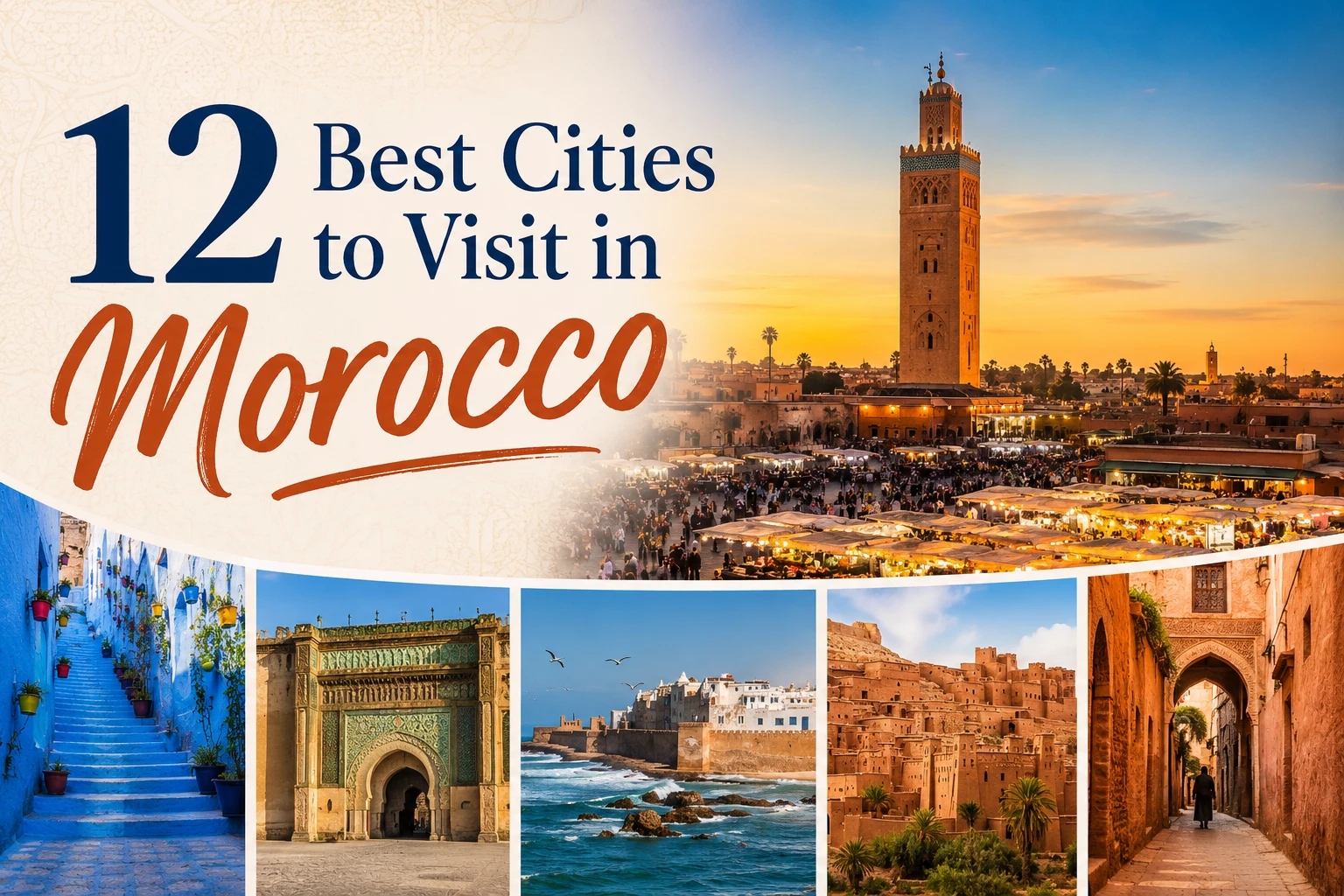
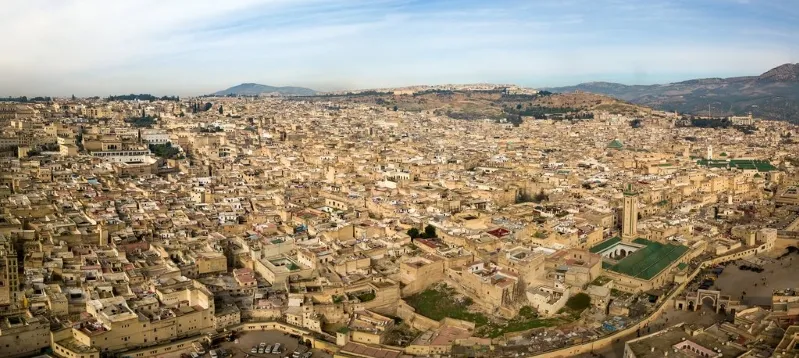
Your driver meets you at the airport and takes you straight to your riad, tucked somewhere inside the old medina walls. Once you have settled in, spend the afternoon wandering nearby streets to get your bearings before the evening brings everyone out to Jemaa el Fna, the main square, which turns into an open-air feast the moment the sun goes down. Try a plate of grilled snails or a slow-cooked tanjia, and take a slow lap past the Koutoubia Mosque and its towering minaret.
Day 2: The Cultural Heart of Marrakech ↑
A private guide leads you through the sights that define Marrakech: the nineteenth century Bahia Palace, the cool blue calm of Jardin Majorelle, and the tangle of souks where leather, spice and metal are still worked by hand. Step into a traditional tannery to watch the dyeing process, then round out the day with a visit to the Yves Saint Laurent Museum or the Dar Si Said Museum for a closer look at Moroccan craftsmanship.
Day 3: Over the High Atlas to Ait Benhaddou ↑
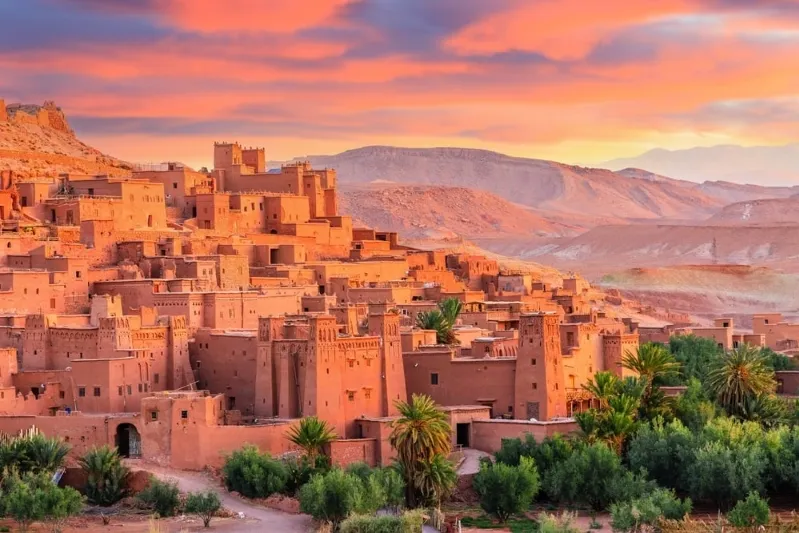
The road climbs into the High Atlas Mountains today, crossing the Tizi n Tichka pass, the highest paved road in North Africa, with plenty of stops for photos along the way. By afternoon you reach Ait Benhaddou, a fortified UNESCO village so cinematic that parts of Gladiator were filmed here. You overnight in a kasbah-style hotel at the edge of the desert region, ready to push deeper the next morning.
Day 4: Roses, Gorges and the Dunes of Merzouga ↑
The scenery shifts completely today, from rock to rolling sand. You pass through the fragrant Valley of Roses and the steep walls of the Todra Gorges before reaching Merzouga, gateway to the great dunes of Erg Chebbi. A camel trek carries you into the Sahara desert for sunset, and the night is spent in a fully equipped Berber camp under a genuinely dark sky.
Day 5: Sunrise Over the Sahara ↑
Few sights compare to watching the sun rise over the dunes, and it is worth the early alarm. After a traditional breakfast at camp, a 4×4 loop takes you to Berber families and to Khamlia village for a taste of Gnawa music. If you are up for it, sandboarding down a dune is a fun, low-effort way to close out the morning before heading back for a slower afternoon.
Day 6: Ouarzazate Back to Marrakech ↑
The drive back to Marrakech passes through Ouarzazate, often called the Hollywood of Africa, where you can stop at the Atlas Film Studios and the Taourirt Kasbah. The Draa Valley’s palm groves offer a green contrast to the desert you have just left behind. Back in Marrakech by evening, a rooftop dinner overlooking the main square is a fitting way to close the loop.
Day 7: Departure ↑
One last Moroccan breakfast, then a private transfer to Marrakech Menara Airport for your flight home, with a week of stories to unpack.
An Alternative Path: Day Trips and the Atlantic Coast ↑
Not everyone wants to spend two full days driving to the far desert, and that is completely fine. This version of the Morocco Itinerary 7 Days keeps you closer to Marrakech, trading long transfers for a series of rich day trips, while still covering mountains, coast and countryside.
Atlas Mountains Day Trip ↑
A day in the Imlil Valley brings a moderate hike through genuine Berber villages, often followed by lunch in a local home, which tends to be one of the warmest parts of the whole trip. The mountain air alone is worth the drive up from the city.
Essaouira Coastal Escape ↑
A few hours west of Marrakech, the walled port town of Essaouira trades desert heat for cool Atlantic breeze. Wander the eighteenth century ramparts, browse the art galleries in the medina, and finish with fresh grilled seafood by the harbor.
Ouzoud Waterfalls ↑
North Africa’s most striking waterfalls drop over three tiers of cliff, surrounded by olive groves where Barbary macaques roam freely. Shaded paths let you hike down to the base of the falls at your own pace, a peaceful contrast to the desert route.
What Sets This Journey Apart ↑
Booking with Distinctive Experience means more than picking a route off a shelf. As a Marrakech-based Moroccan travel agency, we shape each trip around who is actually taking it.
- Genuinely custom planning. Photographers get extra stops timed for golden hour, food lovers get a cooking class arranged in Fes or Marrakech, and families get a pace that suits younger travelers.
- Guides who know the country from the inside. Our drivers and guides are Moroccan nationals, fluent in English, and deeply familiar with Berber culture and local history.
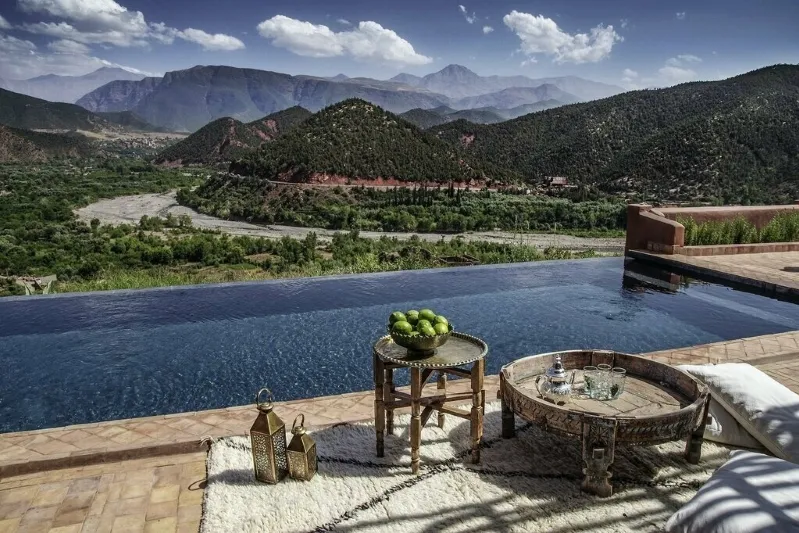
- Comfort that matches the scenery. Expect traditional riads with courtyard pools in the cities, and a proper en-suite desert camp with real beds and heating or air conditioning in the Sahara.
- All-inclusive simplicity. Accommodation, private transport, most meals and excursions are bundled together, and we also design bespoke wedding packages for couples who want a Moroccan celebration.
Practical Notes Before You Go ↑
Moroccan Hospitality ↑
Moroccans are known for genuine warmth, and mint tea is central to that culture. If it is offered, accept it, since turning down the first glass can come across as impolite. A modest tip for guides, drivers and hotel staff is customary and appreciated, and it is worth remembering that the Berber people, Morocco’s original inhabitants, shape much of what you will see in the mountains and the desert.
Safety, Transport and Money ↑
Morocco is a generally safe destination for tourists, though it pays to keep an eye on your belongings in crowded spots like the Marrakech medina. Travelling with a private driver, as we arrange for every trip, removes the need to negotiate with street taxis. The local currency is the Moroccan Dirham, ATMs are common in cities, and small vendors typically expect cash.
What to Eat ↑
Tagine, slow-cooked in its signature earthenware pot, is the dish to try first, whether with preserved lemon and chicken or lamb and prunes. Couscous appears at family tables on Fridays, and street snacks like fresh orange juice and honey-soaked chebakia are worth stopping for in Jemaa el Fna.
Where to Go After Your First Week ↑
A week is often just enough to make travelers want more. If you find yourself already planning a return, our longer Morocco tours extend the same approach across the Imperial Cities of Fes, Rabat and Meknes, or combine the Sahara, the Atlas and the Atlantic coast into a fuller two or three week journey. We also arrange specialized trips for hikers heading into the High Atlas, cultural travelers interested in Roman ruins and ancient kasbahs, and couples planning a wedding in Morocco.
Frequently Asked Questions ↑
Is seven days enough time to see Morocco?
Seven days is enough to properly experience Marrakech and the Sahara together, without feeling rushed between the two. It will not cover the entire country, but it gives a full and satisfying introduction that many travelers later extend into a longer trip.
What is the best route for a 7 day Morocco itinerary?
The classic loop from Marrakech across the High Atlas to Merzouga and back through the Draa Valley is the most complete option, since it covers city, mountains and desert. Travelers who prefer less driving often choose the alternative route built around Marrakech day trips instead.
Can this itinerary be customized for families or honeymooners?
Yes. The pace, accommodation style and activities are adjusted depending on who is traveling, whether that means gentler days for children or more private, romantic touches for couples.
What is the best time of year for this trip?
Spring and autumn offer the most comfortable temperatures for both Marrakech and the Sahara. Summer can be very hot in the desert during the day, while winter nights in the dunes get cold, so a well-equipped camp matters more at that time of year.
Do I need a visa to visit Morocco?
Many nationalities, including travelers from the US, UK, EU and several Gulf states, can enter Morocco without a visa for short tourist stays, though the exact rules depend on your passport. It is worth checking with your local Moroccan consulate before you book.
Ready to trade the guesswork for a properly planned Morocco Itinerary 7 Days? Get in touch with Distinctive Experience and we will build the week around what you actually want to see.