Real Casablanca: Beyond the movie (2026 guide)
When people hear the name Casablanca, many still picture black-and-white Hollywood glamour, Humphrey Bogart, Ingrid Bergman and a smoky piano bar. But the Casablanca you find in Morocco is something else entirely.
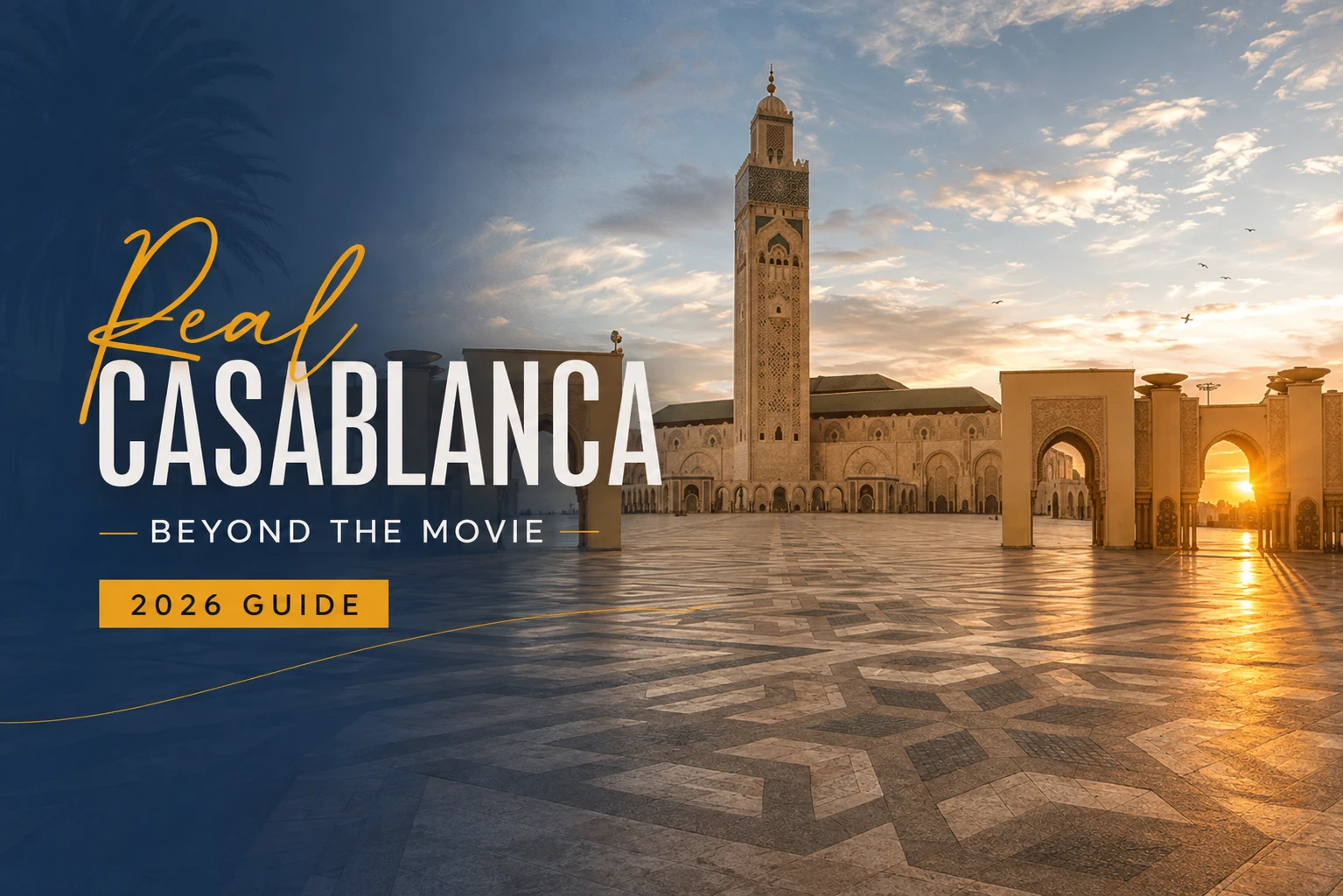
The real Casablanca is busy, modern and often surprisingly understated. It is Morocco’s economic centre, a major Atlantic port and a city where Art Deco buildings stand beside traditional markets, modern cafés and one of the country’s most spectacular religious landmarks: the Hassan II Mosque.
Casablanca is not always the city that wins travellers over in their first hour. The traffic can be intense, the distances can feel longer than they look on a map, and its charm is less obvious than that of Marrakech or Fes. But give it time and the city starts to make sense. Its architecture, food, Atlantic coastline and everyday street life reveal a more contemporary side of Morocco that is easy to miss on a classic tourist itinerary.
This guide looks beyond the movie and focuses on the Casablanca worth experiencing today: the monuments to see, the neighbourhoods to explore, the architecture to notice, the food to try and the practical details that make a visit easier.
Hassan II Mosque: The Landmark You Should Not Miss
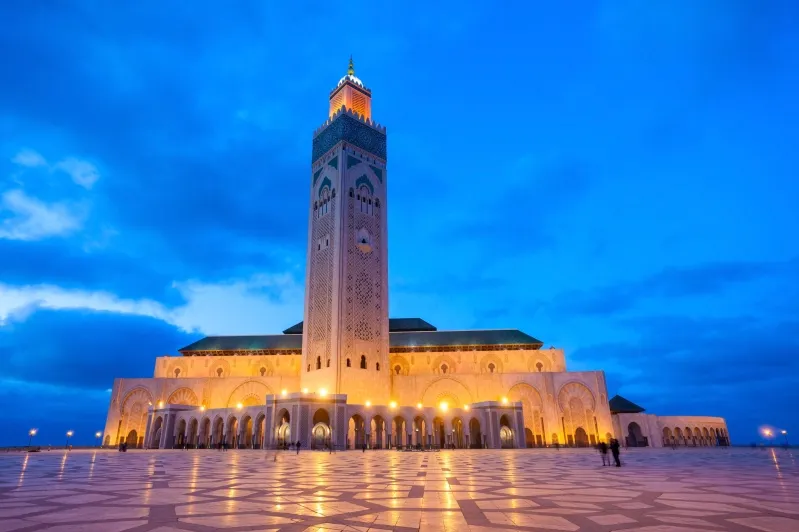
For a first visit to Casablanca, the Hassan II Mosque is the obvious place to begin.
Set beside the Atlantic Ocean, the mosque is one of the city’s defining landmarks. Its 210-metre minaret dominates the skyline, while the immense prayer hall and surrounding spaces combine traditional Moroccan craftsmanship with an ambitious modern design.
What makes the mosque particularly striking is its relationship with the sea. Part of the complex extends over a platform above the Atlantic, creating the impression that the building rises directly from the water.
Inside, the details are just as important as the scale. The complex showcases Moroccan craftsmanship in carved stone, zellige, woodwork, marble and plaster. The main prayer hall also features a retractable roof, an unusual architectural element that allows the space to open towards the sky.
Can non-Muslims visit the Hassan II Mosque?
Yes. The Hassan II Mosque is open to non-Muslim visitors through organised guided tours. The official foundation publishes visiting times and current admission prices, which vary according to visitor category. Because schedules can change, especially around Ramadan and religious occasions, it is worth checking the official Fondation de la Mosquée Hassan II website before you go.
Visitors should dress respectfully. The mosque is a place of worship as well as a major architectural attraction, so modest clothing is appropriate.
A guided visit is worthwhile because the scale of the building is only part of the story. The tour also helps explain the craftsmanship, symbolism and construction of the complex.
Casablanca’s Architectural Soul
One of the biggest mistakes visitors make is to judge Casablanca only by its monuments.
The city’s real character is in its streets.
During the first half of the 20th century, Casablanca became an important centre for urban planning and architectural experimentation. Henri Prost played a major role in shaping the city’s urban layout, while architects including Marius Boyer helped create the distinctive streetscapes that are now associated with central Casablanca. The result was an unusual mixture of Art Deco, Neo-Mauresque, Neoclassical and later Modernist architecture.
You do not need to be an architecture enthusiast to appreciate it. Look up as you walk.
Balconies, geometric façades, tiled details, rounded corners, decorative plasterwork and monumental public buildings often reveal themselves slowly. Some of the city’s most interesting details are above street level, where they are easy to miss if you are rushing between attractions.
Boulevard Mohammed V
Boulevard Mohammed V is one of the best places to start an architectural walk.
The boulevard cuts through the city centre and brings together commercial life and some of Casablanca’s most recognisable heritage buildings. Casamémoire highlights several important stops along the boulevard, including the Central Market, the Hôtel Lincoln and the Immeuble Assayag, designed by Marius Boyer in 1930.
The best way to experience the area is slowly. Rather than looking for one famous building, pay attention to how different architectural styles appear next to one another.
Place Mohammed V
Place Mohammed V offers another concentrated look at the city’s architectural history. The square is surrounded by major public buildings, including the Grande Poste and the former Wilaya, and combines Neo-Classical and Art Deco influences. Casamémoire includes the square among its heritage circuits because of the concentration of significant buildings in this part of the city.
This is one of the parts of Casablanca where simply walking without a strict timetable can be more rewarding than moving from one attraction to another.
The Old Medina: Casablanca Before the Modern City
Casablanca’s Old Medina is easy to overlook because the city is so closely associated with its modern architecture.
But this is where you can see a different side of Casablanca.
The historic medina preserves layers of the city’s earlier history, including Portuguese, Alaouite and Protectorate influences. Its defensive walls, narrow streets, small shops and traditional buildings create a very different atmosphere from the broad avenues of the city centre. Casamémoire’s heritage routes include the old medina and sites such as the Sqala fortifications.
The best approach is to explore without expecting the scale or polished appearance of the medinas in Marrakech or Fes. Casablanca’s old medina is more compact and tied closely to the city’s modern urban fabric.
That contrast is precisely what makes it interesting.
Habous: Casablanca’s New Medina
South of the city centre, the Quartier Habous, often called the New Medina, offers another architectural contrast.
Developed during the French Protectorate period, the neighbourhood combines elements of traditional Moroccan urban design with planned streets and buildings influenced by modern European ideas.
It is one of the easiest places in Casablanca to experience a traditional market atmosphere without the density and maze-like feeling of larger historic medinas.
Come for the architecture, then take time to browse the shops.
You will find traditional crafts, leather goods, textiles, ceramics and Moroccan products, while the surrounding streets provide a quieter introduction to this side of the city.
Mahkama du Pacha
The Mahkama du Pacha is one of the neighbourhood’s standout buildings.
Known for its ornate interiors and traditional Moroccan decorative work, the former administrative complex is particularly interesting for visitors who want to see carved wood, zellige, stucco and other forms of craftsmanship in a formal setting.
Access arrangements can vary, so it is sensible to check locally before building your entire itinerary around an interior visit.
Casablanca and the Atlantic
Casablanca is a coastal city, and the Atlantic is an important part of its identity.
The Corniche and Ain Diab area offer a completely different experience from the historic centre. Here, the city opens towards the ocean, with promenades, cafés, restaurants and leisure spaces along the coast.
The coastline is not simply a backdrop for the Hassan II Mosque. It is part of everyday Casablanca life, particularly for residents looking to escape the centre for a few hours.
For many visitors, late afternoon is the most enjoyable time to head towards the coast. The light becomes softer, temperatures usually feel more comfortable than in the middle of the day, and the atmosphere changes as people come out for walks and social time.
Casablanca’s relationship with the Atlantic has also shaped its architecture. The city’s Corniche developed as a place for recreation, with cafés, hotels and residential buildings responding to the coastline.
What to Eat in Casablanca
Casablanca’s food scene is one of the easiest ways to experience the city as a living Moroccan metropolis rather than simply a sightseeing stop.
Central Market
The Central Market is one of the city’s most interesting places for travellers who enjoy seeing how locals shop and eat.
It is a working market rather than a carefully curated tourist attraction, which is exactly why it can be worth visiting. Seafood, produce and other everyday goods give you a glimpse of the city’s commercial rhythm.
For seafood lovers, the market is a natural place to start. Ask about the day’s catch and look around before choosing where to eat. As with any busy market, conditions and individual vendors can vary, so use normal judgement when selecting food.
Moroccan Food Beyond the Tagine
Casablanca is also a good city for discovering Moroccan dishes beyond the familiar tourist menu.
Look for:
- Fresh Atlantic seafood
- Moroccan salads and cooked vegetable dishes
- Harira
- Grilled meats
- Couscous on its traditional serving day
- Mint tea and Moroccan pastries
- Moroccan breakfast dishes in local cafés
One of the pleasures of Casablanca is that you do not have to look for a “traditional restaurant” for every meal. Sometimes a simple neighbourhood café tells you more about the city’s daily rhythm than a formal dining room.
Rick’s Café: Meeting Hollywood in the Real Casablanca
There is no escaping the movie.
The original Casablanca was released in 1942, and the fictional Rick’s Café became one of cinema’s most famous settings. The restaurant now known as Rick’s Café in Casablanca was created decades later as a tribute to the film rather than being the original location from the movie.
Today, the restaurant deliberately recreates the atmosphere associated with the film, with period-inspired interiors and live piano music. Its official website describes an ambience inspired by the 1942 movie and currently offers lunch and dinner reservations.
It is worth considering for a meal or a drink if you enjoy the history of cinema.
But there is a useful way to think about it: Rick’s Café is part of Casablanca’s story because of the film, while the rest of the city is interesting precisely because it exists beyond that film.
How Many Days Do You Need in Casablanca?
You can see the main highlights in one full day, but two days will give you a much better impression of the city.
One day in Casablanca
Focus on the essentials:
Morning: Hassan II Mosque
Late morning: Old Medina
Afternoon: Place Mohammed V and Boulevard Mohammed V
Evening: Corniche or Ain Diab
This works well for travellers using Casablanca as a stop between flights or trains.
Two days in Casablanca
With a second day, you can slow down and explore more of the city.
Add:
- Habous
- Mahkama du Pacha if accessible
- Central Market
- More time for the architectural centre
- A relaxed meal or evening by the Atlantic
Two days is a better choice if you want to understand Casablanca rather than simply photograph its main sights.
Three days or more
With three days, Casablanca can become a base for exploring nearby destinations, including Rabat or El Jadida.
Best Day Trips from Casablanca
Rabat
Rabat is one of the easiest day trips from Casablanca.
The Al Boraq high-speed rail service links Casa Voyageurs with Rabat Agdal as part of the Casablanca–Tangier route.
In Rabat, the Hassan Tower, the Mausoleum of Mohammed V, the Kasbah of the Udayas and the old medina make a natural full-day itinerary.
Because Rabat has a very different atmosphere from Casablanca, the combination works particularly well: one city shows Morocco’s modern economic side, while the other offers a stronger sense of administrative, historical and coastal heritage.
El Jadida
El Jadida is another option, especially for travellers interested in history and Atlantic architecture.
The old Portuguese City of Mazagan is a UNESCO World Heritage site. Its fortified walls, bastions, historic buildings and famous cistern reflect centuries of contact between Moroccan and European cultures. UNESCO lists the property as being about 90 kilometres southwest of Casablanca.
It is an especially appealing excursion for photographers and anyone interested in the meeting point between Moroccan and Portuguese history.
Getting Around Casablanca
Casablanca is large, and traffic can be frustrating during busy periods. Planning your movements can make a significant difference.
Tramway
The tramway is useful for moving around many parts of the city without relying entirely on road traffic. For visitors, it can be a practical alternative to sitting in congested streets.
Petit taxis
Casablanca’s small taxis are a common way to make shorter journeys.
For metered trips, make sure the meter is being used rather than agreeing to an unexpectedly high flat price. Having the name of your destination written down can also help when pronunciation becomes a problem.
Trains
The two stations most useful to visitors are Casa Voyageurs and Casa Port, depending on where you are staying and where you are travelling next.
Casa Voyageurs is particularly important for longer rail journeys and for connections with the Al Boraq network.
Casablanca Travel Tips for 2026
Safety
Casablanca is a major city, so use the same precautions you would use in any busy urban destination.
Keep an eye on your belongings in crowded areas such as markets, stations and busy streets. At night, use sensible judgement about where you walk and how you move around the city.
There is no need to treat Casablanca as an unsafe destination, but it is not a small resort town either.
Language
Moroccan Arabic (Darija) is the main everyday language. French is also widely used in business, transport and tourism.
English is increasingly common in hotels, tour companies and visitor-oriented businesses, particularly among younger staff, but knowing a few French or Arabic expressions can still make everyday interactions easier.
Money
The Moroccan dirham (MAD) is the local currency.
Cards are accepted in many hotels, restaurants and modern businesses, but keeping some cash is useful for taxis, small cafés, markets and smaller purchases.
Drinking water
Bottled water is widely available and is the simplest option if you are unsure about drinking tap water during your trip.
What to wear
Casablanca is a modern city, but visitors should still dress with reasonable respect, particularly when visiting the Hassan II Mosque or other religious sites.
For mosque visits, modest clothing is appropriate.
When to visit
Spring and early autumn are generally comfortable periods for exploring the city on foot. Summer can be warm and humid along the Atlantic, while winter is usually mild compared with many European destinations.
Rather than choosing a month only because of temperature, think about what you want to do. Architecture and city walks can be enjoyed throughout much of the year, while the coast becomes a bigger part of the experience during warmer periods.
Casablanca or Marrakech: Which One Should You Visit?
This is not really a competition because the two cities offer very different experiences.
Choose Casablanca if you want:
- Modern Moroccan city life
- Art Deco and 20th-century architecture
- The Hassan II Mosque
- Atlantic views
- Seafood and urban cafés
- A less traditional, more contemporary side of Morocco
Choose Marrakech if you want:
- A more immersive historic medina
- Souks and traditional architecture
- Palaces and gardens
- A stronger concentration of classic tourist attractions
- A more obviously traditional visual identity
For a first trip to Morocco, there is no reason to choose only one. Casablanca and Marrakech complement each other particularly well.
Why Casablanca Is Worth Visiting
Casablanca rarely feels like a city designed purely for tourists.
That is its strength.
You may arrive expecting the Morocco of films, lanterns and narrow souks and instead find wide avenues, office towers, red taxis, apartment blocks, cafés, trams and a huge Atlantic horizon.
Then, just when the city starts to feel completely modern, you turn a corner and find a traditional market, a historic façade covered in Moroccan details or a centuries-old neighbourhood hidden behind the traffic.
That contrast is the real Casablanca.
The movie created a myth around the name. The city itself tells a much larger story: one of architecture, trade, religion, migration, modernisation and everyday Moroccan life.
So do not come to Casablanca looking only for Rick’s Café.
Come for the Hassan II Mosque. Walk the streets of the centre. Look up at the Art Deco façades. Explore the Old Medina and Habous. Watch the Atlantic from the Corniche. Eat seafood. Take the train to Rabat. And, most importantly, leave enough time to experience the city between the landmarks.
That is where the real Casablanca begins.