Things to Do in Rabat Morocco: Your Expert Guide to the Capital City
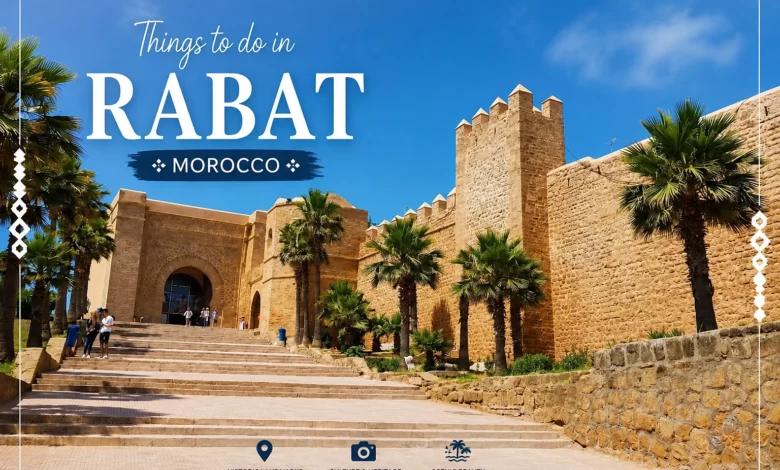
Most itineraries treat Morocco’s capital as a lunch stop on the road between Casablanca and Fes, and that habit quietly robs travellers of one of the country’s most rewarding cities. The best things to do in Rabat Morocco are not crammed into a single square, they are spread across a twelfth century kasbah painted in blue and white, a Roman city swallowed by fig trees and storks, an unfinished minaret that was meant to crown the largest mosque on earth, and an Atlantic corniche where families walk until the light goes orange. Rabat is a UNESCO World Heritage site, yet it still feels like a place where people live rather than a place that performs for visitors.
This Rabat travel guide is built for the traveller who wants substance: what to see, how long each site really takes, what it costs, and how to string it all together. Whether you have a single afternoon or a full weekend, you will find a workable Rabat itinerary below, along with the small practical details that make the difference between rushing and actually enjoying the city.
- Is Rabat worth visiting
- Rabat attractions at a glance
- Kasbah of the Udayas and Café Maure
- Hassan Tower and Mausoleum of Mohammed V
- Chellah Necropolis and Bab Chellah
- Rabat old medina and Rue des Consuls
- Mohammed VI Museum and contemporary art
- Bouregreg Marina and Rabat Marina
- Rabat Beach and the Atlantic corniche
- Rabat Zoo and family things to do
- Free things to do in Rabat
- Hidden gems and unique experiences
- Things to do in Rabat at night
- Rabat in one day
- Rabat weekend itinerary
- How many days and where to stay
- Rabat day trip ideas
- Rabat travel tips
- FAQs
Is Rabat Worth Visiting? ↑ Contents
Short answer: yes, and for reasons that have nothing to do with ticking off monuments. Rabat is the seat of government, home to the royal palace and dozens of embassies, so the city is unusually well kept, green and orderly by North African standards. Wide boulevards, tram lines that actually run on time, and long stretches of public garden give it a rhythm closer to a European capital than to the sensory rush of Marrakech.
Then there is the other half of the city. Behind the ochre ramparts sits a medina that has never been reshaped for tourism, and above the river mouth stands a fortress town that predates almost everything you will see inland. In 2012 UNESCO inscribed Rabat as a modern capital and historic city, recognising exactly this overlap of a twentieth century colonial-era town plan with Almohad and Marinid heritage. That Rabat UNESCO listing is not a marketing line, it is the clearest description of what the city actually is.
Visitors who arrive from Fes or Marrakech usually notice the same thing within an hour: nobody is chasing them. You can browse a rug in Rue des Consuls, decide against it, and walk away with a smile rather than a speech. For travellers who want history without the crowds, Rabat sightseeing is one of the calmest experiences in Morocco.

Rabat Attractions at a Glance ↑ Contents
Before the detail, here is the practical shape of a visit. Times below are realistic walking-pace estimates, not minimum sprint times, and fees are indicative in Moroccan dirham. Rates and hours are reviewed periodically by the Fondation Nationale des Musées, so confirm on the day.
| Attraction | Time needed | Entry fee | Best time of day |
|---|---|---|---|
| Hassan Tower | 45 min | Free | Late afternoon |
| Mausoleum of Mohammed V | 30 min | Free | Late afternoon |
| Kasbah of the Udayas | 2 hours | Free to walk | Morning |
| Andalusian Gardens | 30 min | Free | Morning |
| Café Maure | 45 min | Cost of tea | Late morning |
| Chellah Necropolis | 1.5 hours | Around 70 MAD | Golden hour |
| Rabat old medina | 1 to 2 hours | Free | Mid morning |
| Mohammed VI Museum | 1.5 hours | Low fee, student rate | Any, closed Tuesday |
| Bouregreg Marina | 1 hour | Free | Sunset |
| Rabat Beach and corniche | 1 to 2 hours | Free | Late afternoon |
| Rabat Zoo | 3 to 4 hours | Around 70 MAD | Opening time |
Kasbah of the Udayas: Rabat’s Blue and White Heart ↑ Contents
If you only have time for one of the places to visit in Rabat, make it this one. The Kasbah of the Udayas sits on a cliff where the Bou Regreg river meets the Atlantic, and its walls go back to the twelfth century Almohad period, when the fortress guarded the river mouth against attack from the sea.
You enter through Bab Oudaia, a monumental gate whose carved stone framing is one of the finest surviving pieces of Almohad craftsmanship anywhere in Morocco. Step through it and the scale changes completely. Inside there are no monuments, just lanes barely wide enough for two people, doors in every shade of blue, cats asleep on warm steps, and the occasional flash of the ocean at the end of an alley.

The blue and white lanes
The lower halves of the walls are painted a deep marine blue and the upper halves whitewashed, a habit brought here by Andalusian families who settled in Rabat after the fall of Spain. People compare it to Chefchaouen, but the feeling is different: this is a working neighbourhood of a few hundred residents, not a photo set. Walk slowly, keep your voice down, and ask before photographing a doorway with someone sitting in it.
The Andalusian Gardens
Tucked against the kasbah’s inner wall, the Andalusian Gardens were laid out during the French protectorate in the early twentieth century, following the geometry of Moorish gardens in Spain. Orange trees, bougainvillea, cypress hedges and a few benches in deep shade make this the best free rest stop in the old city. The Oudayas Museum sits on the same grounds inside a seventeenth century palace.
Café Maure
At the far edge of the kasbah, a terrace steps down toward the water and becomes Café Maure, one of the most loved addresses in the capital. There is no menu worth studying: you order mint tea and a plate of almond pastries, then find a seat on the blue and white tiling facing the river. Across the water you can see Salé, and below you the fishing boats crossing back and forth. Locals treat it as an institution, and it costs almost nothing. If someone asks what to do in Rabat on a first morning, this is the honest answer.
Local note: the kasbah has two entrances. Most people climb the monumental ramp to Bab Oudaia, but the small gate near the Andalusian Gardens is far quieter, and it lets you finish the visit at Café Maure rather than start there.
Hassan Tower and the Mausoleum of Mohammed V ↑ Contents
The Hassan Tower is the image most people carry away from the city, and its story is one of ambition cut short. Sultan Yacoub al Mansour began the mosque in 1195 with the intention of building the largest in the Muslim world. When he died four years later the work stopped at once. The minaret reached about 44 metres of a planned 86, and the prayer hall was never roofed.
What remains is strangely powerful: a red sandstone tower standing over a field of 348 truncated columns, each one marking where an arcade should have been. There is no ticket office and no barrier. People wander among the columns at their own pace, and royal guards on horseback keep watch at the perimeter.

At the opposite end of the esplanade stands the Mausoleum of Mohammed V, completed in 1971 and holding the tombs of the late king and his two sons, Hassan II and Prince Abdallah. The exterior is white marble under a green tiled roof. The interior is where it becomes remarkable: carved cedar ceilings, hand cut zellij, a domed hall of stucco worked to look like lace, and a reader of the Quran seated permanently beside the tomb. Visitors of all faiths are welcome to look down into the chamber from the raised gallery. Dress modestly, cover shoulders and knees, and keep quiet inside.
Chellah Necropolis and Bab Chellah ↑ Contents
Chellah is the site that surprises people. About two kilometres from the centre, on a slope above the Bou Regreg valley, sits a walled enclosure holding two civilisations stacked on top of each other. The Romans built a town here called Sala Colonia, with a forum, a triumphal arch and a paved decumanus that you can still walk along. Twelve centuries later the Marinid sultans turned the abandoned site into a royal necropolis, adding a mosque, a minaret and the tombs of the Black Sultan Abu al Hassan and his wife Shams al Duha.
You enter through Bab Chellah, a fourteenth century Marinid gate with octagonal flanking towers and a bent entrance passage designed so attackers could never charge straight through. The stone carving around the arch is worth a few minutes on its own before you step inside.

What no photograph prepares you for is the storks. Dozens of them nest on the minaret and the broken walls, clattering their bills all afternoon, and the gardens below have gone half wild with fig trees, bananas and datura. There is a small pool near the sanctuary where locals still leave offerings, an eel pond wrapped in old superstition. Entry is around 70 MAD, an audio guide is available for a little more, and the site closes in the late afternoon, so aim to arrive by four in high season if you want the golden light without rushing.
Rabat Old Medina and Rue des Consuls ↑ Contents
The Rabat old medina was largely built by Andalusian refugees in the seventeenth century, which is why its layout is looser and more rectilinear than the tangle of Fes. It is also the least commercial medina among Morocco’s big cities. Most shops here serve residents: fabric, spices, coriander by the bunch, plastic buckets, school notebooks, olives in mountains of green and violet.
Rue des Consuls is the exception and the highlight. Named for the foreign consuls once required to live along it, the street is the traditional home of Rabat’s rug trade. Carpets from the Middle Atlas and Zemmour region hang in long galleries, brassware is hammered in open workshops, and the Monday and Thursday morning rug auctions still bring dealers in from the countryside. Prices are noticeably lower than in Marrakech and the negotiation is gentler, which for many travellers makes this the best place in the country to buy one good piece.

Walk the length of the medina and you come out at Bab el Had or at the Souika, the main food street, where a bowl of harira or a grilled sardine sandwich costs a few dirham. The medina joins the kasbah at its northern end, so the two work perfectly as one continuous morning.
Mohammed VI Museum and Rabat’s Art Scene ↑ Contents
Opened in October 2014 on Avenue Moulay Hassan, the Mohammed VI Museum of Modern and Contemporary Art was the first major museum built in Morocco since independence and the first dedicated entirely to modern work. The building itself borrows from Andalusian architecture, with a white façade and paired arches, and the collection covers a century of Moroccan creation, from Hassan El Glaoui and Mohamed Kacimi to younger names working in photography and installation.
It is a manageable museum, an hour and a half is plenty, and the temporary exhibitions are often the strongest part of the programme, with international loans that regularly bring twentieth century European masters to Rabat. Labels are in Arabic, French and English. It closes on Tuesdays and the ticket is inexpensive, with a reduced student rate.

Rabat’s contemporary art scene extends past that one address. Villa des Arts, in a restored Art Deco villa near the parliament, shows rotating contemporary exhibitions and charges nothing to enter. The Museum of History and Civilisations holds the archaeology of the country, including bronzes recovered from Volubilis. And the Grand Théâtre de Rabat on the Bouregreg, designed by Zaha Hadid Architects, has turned the riverbank into a genuine cultural district.
Bouregreg Marina and Rabat Marina ↑ Contents
The Bou Regreg valley between Rabat and Salé has been redeveloped over the past two decades, and the result is the part of the city that locals themselves use most in the evening. Bouregreg Marina holds moorings for several hundred boats, with promenades, cafés and restaurants along the water and views back toward the kasbah walls glowing in the last of the sun.
Rabat Marina, the wider waterfront district around it, adds landscaped walkways, the sculptural silhouette of the Grand Théâtre and the Mohammed VI Tower rising on the Salé bank, now the tallest building in Africa. It is a strange and pleasant contrast: a twelfth century fortress on one side of the river, a twenty first century skyline on the other.

The best way to cross between the two banks is also the oldest. Small blue rowing boats still ferry passengers from the beach below the kasbah to Salé for a handful of coins, a two minute crossing that has not changed in generations. On the Salé side, the Grand Mosque and the Medersa Abu al Hassan, with its carved cedar and zellij courtyard, see a fraction of the visitors they deserve.
Rabat Beach and the Atlantic Corniche ↑ Contents
Rabat Beach lies directly beneath the kasbah walls, a wide crescent of sand at the river mouth where the city goes to breathe. It is not a resort beach, and that is precisely the appeal. On a summer evening you will find football matches marked out with sandals, surf schools taking beginners into the whitewater, groups of friends with a thermos of tea, and swimmers ignoring the Atlantic chill.
The corniche running south from the beach is a proper promenade, popular for jogging and for the long slow walk that Moroccans call a stroll rather than exercise. Further along, the coastline continues toward the Temara beaches, where the water is cleaner and the sand emptier, roughly fifteen to twenty minutes by taxi from the centre.

A word of caution that locals will give you freely: the currents at the river mouth are strong and the water is cold most of the year. Swim where others are swimming, and treat the Atlantic here with respect.
Rabat Zoo and Family Things to Do in Rabat ↑ Contents
Families travelling with children have an easier time in Rabat than almost anywhere else in Morocco, mostly because the city has space, parks and short distances. The clear headline is Rabat Zoo, officially the Jardin Zoologique de Rabat, set in the Green Belt on the southern edge of the city.
It is a genuinely modern zoo, rebuilt around five biozones representing the Atlas mountains, the desert, the savannah, the wetlands and the tropical forest, and home to roughly 130 species. The star residents are the Atlas lions, a subspecies extinct in the wild whose surviving bloodline descends from the royal collection. Giraffe feeding sessions run at fixed times, there is a vivarium for a small extra fee, and the site is stroller and wheelchair friendly. Adult entry sits around 70 MAD, with family and group combinations that bring the price down. Opening is at 10:00, closing at 17:30 from March to October and 16:30 from November to February.

Other family friendly options
- The Exploration Museum and the science displays at the zoo’s reception village, useful on a hot afternoon.
- The small boat crossing to Salé, which children reliably enjoy more than any monument.
- Hilton Garden and the Ibn Sina gardens for open lawns and shade.
- The tram itself, which children treat as an attraction and which reaches most sights on a single ticket.
Free Things to Do in Rabat ↑ Contents
One of the quiet advantages of the capital is how much of it costs nothing. A full and satisfying day of Rabat sightseeing can be assembled without buying a single ticket.
- Hassan Tower and the Mausoleum of Mohammed V, both open to the public at no charge.
- The Kasbah of the Udayas, its blue lanes, its ramparts and the platform overlooking the ocean.
- The Andalusian Gardens beside the kasbah.
- The full length of the old medina, including Rue des Consuls.
- Rabat Beach, the corniche and the marina promenades.
- Villa des Arts, free entry to contemporary exhibitions.
- The exterior of the Royal Palace complex, Dar al Makhzen, viewed from the mechouar.
- Bab el Had, Bab Rouah and the Almohad ramparts that ring the old town.
Worth knowing: a self guided Rabat walking tour linking the medina, the kasbah, Café Maure and the beach takes about three hours at a comfortable pace and costs no more than a pot of mint tea.
Hidden Gems and Unique Things to Do in Rabat ↑ Contents
Once the headline sights are done, the city rewards curiosity. These are the corners that regular visitors return for.
- The rowing boat to Salé. Blue skiffs, wooden oars, a fixed fare of a few dirham, and the best low angle view of the kasbah cliff you will get.
- Medersa Abu al Hassan in Salé. A fourteenth century Marinid school with carved cedar, stucco and zellij on every surface, almost always empty.
- Bab Rouah. A monumental Almohad gate now used as an exhibition space, with stone carving that rivals Bab Oudaia.
- The Sunday morning flea market at Bab el Had. Old radios, Berber jewellery, colonial era postcards and a great deal of junk.
- Le Dhow. A converted wooden boat moored at the marina, worth a coffee on deck.
- Jardin d’Essais Botaniques. A century old botanical garden near Agdal, restored and almost entirely local.
- Oudayas Museum. Moroccan jewellery, manuscripts and textiles inside a seventeenth century palace within the kasbah.
Things to Do in Rabat at Night ↑ Contents
Rabat’s evenings are gentle rather than loud, which suits the city. The Hassan Tower esplanade is lit after dark and the mausoleum’s white marble takes the light beautifully, so an after dinner walk there is worth building in. The marina and the corniche fill up with families around sunset, and the terraces facing the river stay busy until late.
For something more programmed, check what is on at the Grand Théâtre de Rabat, which hosts concerts, dance and Moroccan and international theatre. Avenue Mohammed V in the Ville Nouvelle, lined with Art Deco façades from the protectorate era, is pleasant at night, and the cafés around Place Pietri and in Agdal serve until midnight or later. Romantic things to do in Rabat come down to the same short list every time: a table at the marina, the rampart walk above the ocean at dusk, or mint tea at Café Maure just as the call to prayer crosses the water from Salé.

Rabat in One Day ↑ Contents
If you only have twenty four hours, this sequence covers what to see in Rabat in one day without a single wasted taxi ride. Everything below is either walkable or one short hop apart.
| Time | Stop | Why it works here |
|---|---|---|
| 08:30 | Old medina and Rue des Consuls | Shops open, locals shopping, no crowds |
| 10:00 | Kasbah of the Udayas | Best light on the blue lanes before midday |
| 11:15 | Andalusian Gardens | Shade and a natural pause |
| 11:45 | Café Maure | Mint tea over the river mouth |
| 13:00 | Lunch in the Ville Nouvelle | Short walk or two tram stops |
| 14:30 | Mohammed VI Museum | Indoors during the hottest hours |
| 16:00 | Chellah Necropolis | Golden light, storks most active |
| 17:45 | Hassan Tower and Mausoleum | Sunset on red sandstone |
| 19:00 | Bouregreg Marina | Dinner facing the illuminated kasbah |
Rabat Weekend Itinerary ↑ Contents
Two days is the sweet spot. Day one follows the plan above. Day two opens the city up.
- Morning. Cross to Salé by rowing boat, visit the Medersa Abu al Hassan and the Grand Mosque, then walk back through Salé’s medina.
- Late morning. Villa des Arts or the Museum of History and Civilisations, depending on your taste.
- Afternoon. Rabat Beach and the corniche, or Rabat Zoo if you are travelling with children, which needs a solid half day.
- Evening. Avenue Mohammed V for the Art Deco architecture, then dinner around Place Pietri or Agdal.
How Many Days in Rabat and Where to Stay ↑ Contents
The honest answer to how many days in Rabat depends on your route. One day covers the monuments. Two days lets you include Salé, the beach and a museum without watching the clock. Three days makes sense only if you plan to use the capital as a base for day trips, which it does very well.
| Area | Character | Best for |
|---|---|---|
| Medina and kasbah | Riads behind old walls, narrow lanes, no car access | Atmosphere and first time visitors |
| Hassan and Ville Nouvelle | Art Deco streets, tram, walkable to the tower | Short stays and rail arrivals |
| Agdal | Modern, residential, cafés and restaurants | Longer stays and nightlife |
| Bouregreg waterfront | New build, river views, marina restaurants | Evening atmosphere and families |
| Souissi | Green, embassy district, quiet and spread out | Travellers with a car |
Rabat Ville station sits in the middle of the Ville Nouvelle, so if you arrive by train and plan a short Rabat vacation, staying within a ten minute walk of it removes almost all transport friction.
Rabat Day Trip Ideas ↑ Contents
Morocco’s rail network is at its strongest along this coast, which makes a Rabat day trip unusually easy. Trains leave several times an hour in each direction and the high speed Al Boraq line connects north in a fraction of the old travel time.
| Destination | Travel time | Highlight |
|---|---|---|
| Salé | 10 min | Medersa Abu al Hassan, medina, potters’ quarter |
| Casablanca | 1 hour by train | Hassan II Mosque and Art Deco centre |
| Meknes | 2 hours by train | Bab Mansour and the imperial granaries |
| Volubilis | 2.5 hours | Roman mosaics and the best ruins in Morocco |
| Moulay Idriss Zerhoun | 2.5 hours | Hillside holy town, usually paired with Volubilis |
| Kenitra and Mehdia | 40 min | Beach, lagoon and the Sidi Bouknadel gardens |
| Fes | 2.5 hours by train | Long day, better as an overnight |
Rabat Travel Tips ↑ Contents
Getting around
The tram is the backbone of the city, two lines linking Rabat and Salé across the Hassan II bridge, clean, cheap and simple to use. Buy a ticket at the platform machine and validate it on board. Petit taxis are blue, metered and inexpensive for short hops, though you may need to remind the driver to run the meter. Grand taxis, usually white, handle longer runs such as Temara or Kenitra. Most of the historic core is walkable, and the medina to kasbah stretch has to be done on foot anyway.
When to visit
| Season | Conditions | Verdict |
|---|---|---|
| March to May | Mild, green, storks nesting at Chellah | Best overall |
| June to August | Warm but cooled by ocean wind, busy beaches | Good, book ahead |
| September to November | Warm sea, clear light, fewer visitors | Excellent |
| December to February | Mild days, rain spells, short museum hours | Quiet and inexpensive |
Practical details
- Currency. The dirham is a closed currency. Withdraw from ATMs on arrival and keep small notes for taxis, tea and the boat crossing.
- Language. Arabic and Amazigh are official, French is used everywhere in business and signage, and English is common among younger people.
- Dress. Rabat is relaxed by Moroccan standards, but cover shoulders and knees at the mausoleum and in the medina.
- Friday. Midday prayer slows the city and many small shops close for a couple of hours. Plan monuments rather than shopping.
- Ramadan. Cafés open late and evenings become lively after sunset. Museum hours shift, so check the same week.
- Photography. Ask before photographing people, and avoid pointing a camera at the royal palace or its guards.
FAQs About Things to Do in Rabat Morocco ↑ Contents
How many days do you need in Rabat?
Two days is ideal. One full day covers the Kasbah of the Udayas, the medina, Hassan Tower, the Mausoleum of Mohammed V and Chellah. A second day adds Salé, a museum, the beach or the zoo, and gives you time to sit still somewhere, which is half the point of Rabat.
Is Rabat worth visiting compared to Marrakech or Fes?
It offers something the other two do not: heritage without pressure. The monuments are major, the medina is authentic and unhurried, and the coastal setting keeps the temperature down. Many travellers find Rabat the easiest introduction to Morocco precisely because nobody is competing for their attention.
What are the best free things to do in Rabat?
Hassan Tower, the Mausoleum of Mohammed V, the Kasbah of the Udayas, the Andalusian Gardens, the old medina, Rabat Beach, the marina promenades and the exhibitions at Villa des Arts are all free. Only Chellah, the museums and the zoo charge admission.
Is the Kasbah of the Udayas free to enter?
Yes. Walking through the gates, the blue and white lanes, the ramparts and the ocean platform costs nothing. The Andalusian Gardens are also free. Only the Oudayas Museum inside the walls has a ticket, and Café Maure charges the price of the tea.
How much does Chellah cost and when does it close?
Entry is around 70 MAD for foreign visitors, with reduced rates for Moroccan residents and free admission for young children. The site opens in the morning and closes in the late afternoon, with earlier closing in winter, so arrive at least ninety minutes before closing time.
What can I see in Rabat in one day?
A realistic one day plan is the medina and Rue des Consuls in the early morning, the Kasbah of the Udayas and Café Maure late morning, lunch in the Ville Nouvelle, Chellah in the afternoon light, then Hassan Tower and the mausoleum at sunset, finishing at the marina.
Are there good things to do in Rabat at night?
Evenings are calm rather than clubby. The illuminated Hassan esplanade, the marina and corniche terraces, performances at the Grand Théâtre de Rabat and the Art Deco stretch of Avenue Mohammed V are the reliable options, with cafés in Agdal open late.
Is Rabat a good base for day trips?
It is one of the best in Morocco. Salé is ten minutes away, Casablanca about an hour by train, and Meknes, Volubilis and Kenitra are all comfortable returns within a day thanks to frequent rail service.
What is the best way to get around Rabat?
The tram covers most of the sights and crosses to Salé, petit taxis are cheap for short journeys, and the historic core between the medina, the kasbah and the beach is best walked. A Rabat walking tour of that stretch takes about three hours.
Can I visit Rabat Zoo with young children?
Yes, and it is one of the better family things to do in Rabat. The site is designed around five habitats, entry is around 70 MAD for adults with family rates available, strollers and wheelchairs are accommodated, and three to four hours covers it comfortably.