Morocco packing list: What to pack for every season (2026 guide)
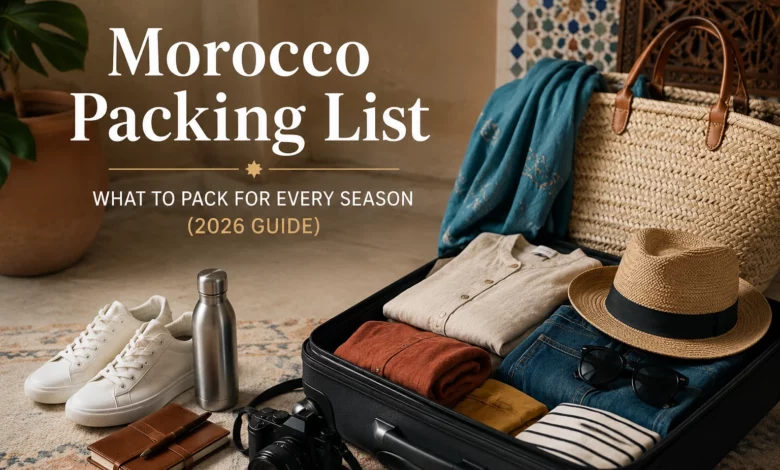
Morocco has a habit of surprising travelers who pack for just one climate. In a single week you might trade sandals for wool socks, sunscreen for a scarf against the wind, and a light cotton shirt for a warm fleece once the desert sun drops behind the dunes. A good Morocco packing list is less about cramming in extra clothes and more about understanding how sharply the country’s weather, terrain, and culture shift between the coast, the Atlas Mountains, and the Sahara. This Morocco travel guide breaks down exactly what to pack for Morocco in every season of 2026, so you arrive prepared instead of improvising in a souk.
Morocco Packing List at a Glance
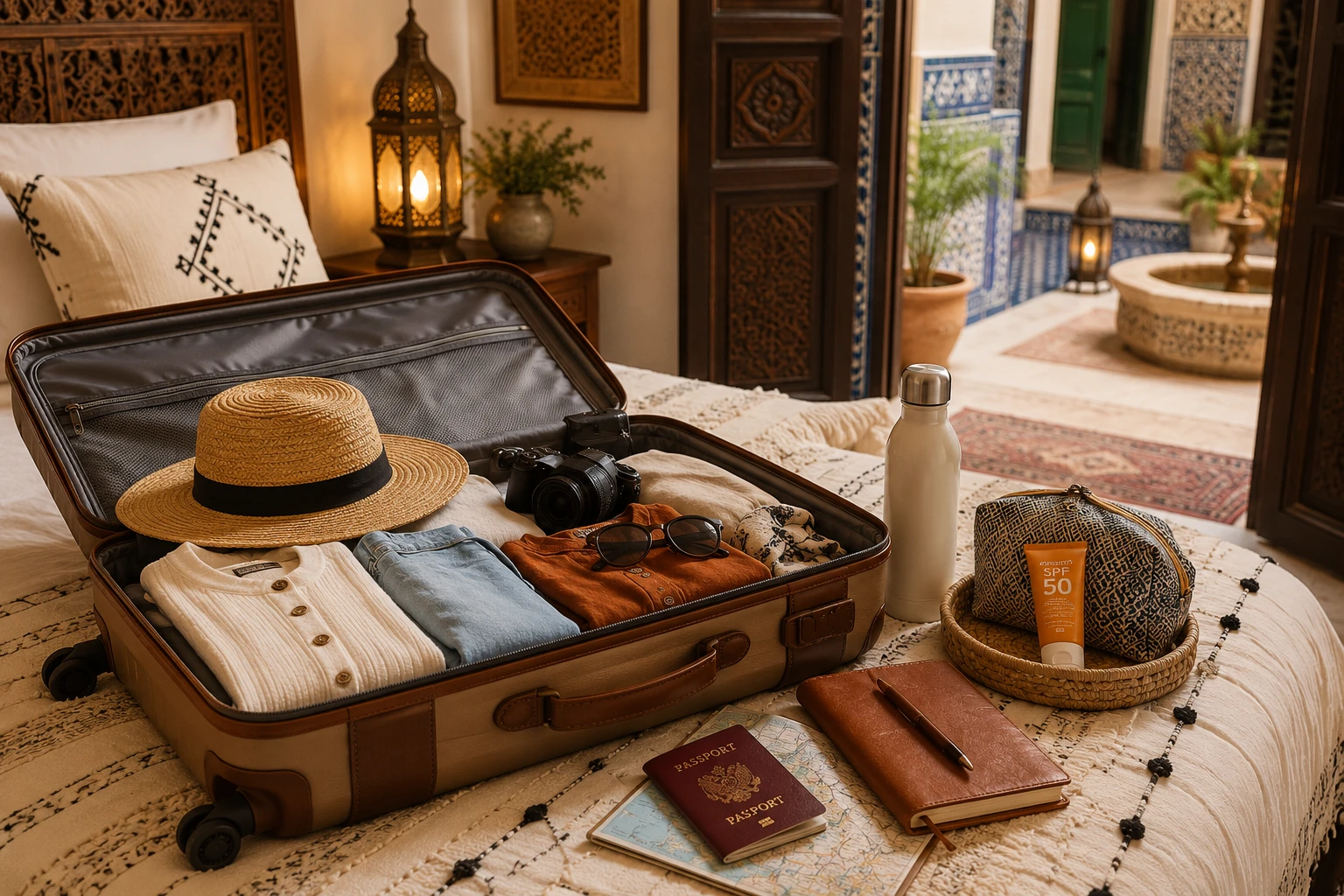
- Lightweight, breathable clothing plus one proper warm layer, whatever the season
- Modest coverage for shoulders and knees outside resort areas
- Comfortable, closed-toe walking shoes for uneven medina streets
- A scarf or shawl for sun, dust, and modesty
- Sun hat, sunglasses, and high-SPF sunscreen
- A universal plug adapter (Type C or E) and a power bank
- Basic first aid pouch and any personal medication
- Cash in dirhams, plus digital and paper copies of your documents
Keep reading for the full breakdown by season, by region, and by activity, including everything you need for a Sahara desert tour.
In This Guide
- Morocco Travel Essentials Checklist
- Morocco Weather by Season
- What to Pack for Summer
- What to Pack for Autumn
- What to Pack for Winter
- What to Pack for Spring
- What to Wear in Morocco
- Best Shoes for Morocco
- Sahara Desert Packing List
- Travel Electronics and Accessories
- First Aid and Health Essentials
- Packing Dos and Don’ts
- The Ultimate Packing Checklist
- Frequently Asked Questions
- Final Thoughts
Morocco Travel Essentials Checklist: What to Pack Before Anything Else
Whether this is a quick city break or a full two-week loop, a solid Morocco vacation packing list starts with the items that never change from one season to the next: your documents, your money, and the basics that keep you comfortable no matter where the day takes you. Think of this section as the foundation of your Morocco trip checklist, the layer everything else in this guide builds on.
Documents, Money, and Safety Copies
- Passport with at least six months of validity remaining
- Printed or offline copies of riad and hotel confirmations, since wifi in the medina and the desert can be patchy
- Travel insurance details and the emergency contact number
- A primary card plus a backup card, kept in separate bags
- Cash in Moroccan dirhams, ideally small notes for souks, taxis, and tipping
- A photo or scan of your passport stored somewhere other than your phone
Toiletries and Personal Care
- Toothbrush, travel-size toiletries, and a small quick-dry towel
- A hammam cloth or exfoliating glove if a traditional bathhouse is on the itinerary
- Hand sanitizer and tissues, since public restrooms often skip the paper
- Lip balm with SPF and a rich moisturizer, since inland and desert air dries out skin fast
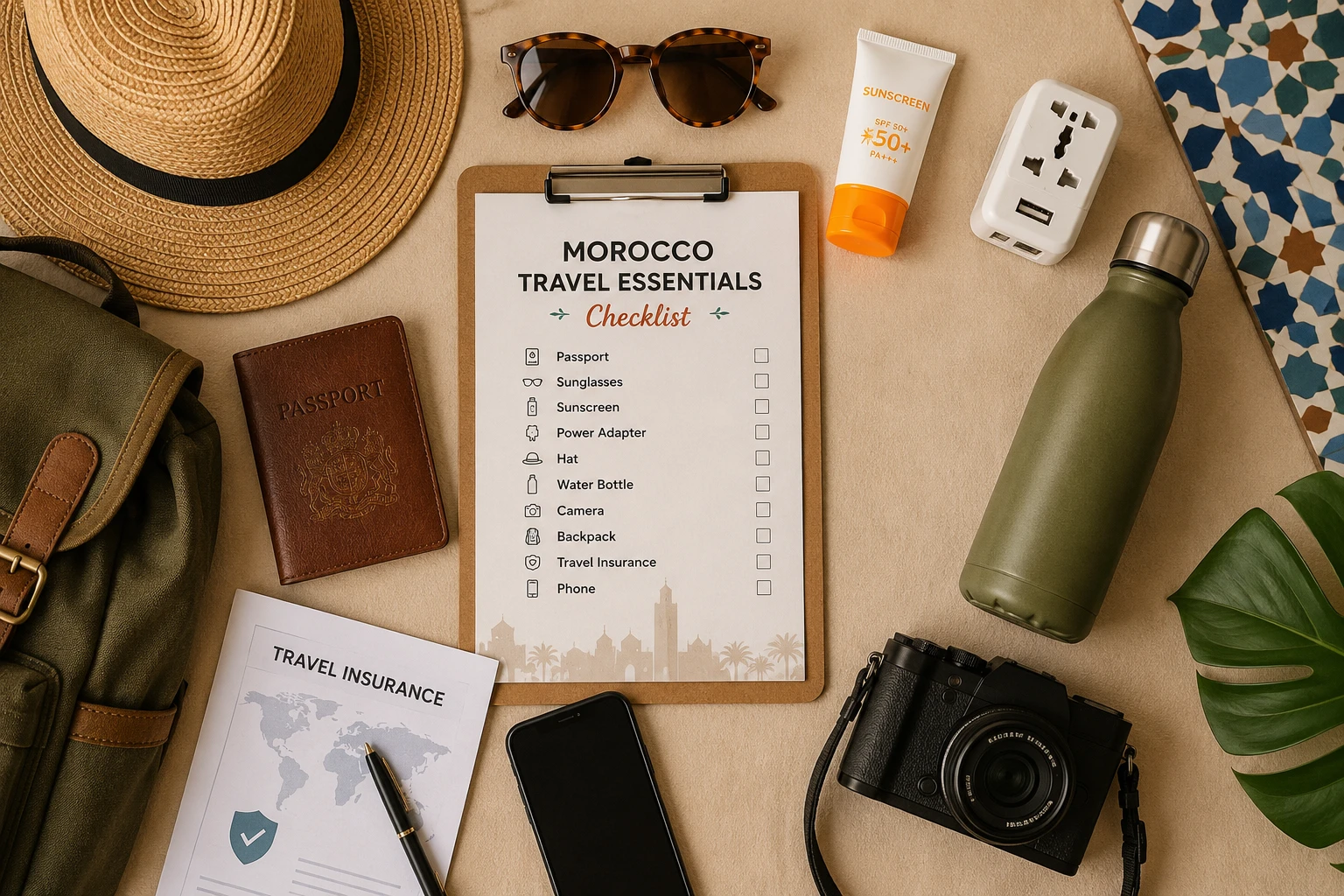
Keep a digital copy of every document in an email draft or a cloud folder you can open offline, and travel with a small stash of dirhams from day one. ATMs thin out fast once you leave the bigger cities, and small transactions like parking, tipping a rug seller who let you look without buying, or a bathroom fee run entirely on cash.
Morocco Weather by Season: What to Expect Before You Pack
Morocco’s geography does a lot of the work here. The Atlantic coast stays mild for most of the year, inland cities like Marrakech and Fes run hot and dry in summer with a real chill in winter, the Atlas Mountains see snow at altitude, and the Sahara swings between blazing days and cold nights almost year round. Morocco weather packing really comes down to knowing which of these zones you’ll actually be in, and often you’ll pass through more than one on the same trip.
| Region | Summer (Jun-Aug) | Winter (Dec-Feb) | Packing focus |
|---|---|---|---|
| Marrakech, Fes, Meknes (inland cities) | Often 35 to 40°C by day | Around 17 to 20°C by day, 5 to 8°C at night | Breathable fabrics in summer, a warm layer for winter evenings |
| Casablanca, Essaouira, Tangier (Atlantic coast) | Mild, often 22 to 26°C with a strong sea breeze | Around 12 to 17°C, damp mornings | A windbreaker earns its keep in any season here |
| Atlas Mountains | Warm days, cool nights | Snow likely at altitude | Proper insulated layers for winter treks |
| Sahara Desert (Merzouga, Zagora) | 40°C plus by day, still mild after dark | Pleasant by day, near or below freezing at night | One warm layer, every single season |
Best Time to Visit Morocco
Spring (March to May) and autumn (September to November) are generally considered the easiest window, with mild temperatures across most regions and comfortable conditions for both city walking and desert excursions. Summer suits the coast far better than the interior, and winter is wonderful for avoiding crowds and heat as long as you pack for genuinely cold nights, especially in the desert and the mountains, and inside unheated riads.

What to Pack for Morocco in Summer (June to August)
Inland cities like Marrakech, Fes, and Ouarzazate run genuinely hot in summer, often into the high thirties or beyond by mid-afternoon. The coast tells a different story, with Essaouira and Tangier staying noticeably cooler thanks to the Atlantic breeze, and the desert turning into an oven by day.
- Loose, breathable clothing in natural fabrics like cotton or linen, favoring long, light layers over anything skin-tight
- A wide-brim hat or cap and UV-rated sunglasses
- High-SPF sunscreen, reapplied more often than feels necessary
- A light scarf for sun and dust protection
- Swimwear for riad pools or the coast, with a cover-up for moving between the pool and the street
- Breathable closed shoes for daytime medina walking, since pavement and sand both get uncomfortably hot underfoot
- One packable warm layer, even in the height of summer
Assuming summer means no warm layer is needed anywhere in the country. Coastal cities can stay genuinely warm at night in July and August, but the desert tells a different story once the sun drops. Even on a midsummer overnight in Merzouga, the temperature swing after dark is real enough to notice.
What to Pack for Morocco in Autumn (September to November)
Autumn is one of the easiest seasons to pack for. Days stay warm through September before cooling steadily, hiking conditions in the Atlas foothills are excellent, and the first rains of the year tend to arrive later in November.
- A wardrobe built around light layers rather than a single heavy jacket
- A packable fleece or light jacket for cooler evenings
- A light rain layer or compact umbrella for late-season showers
- Sunscreen still matters, even as temperatures ease
- Comfortable walking shoes with decent grip for cobblestones that turn slick if it rains
What to Pack for Morocco in Winter (December to February)
If you’re wondering whether you need warm clothes in Morocco during winter, the answer is a clear yes. Coastal cities hover around a mild 15 to 20°C by day, but mornings and evenings turn damp and cool, and traditional riads, with their thick stone walls and open courtyards, are rarely heated the way a Western hotel room would be.
In the Atlas Mountains, snow is common at altitude, and any serious trekking in this range calls for proper mountain gear well beyond a standard packing list. In the Sahara, days stay pleasant, often around 18 to 20°C, but nights can drop close to or below freezing.
- A warm sweater or fleece, plus an insulated jacket for evenings
- Warm sleepwear, since indoor spaces stay cooler than expected
- Wool socks and closed, warm shoes
- A scarf, gloves, and a beanie for desert or mountain excursions
- A thermal base layer if an overnight desert camp or a mountain outing is planned
Even comfortable riads rarely offer more than a small space heater on request, so pack for indoor cold as much as outdoor weather. A warm layer for lounging in the evening after a day of sightseeing makes a real difference to how the trip actually feels.
What to Pack for Morocco in Spring (March to May)
Spring runs close to autumn in terms of packing, with mild days, blossoming almond and orange trees in parts of the country, and some of the best conditions of the year for hiking before the summer heat sets in.
- Versatile layers that work from a cool March morning to a warm May afternoon
- A light rain jacket for early spring showers
- Lighter, summer-weight clothing to bring out as the season progresses
- Sunscreen and a hat, since UV exposure climbs quickly through these months
What to Wear in Morocco: Clothing and Dress Code Tips
Morocco is a Muslim-majority country with a generally relaxed, welcoming attitude toward visitors, and these Morocco clothing tips reflect what actually works day to day rather than any strict rulebook. Modest dress is appreciated outside beach resorts and hotel pools, particularly in souks, smaller towns, and around religious sites, and packing the right Morocco travel clothes really comes down to breathable fabric and easy layering.
Can You Wear Shorts in Morocco?
Shorts are perfectly fine in beach towns, resort areas, and modern city districts like Gueliz in Marrakech. In medinas, rural villages, and around religious sites, knee-length or longer is the safer choice, particularly for women. If this is your first time in Morocco, knee-length shorts make an easy middle ground that works almost everywhere.
Morocco Packing List for Women
- Loose midi or maxi dresses, or wide, breathable trousers
- Tops that cover the shoulders, with a light cardigan that doubles for sun, air conditioning, and religious sites
- A scarf for sun protection, dust, or covering your hair where it feels appropriate
- Swimwear for pools and private beach clubs, with a touch more coverage for public beaches and the medina
Morocco Packing List for Men
- Lightweight trousers, plus knee-length shorts for warmer days
- A collared shirt or two for nicer riads and restaurants
- Swim shorts for pools and coastal towns
- A light jacket for cooler evenings
Pack It or Buy It in Morocco?
| Item | Recommendation |
|---|---|
| Scarves and shawls | Buy locally, the selection and prices in the souks are hard to beat |
| Babouche slippers | Buy locally as a souvenir that also earns its keep at home |
| Djellaba or kaftan | Buy locally if it appeals, fit and fabric are easier to judge in person |
| Quality walking shoes | Bring from home, fit matters too much to leave to chance |
| Swimwear | Bring from home |
| Basic toiletries | Bring travel-size from home, pharmacies in cities work well for restocking |
Bargaining is part of the experience in most souks, and it tends to go more smoothly when you dress comfortably but respectfully. Shopkeepers generally respond well to visitors who take the culture seriously without overthinking it.
Best Shoes for Morocco: What Shoes to Bring
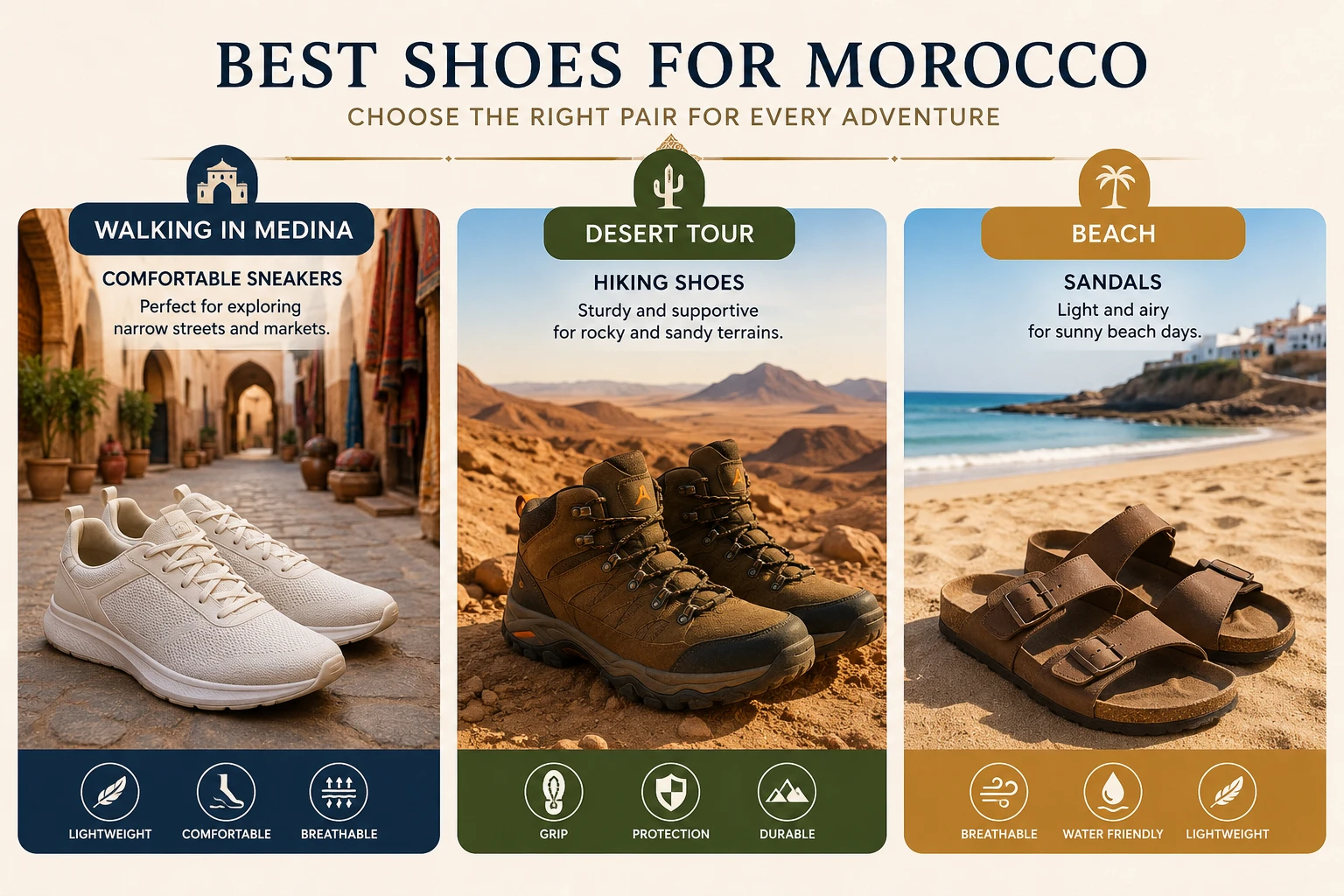
Few destinations put footwear through as many different tests in one trip. Uneven cobblestones and steep medina stairways, soft sand dunes, mountain trails, and polished riad floors all call for something slightly different, so one pair rarely covers everything.
| Shoe type | Best for | Notes |
|---|---|---|
| Comfortable closed sneakers or walking shoes | Medina exploring, everyday city walking | A grippy sole handles uneven cobblestones and steps well |
| Sandals with a back strap | Warm coastal towns, riad courtyards, hammam visits | Skip flip-flops for any serious walking |
| Sturdy trail shoes or light hiking boots | Atlas Mountains, Sahara dunes, desert camps | Ankle support helps on both sand and loose rock |
| Slip-on shoes | Riads and mosque visits open to the public, like the Hassan II Mosque | Quick on and off where footwear comes off indoors |
| Water shoes | Rocky beaches in Essaouira or Taghazout | Protects feet where the shoreline isn’t sandy |
Sahara Desert Packing List: What to Pack for a Morocco Desert Tour
Overnight desert tours to Merzouga or Zagora are a highlight for most visitors, but the desert plays by its own rules. Blazing sun by day, biting cold by night, and fine sand that finds its way into everything. Knowing what to wear in the Sahara Desert really comes down to layering for a temperature swing that can exceed 20°C between midday and midnight, and this Morocco desert packing list covers the details that make the difference between an uncomfortable night and a memorable one.
- Long-sleeve, breathable layers for midday sun
- A warm fleece or light down layer for after sunset, in every season
- A long scarf or shesh-style wrap for sun, wind, and sandstorm protection
- Closed shoes rather than sandals, since sand runs hot by day and cold by night
- A headlamp or small flashlight for camps with limited lighting after generator hours
- Wet wipes and travel-size toiletries, since running water can be limited
- A dust-proof pouch or ziplock bag for your phone or camera
- A reusable water bottle
- Personal medication and a basic first aid pouch
- A fully charged power bank
- A small daypack for the camel trek, with main luggage left at the hotel or riad
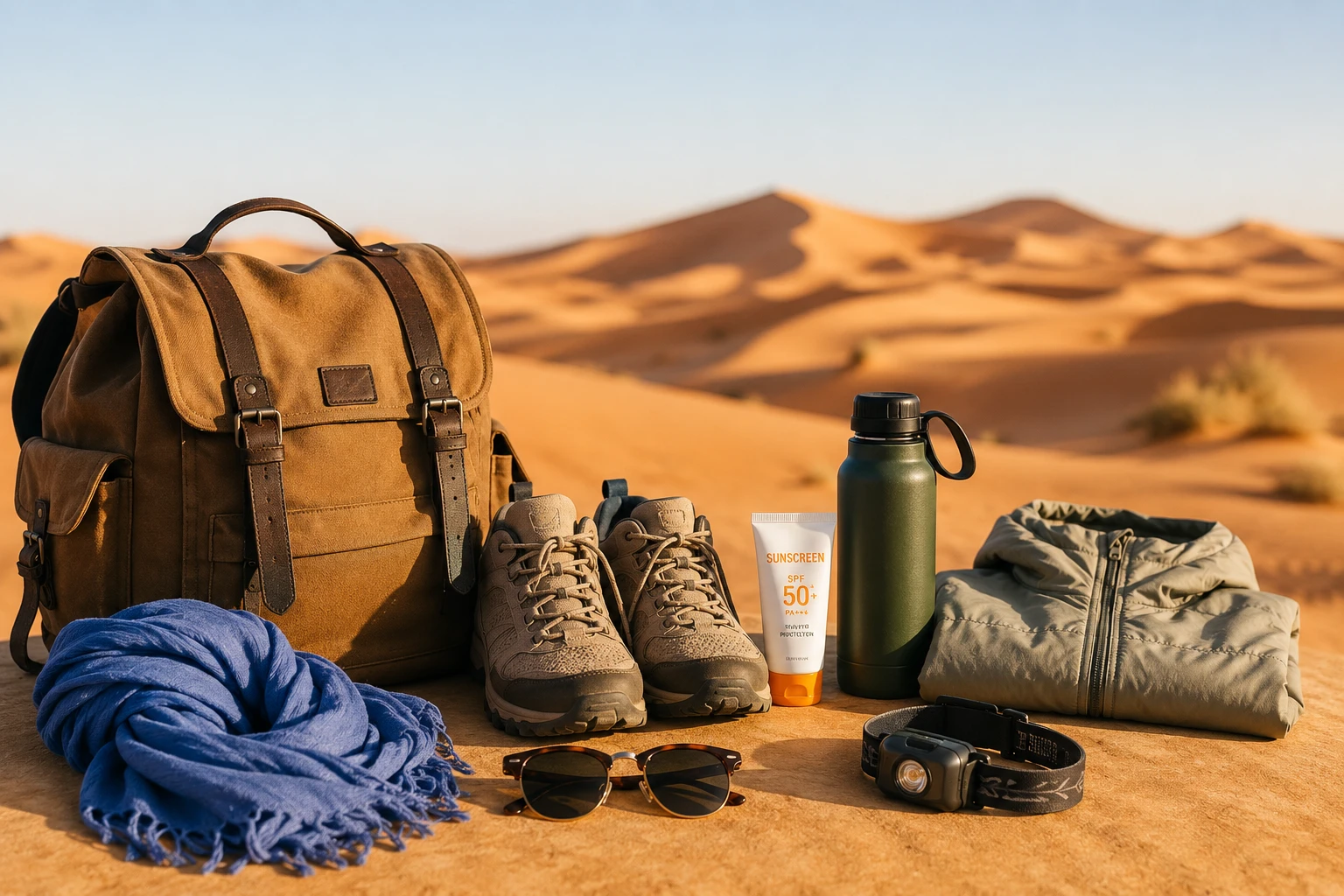
Pack a warm layer even for a July desert overnight. Once the sun drops behind the dunes, the temperature falls fast, and camp evenings can feel closer to autumn than midsummer.
Morocco Travel Electronics and Accessories
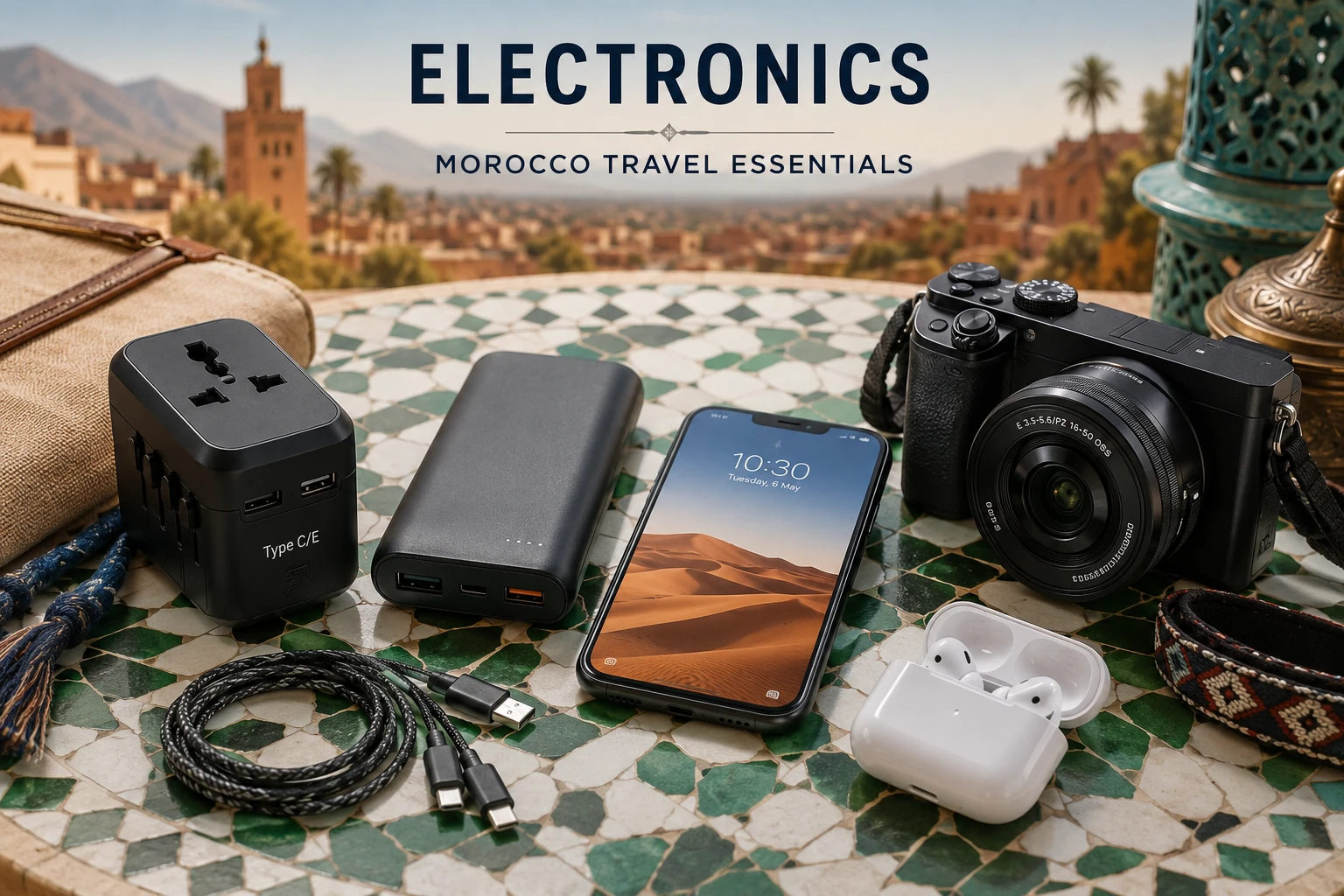
Morocco runs on Type C and Type E sockets, the two round-pin plugs common across continental Europe, at 220 to 230 volts. These Morocco travel accessories cover the gear that keeps a trip running smoothly once the sightseeing starts.
| Item | Why you need it | Note |
|---|---|---|
| Plug adapter (Type C or E) | Morocco uses two round-pin European-style sockets | Most phone and laptop chargers handle 220V automatically, but 110V-only appliances need a voltage converter, not just an adapter |
| Power bank | Outlets can be limited in desert camps and rural guesthouses | Bring one from home, or pick up a reliable Powerbank Morocco option locally before heading into the desert |
| Local SIM or eSIM | Affordable and easy to arrange at the airport | Coverage can thin out in remote desert or mountain stretches |
| Dust-resistant phone pouch | Fine desert sand gets everywhere on dune excursions | |
| Compact padlock | Useful for riad lockers or overnight bus luggage |
Morocco Travel First Aid Kit and Health Essentials
This section covers general packing guidance rather than medical advice. Speak with a doctor or a travel clinic before your trip for recommendations suited to your own health and for any vaccinations worth considering.
- Personal prescription medication in its original packaging, plus a copy of the prescription
- General over-the-counter items for common travel discomfort, such as an upset stomach, a headache, or motion sickness, ideally chosen with a pharmacist’s advice before you leave
- Rehydration sachets, genuinely useful in desert heat
- High-SPF sunscreen, reapplied often
- A mild insect repellent, more relevant near water or in the evening
- Blister plasters, since medina walking covers a lot of uneven ground
- Hand sanitizer and tissues
- Travel insurance documents
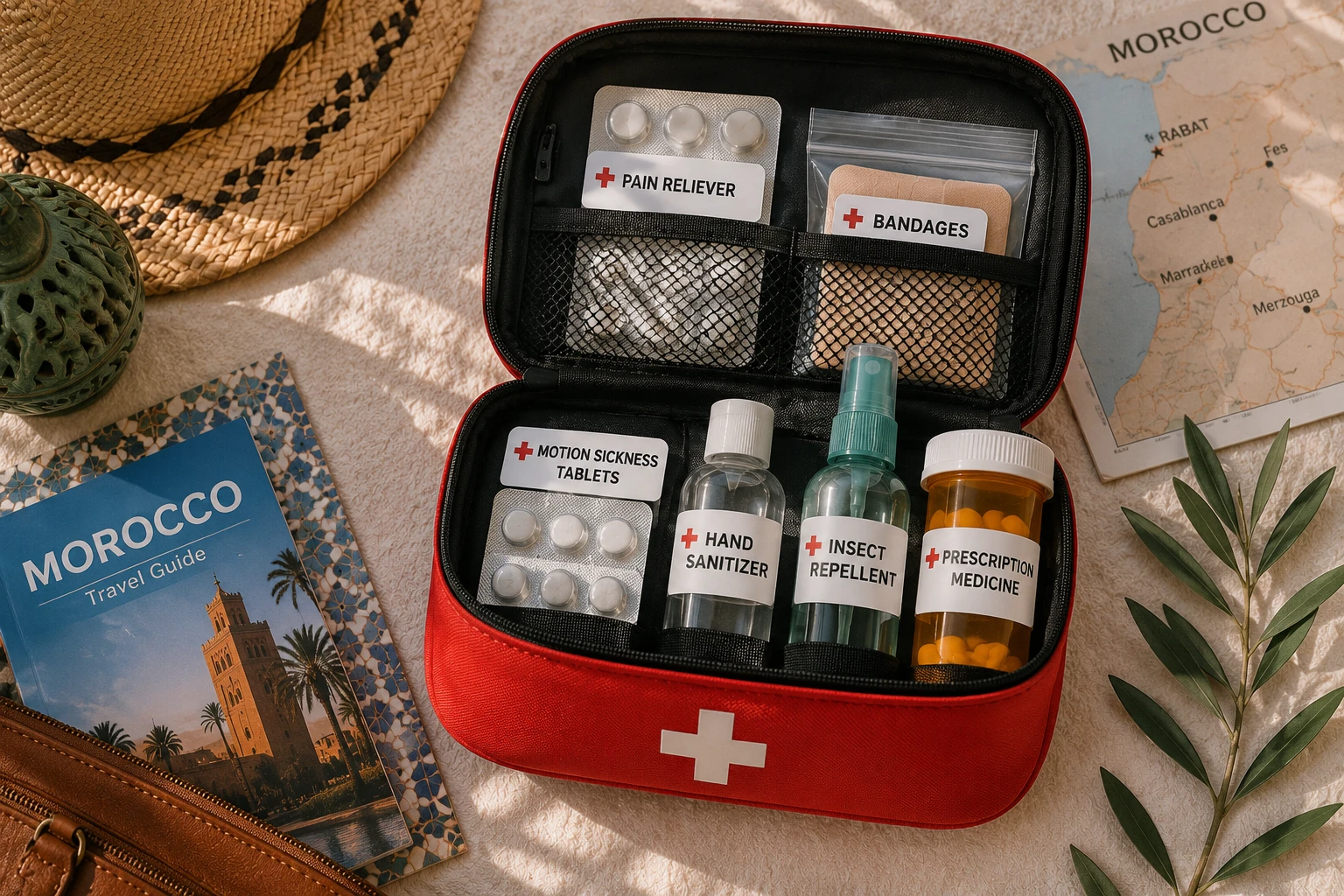
Pharmacies marked with a green cross are common even in smaller towns, and pharmacists are generally well trained and helpful for minor issues. A basic kit still saves time on travel days, especially in the desert where the nearest pharmacy might be hours away.
Morocco Packing Dos and Don’ts
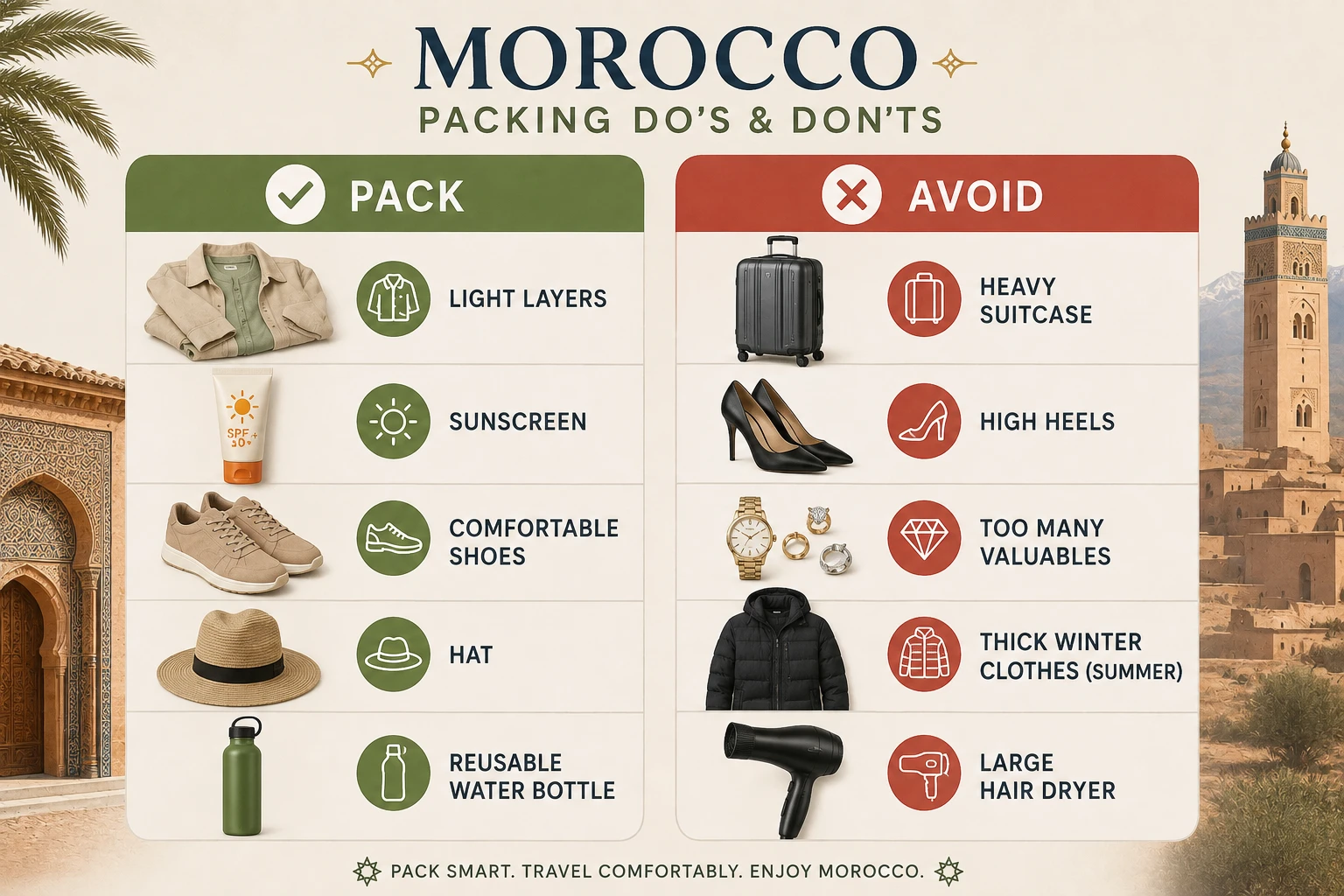
This quick Morocco travel checklist for tourists highlights the small mistakes that trip up even experienced travelers.
| Do | Don’t |
|---|---|
| Pack breathable natural fabrics | Over-pack synthetics that trap heat |
| Bring one proper warm layer, even in summer | Assume desert means always hot |
| Bring a scarf or shawl | Pack only sleeveless tops with nothing to layer over them |
| Bring comfortable closed walking shoes | Rely on flip-flops for medina walking |
| Carry small dirham notes | Assume cards work everywhere, especially in souks |
| Pack a plug adapter | Forget that 110V-only appliances still need a converter |
| Keep a paper and digital copy of documents | Rely on wifi being available everywhere |
The Ultimate Morocco Packing Checklist
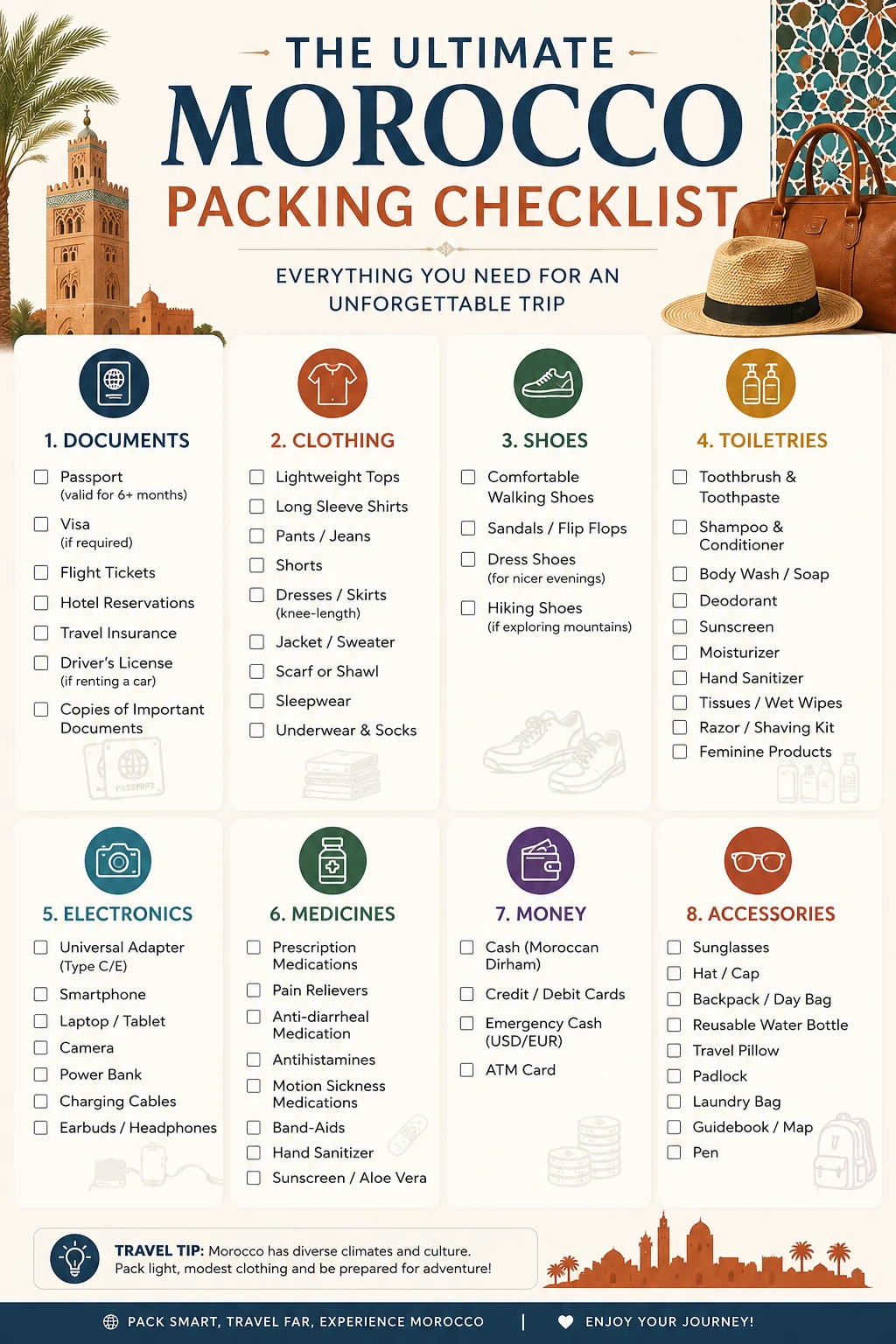
Use this final Morocco packing checklist as a last pass before you zip up the suitcase, grouped by category so nothing gets missed.
Clothing
- Breathable tops and bottoms
- One warm layer, every season
- Scarf or shawl
- Sleepwear
- Swimwear
- Light rain layer
Footwear
- Closed walking shoes
- Sandals with back strap
- Slip-on shoes
- Warm socks (autumn to spring)
Documents and Money
- Passport
- Printed bookings
- Travel insurance details
- Cash in dirhams
- Backup card
Toiletries and Health
- Sunscreen
- Personal medication
- Basic first aid pouch
- Hand sanitizer and tissues
- Lip balm with SPF
Electronics and Accessories
- Plug adapter
- Power bank
- Phone and charger
- Local SIM or eSIM
Desert and Overnight Extras
- Headlamp
- Dust-proof phone pouch
- Extra warm layer
- Small daypack
Frequently Asked Questions
What should I pack for Morocco?
Pack lightweight, breathable clothing for daytime heat, one warm layer for cool evenings and desert nights, comfortable closed walking shoes, a scarf for sun and modesty, high-SPF sunscreen, a universal plug adapter, cash in dirhams, and copies of your travel documents. What you add depends on the season and whether a desert tour is on the itinerary.
What clothes should tourists wear in Morocco?
Loose, breathable clothing that covers shoulders and knees works best in most situations, especially in medinas, markets, and religious sites. Shorts, sleeveless tops, and swimwear are fine at hotel pools, riads, and beach resorts, but a bit more coverage is appreciated once you step into the old town or rural areas.
Do I need a jacket in Morocco?
Yes, especially outside peak summer. Evenings cool down quickly even in warm cities, riads are rarely heated, and both the Atlas Mountains and the Sahara can turn genuinely cold after sunset. A packable fleece or light insulated jacket earns its space in the suitcase in every season.
Can I wear shorts in Morocco?
Shorts are fine in beach towns, resort areas, and modern city districts, and increasingly common in medinas too. For a first time in Morocco, knee-length shorts make a safe middle ground, especially in smaller towns, souks, and around mosques or other religious sites.
What shoes are best for Morocco?
Comfortable, closed-toe walking shoes with good grip handle Morocco’s uneven cobblestones and steep medina alleys best. Add sturdier trail shoes if the Atlas Mountains or Sahara dunes are on the itinerary, and slip-on shoes make quick work of riads and mosque visits where footwear comes off indoors.
What should I pack for the Sahara Desert?
Bring breathable layers for daytime heat, a proper warm layer for after sunset, a long scarf for sun and sandstorm protection, closed shoes rather than sandals, a headlamp, a dust-proof phone pouch, and a fully charged power bank, since camps often only offer limited charging time.
Do I need a power adapter for Morocco?
Yes. Morocco uses two round-pin Type C and Type E sockets running on 220 to 230 volts, so travelers from the US, UK, and most of Asia need a plug adapter. Most modern phone and laptop chargers handle the voltage automatically, but older 110V-only appliances still need a converter too.
Is Morocco cold at night?
It can be, depending on the season and region. Coastal cities stay relatively mild year round, but inland cities cool down noticeably after dark, and both the Sahara Desert and the Atlas Mountains can drop close to freezing on winter nights, and still feel surprisingly chilly even in summer.
What medicines should I bring to Morocco?
Bring any personal prescription medication in its original packaging along with a copy of the prescription, plus general over-the-counter items for common travel discomforts like an upset stomach or a headache. Speak with a doctor or pharmacist before your trip for advice suited to your own health needs.
Is sunscreen necessary in Morocco?
Yes, in every season. Sun intensity stays strong year round, especially at altitude in the Atlas Mountains and across the open exposure of the Sahara, and it’s easy to underestimate on cooler or overcast days. A high-SPF sunscreen, reapplied regularly, belongs on every Morocco packing list.
Final Thoughts on Packing for Morocco
Morocco rewards travelers who pack with a little flexibility built in. The same trip might carry you from a warm coastal breeze in Essaouira to a chilly night beneath the stars in the Sahara, often within the same week, so layering matters more than any single essential item. Run through this Morocco packing list once by season and once by activity, leave a little room in the suitcase for a scarf or a pair of leather babouches picked up in a souk, and you’ll land with exactly what the trip actually needs, not what a generic list assumed you would.