Taourirt Kasbah in Ouarzazate: History, architecture and visitor guide
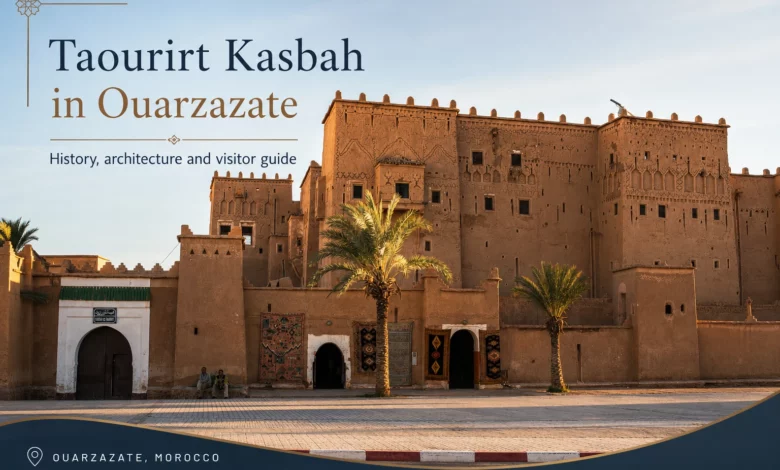
Nearly three hundred rooms, walls built from the ground they stand on, and a family that once controlled every road between Marrakech and the Sahara. Taourirt Kasbah in Ouarzazate is the largest historic monument in the city and one of the finest surviving pieces of earthen architecture in Morocco, yet most travellers give it twenty minutes on the way to Ait Ben Haddou. This guide covers its history, its architecture, and everything you need to plan the visit properly.
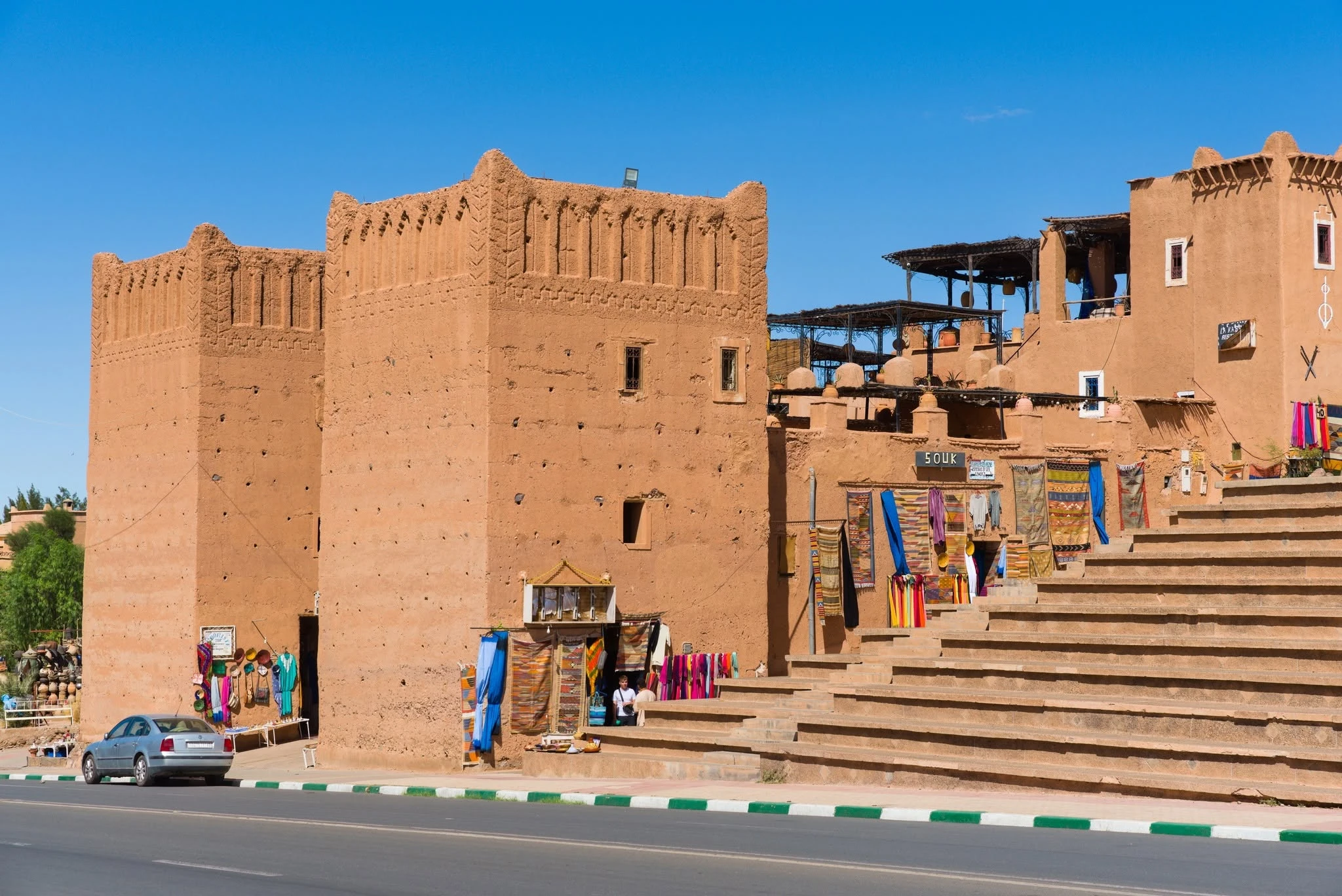
- WhereAvenue Mohammed V, Ouarzazate
- Built18th to 19th century
- OwnersThe Glaoui family
- Visit45 to 90 minutes
- TicketSmall fee, cash at the door
What Is Taourirt Kasbah? ↑
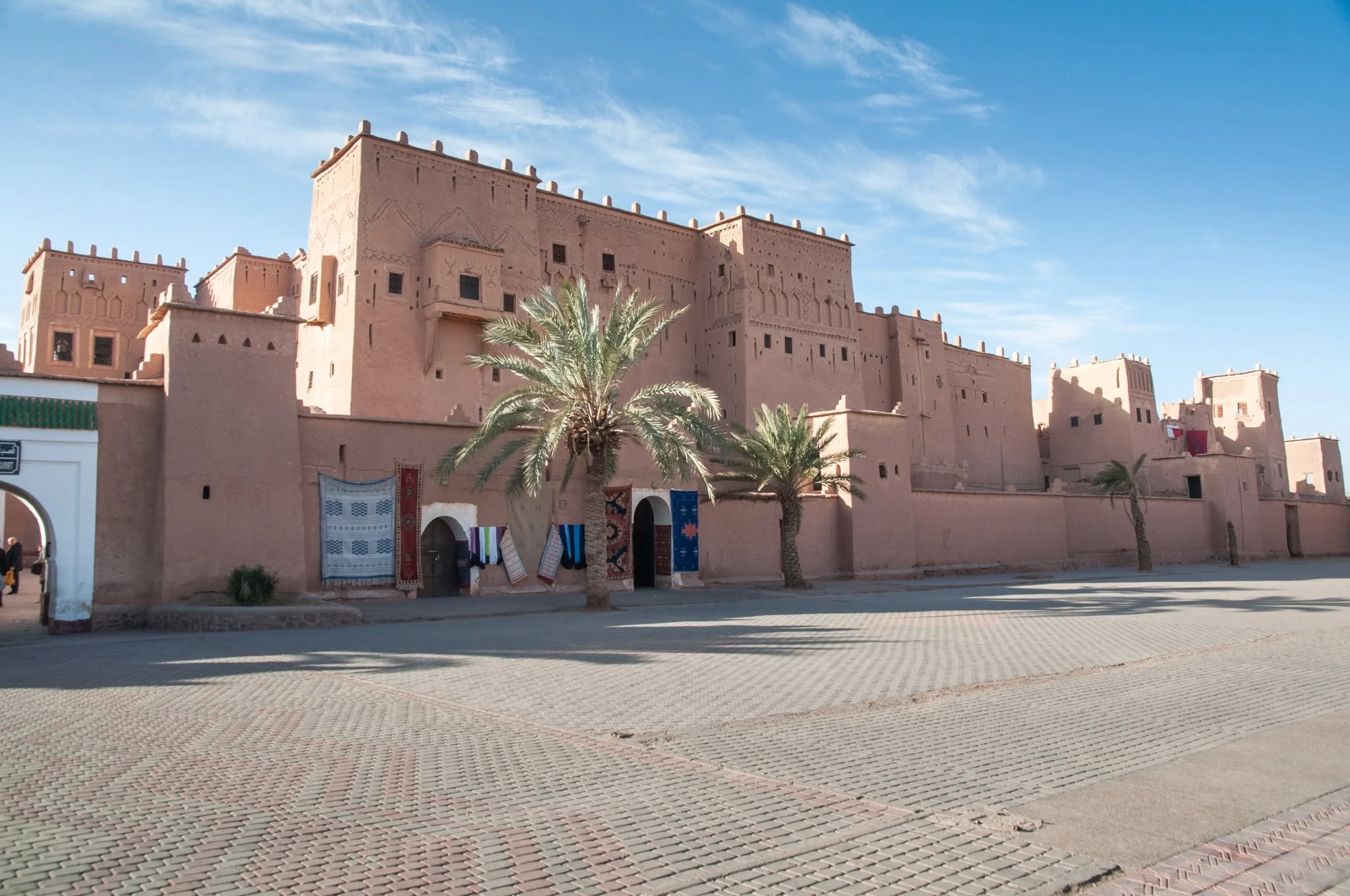
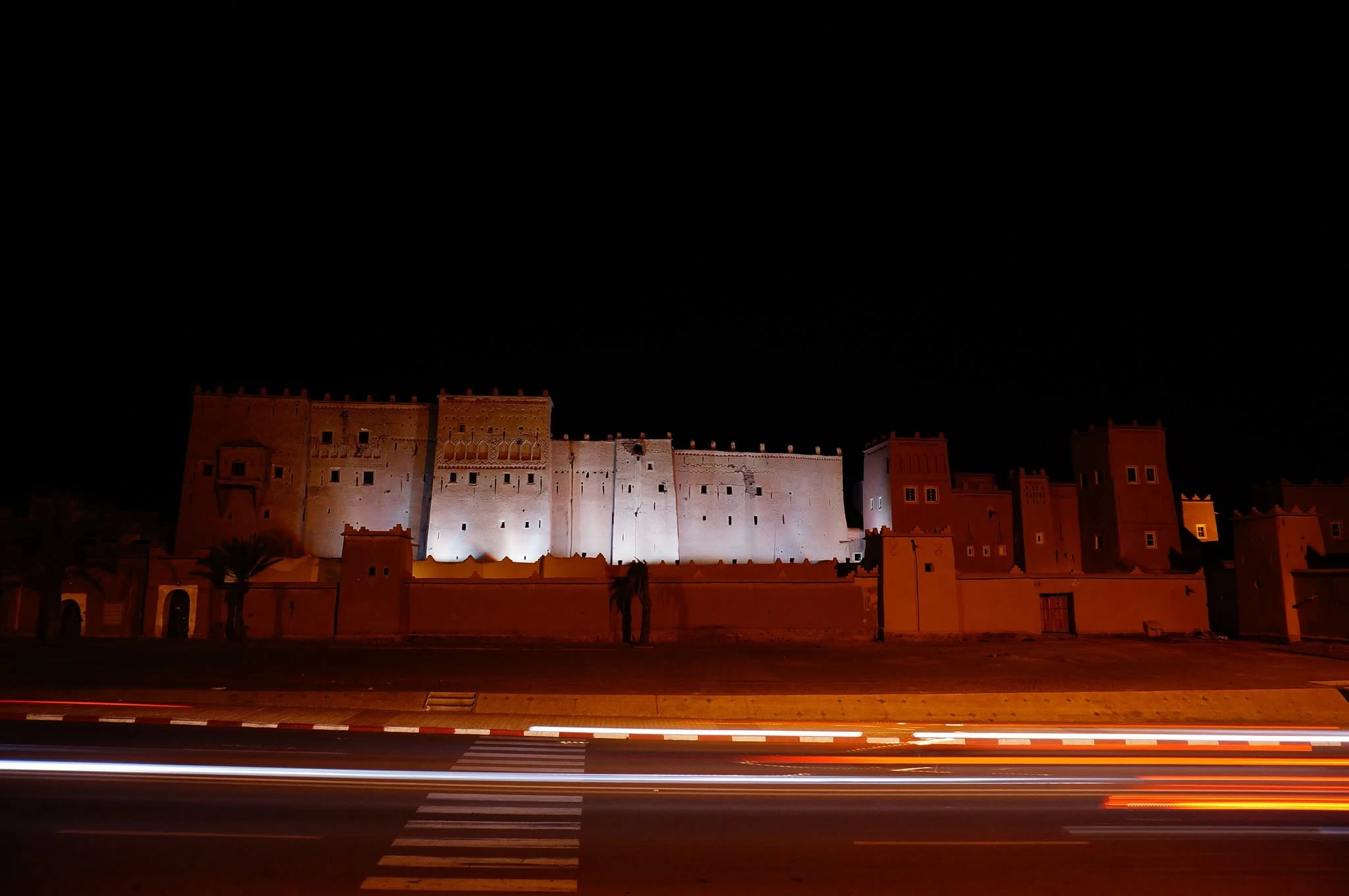
Taourirt Kasbah is the largest historic monument in Ouarzazate and one of the most complete examples of southern Moroccan earthen architecture still standing in a city centre. The word kasbah means a fortified residence, and this one grew far past a single house. At its peak it worked as a small walled town: the private quarters of a ruling family, the rooms of their relatives and servants, storehouses, stables, workshops and a warren of streets that could be sealed off behind a single gate.
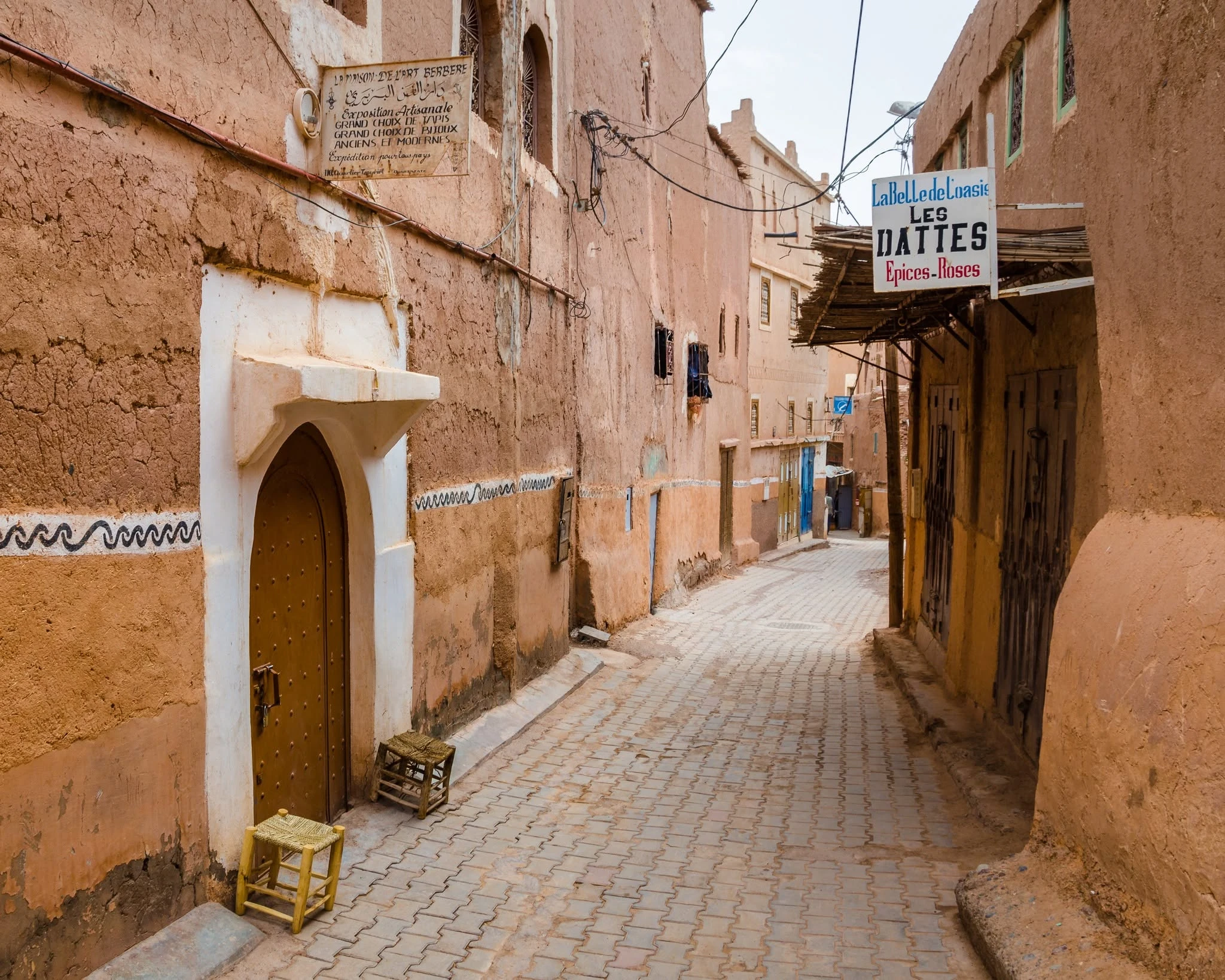
Everything you see is built from the ground it stands on. Rammed earth mixed with straw and lime, palm and tamarisk beams, and a plaster made from the same soil. That is why Kasbah Taourirt Ouarzazate seems to grow out of the riverbank rather than sit on it, and why the colour of the walls changes hour by hour as the light moves across them.
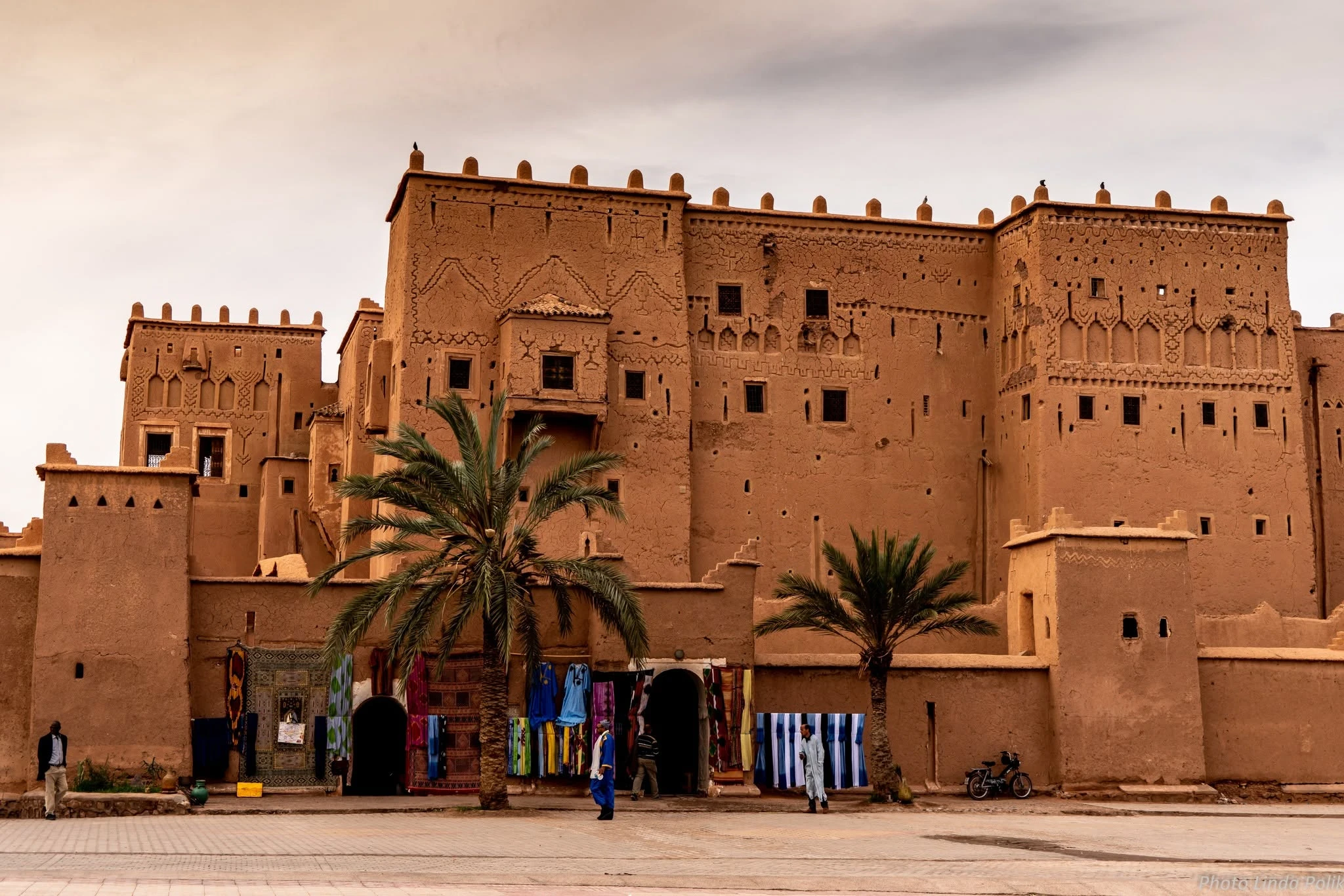
A vast eighteenth and nineteenth century earthen palace complex in central Ouarzazate, once held by the Glaoui, the family that controlled the passes of the High Atlas until 1956. Part of it is restored and open to visitors, and the rest is a lived in quarter of the city.
Where Taourirt Kasbah Stands in Ouarzazate ↑
The kasbah occupies a rise on the eastern edge of the modern town, on Avenue Mohammed V, roughly a kilometre from the central square and directly opposite the Cinema Museum. Ouarzazate itself sits at about 1,150 metres, at the point where the roads from Marrakech, the Draa Valley, the Dades and the Todgha all meet. That crossroads is the entire reason a fortress of this size was built here.
Approaching from the west you see the tallest towers first, then the terraces stepping down towards the Oued Ouarzazate. From the upper floors, the view runs across the palm gardens on the riverbed to the High Atlas on one side and the flat stone plain heading for the desert on the other. Whoever held this hill could watch every road into the region.
- Ouarzazate town centre10 minutes on foot
- Ouarzazate airport10 minutes by car
- Ait Ben Haddou30 minutes
- Fint Oasis25 minutes
- Marrakech via Tizi n TichkaAbout 4 hours
The History of Taourirt Kasbah ↑
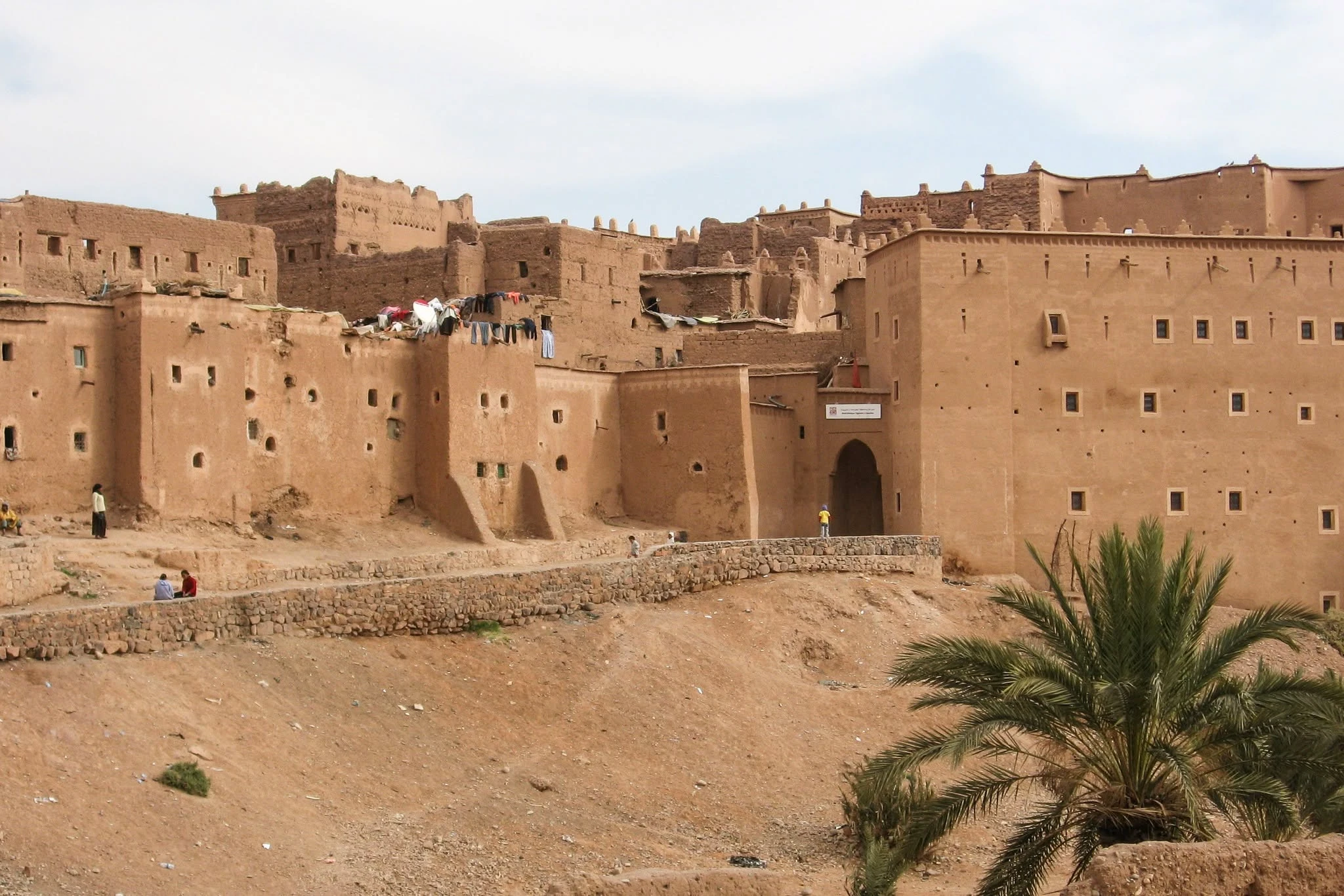
The history of Taourirt Kasbah is really the history of a road. Long before Ouarzazate existed as a town, caravans came up from the Draa and the Tafilalet carrying dates, salt and gold towards Marrakech, and the last comfortable stop before the mountains was here. A fortified house on the hill controlled that traffic, taxed it, and offered it protection.
A first kasbah rises on the site under a local notable. The core of the building, thick walled and inward facing, dates from this period and was designed for a world without any central state presence in the south.
The Glaoui take control of the region and enlarge the kasbah into something closer to a palace, adding reception halls, family apartments and the decorated rooms that survive today. The complex swells to hundreds of rooms.
Under Thami El Glaoui, Pasha of Marrakech, Taourirt becomes one of the strongholds of a family whose authority reaches from the Atlas to the Sahara. Officials, guests, soldiers and hundreds of household members live inside the walls.
With independence and the fall of the Glaoui, the palace loses its purpose. Parts are abandoned, unroofed earth begins to dissolve in the winter rains, and families from the surrounding area settle in the outer quarters.
Successive conservation campaigns, working with traditional earth building techniques, stabilise the main wing and open it to visitors. The work continues in phases, and sections close and reopen as it progresses.
The Glaoui Kasbah and the Mountain Passes ↑
To understand why a Glaoui kasbah in Ouarzazate matters, you have to look north to Telouet, the family seat in the mountains. In the late nineteenth century the Glaoui held the pass that every caravan and every army had to cross between Marrakech and the south. A gift of modern artillery from the sultan turned a strong local family into the dominant power of the region, and by the colonial period Thami El Glaoui was arguably the second most powerful man in Morocco.
Taourirt was the southern anchor of that system. Telouet watched the mountain, Taourirt watched the plain, and the two were linked by the Ounila valley road that still runs past Ait Ben Haddou. Walking through the reception rooms here, it helps to remember that the plaster and the painted cedar were not decoration for visitors. They were a display of authority, aimed at the tribal leaders who came to negotiate.
Architecture and Decoration ↑
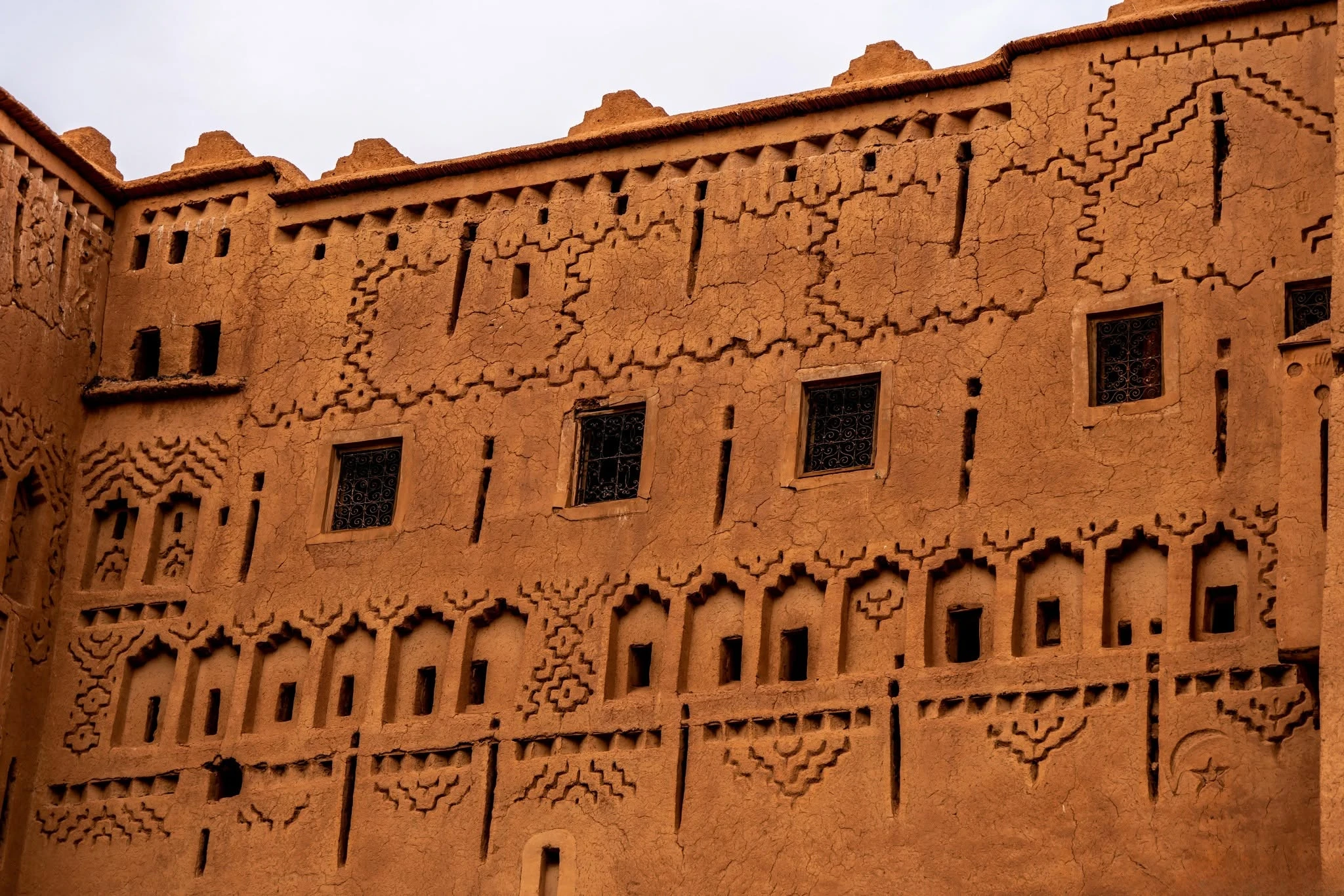
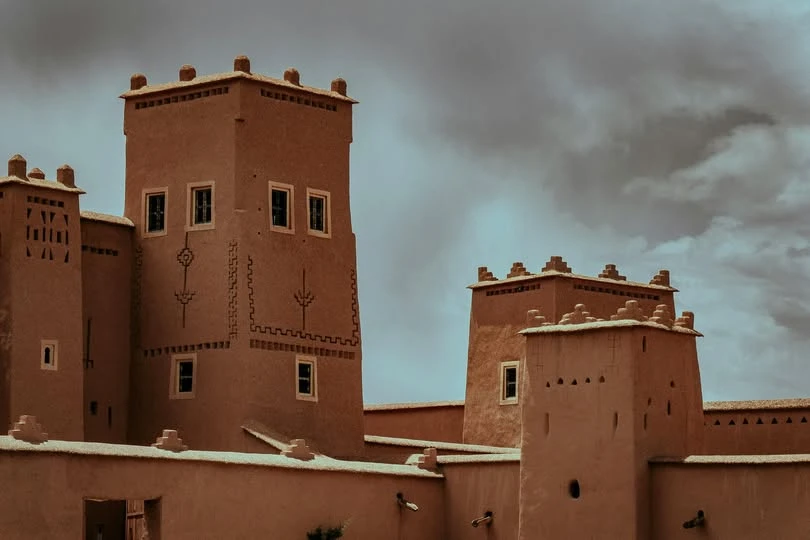
Moroccan kasbah architecture in the pre Saharan south is a study in doing a great deal with very little. There is no stone facing, no marble and no imported timber. What the builders had was earth, palm wood, lime and an inherited grammar of proportion, and the results have held up for two centuries.
Pise walls
Damp earth, straw and lime rammed between wooden shutters, one lift at a time. Bases close to two metres thick taper as the wall rises, which is what gives kasbahs their leaning silhouette.
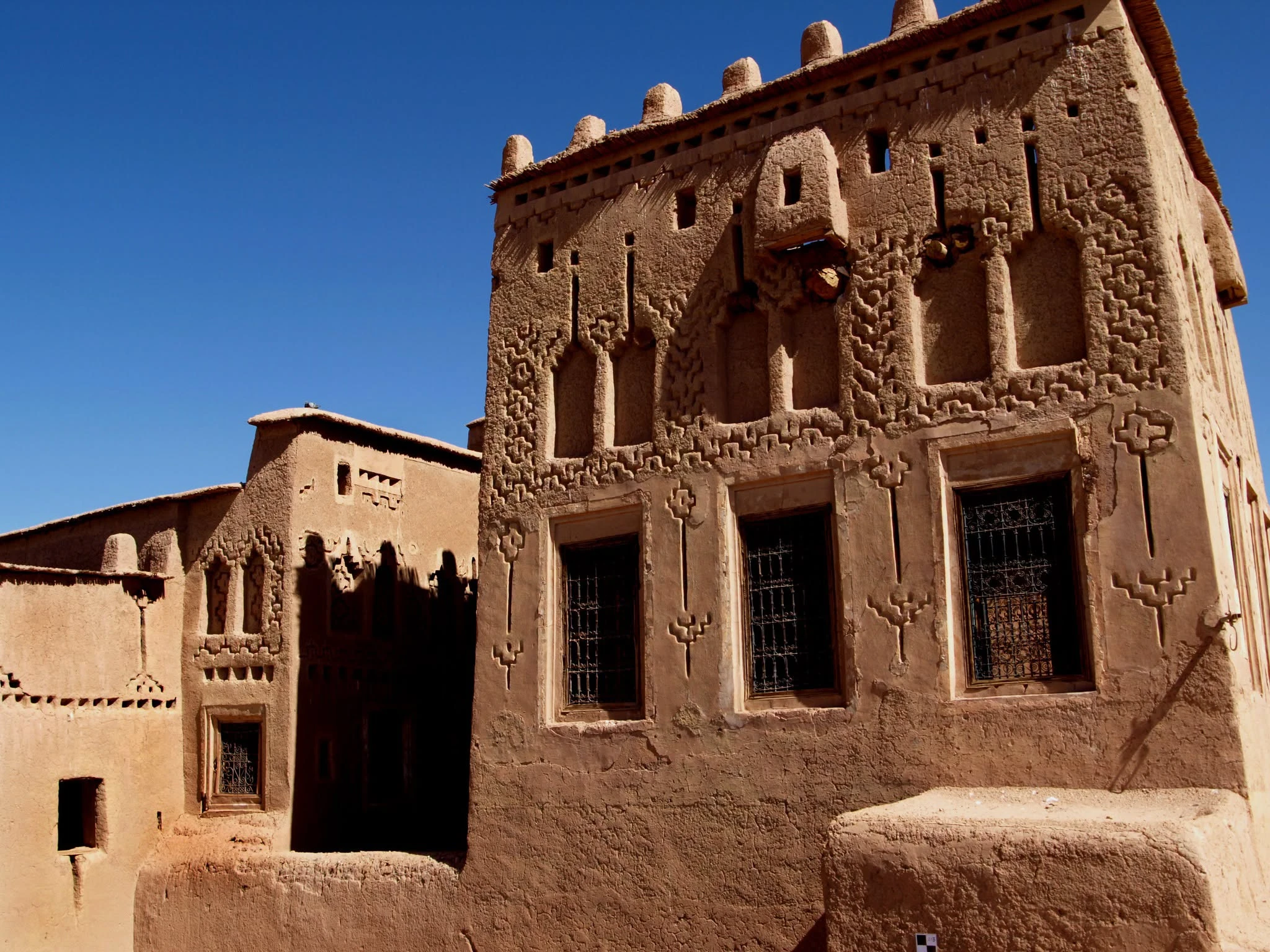
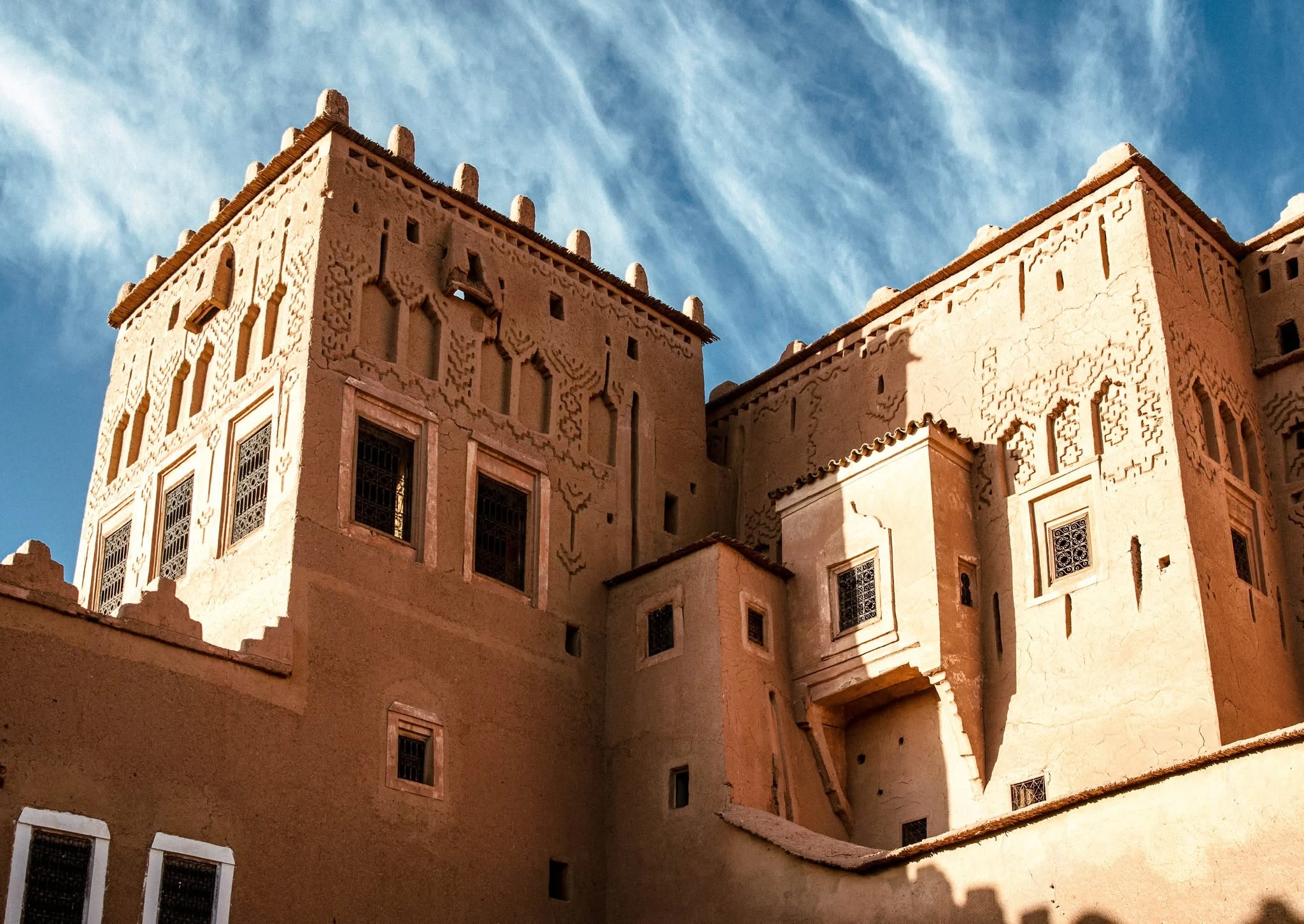
Brick lozenges
The upper walls carry diamonds, chevrons and interlaced bands built in mud brick. Decoration sits high on the facade, where it catches raking light and can be read from the street.
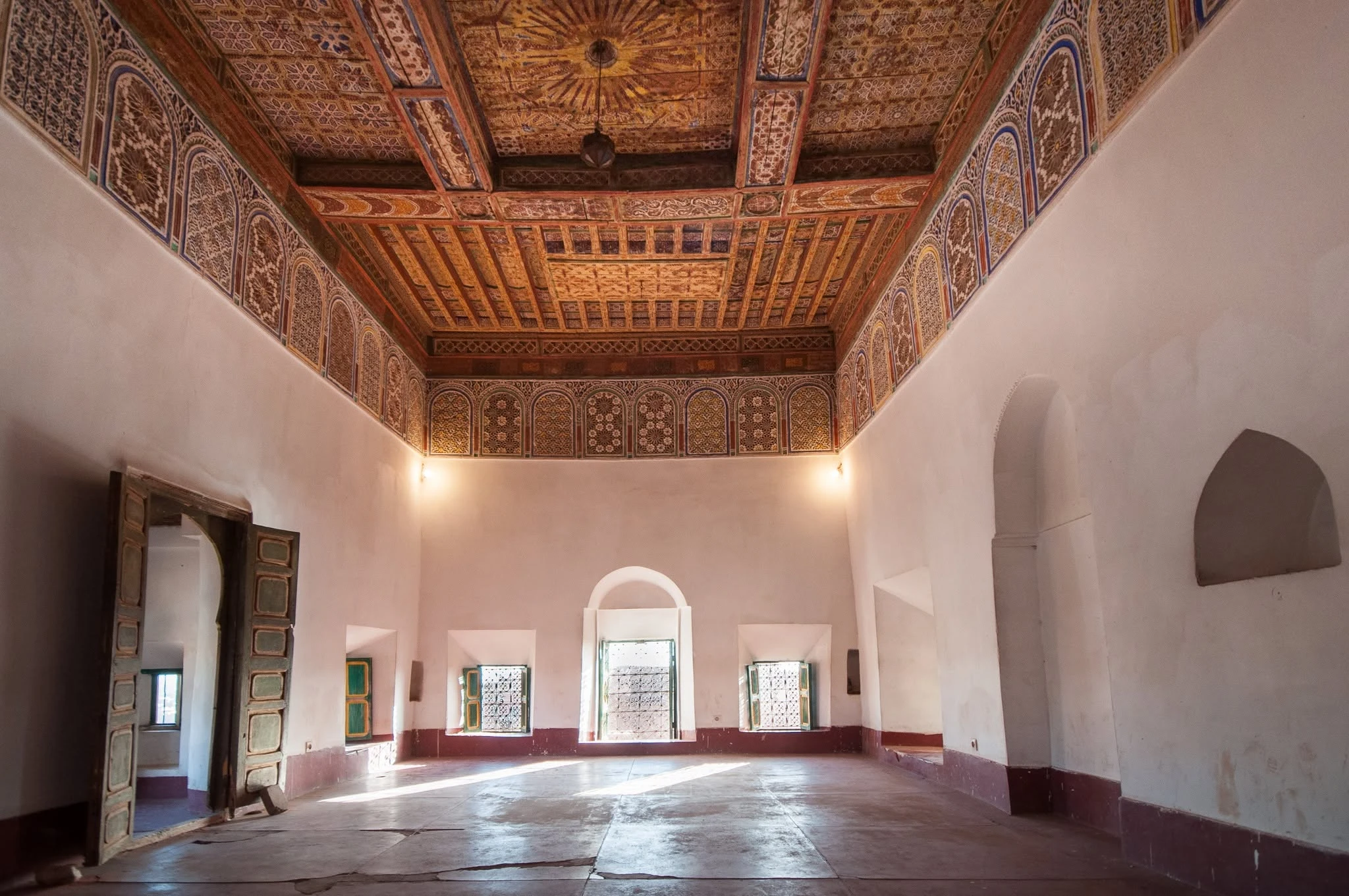
Painted cedar ceilings
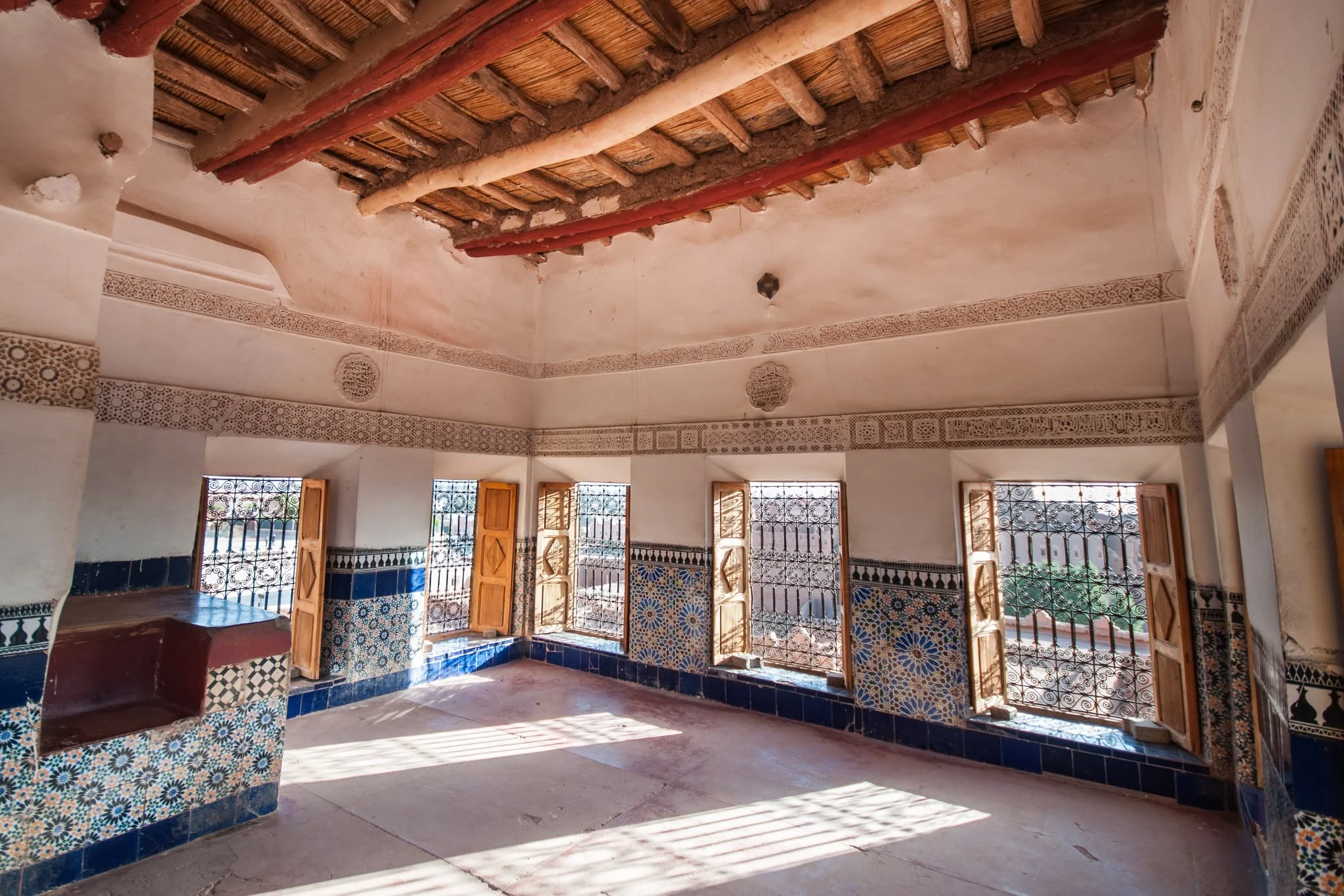
In the state rooms, cedar brought from the middle Atlas was assembled into coffered panels and painted with vegetal and geometric motifs in ochre, indigo and green.
Carved plaster
Bands of gebs, or carved stucco, frame the doorways and niches. The patterns follow the same rules as those in Fes and Marrakech, executed here in local materials.
Small openings
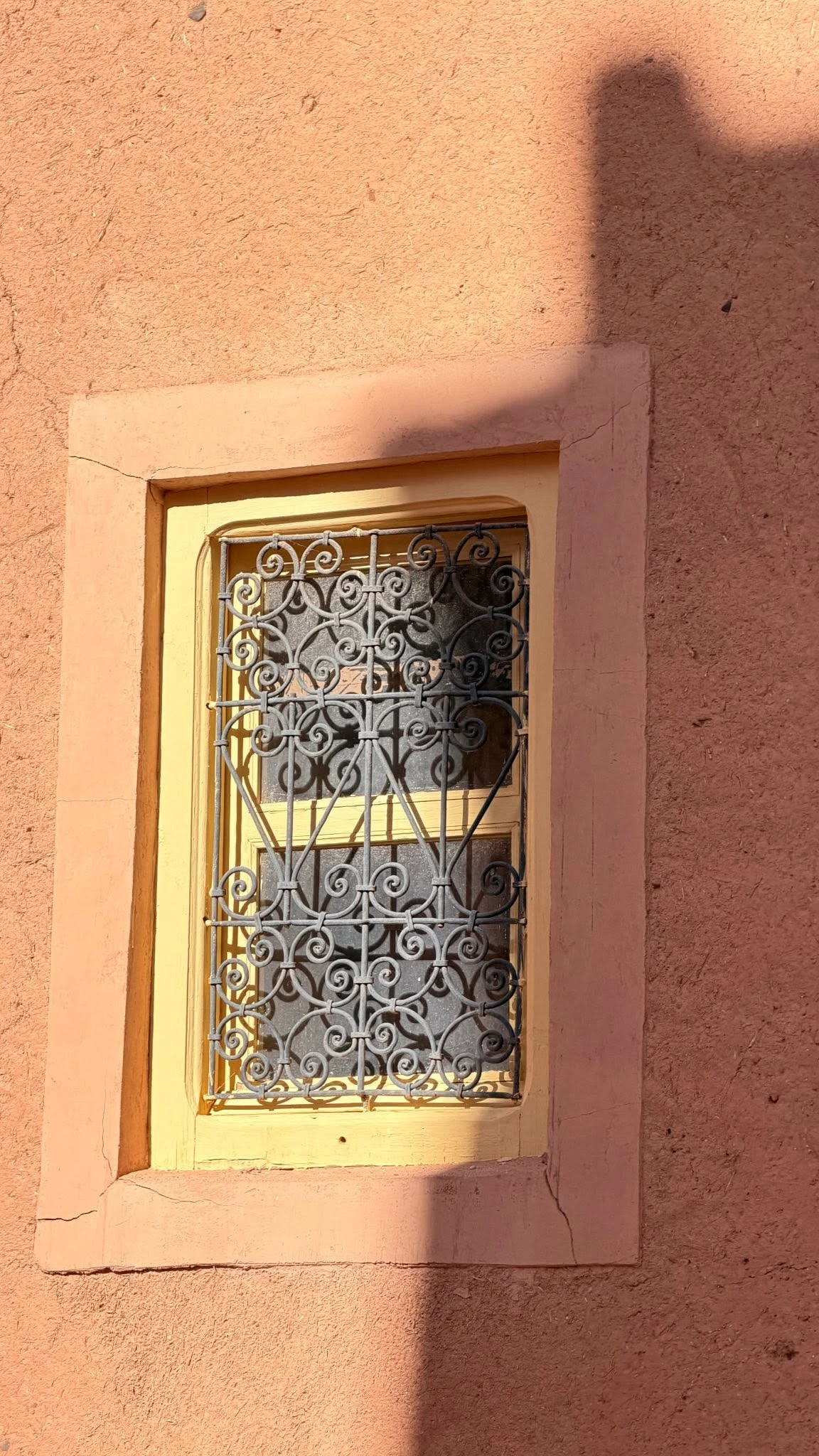
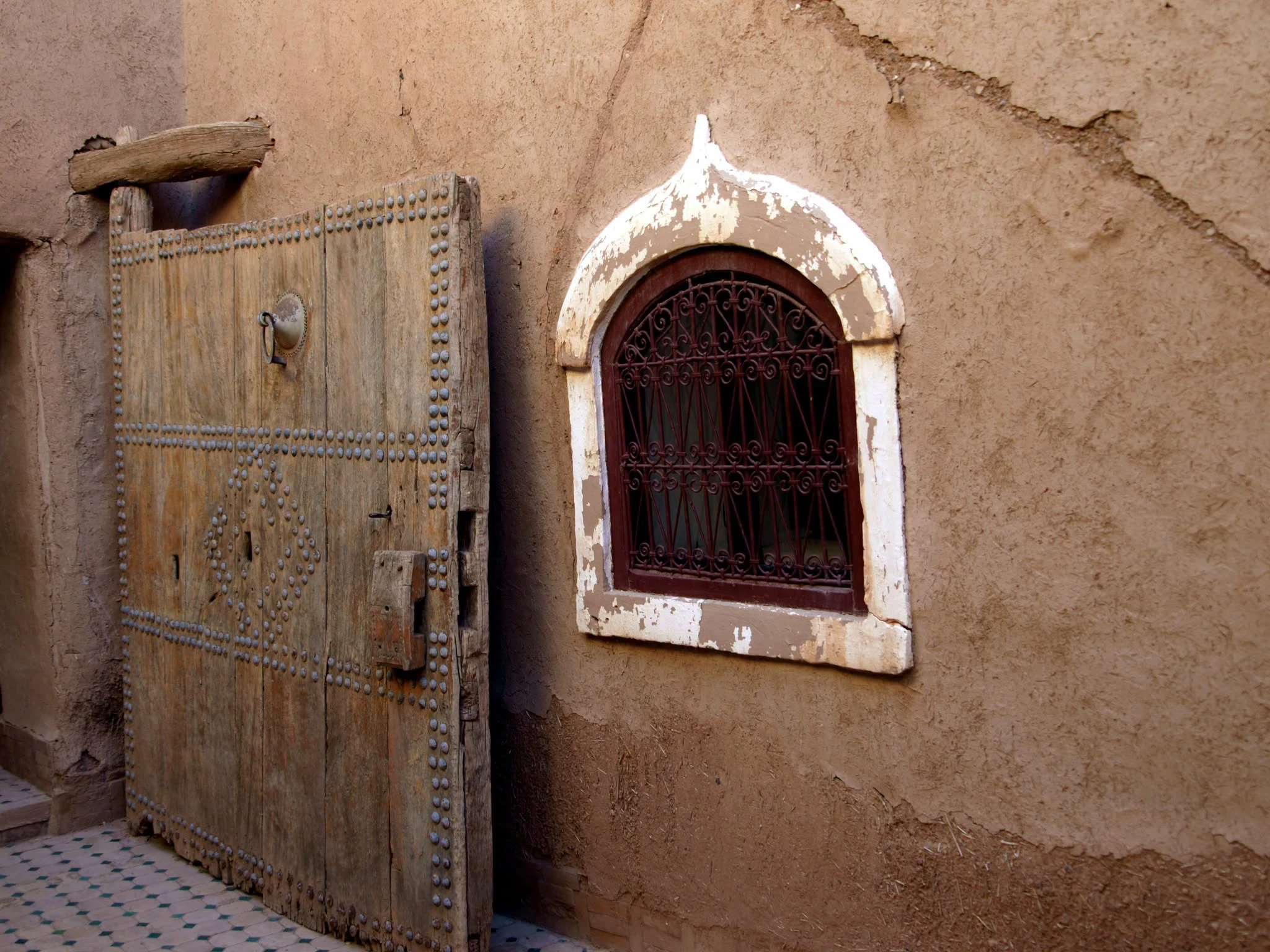
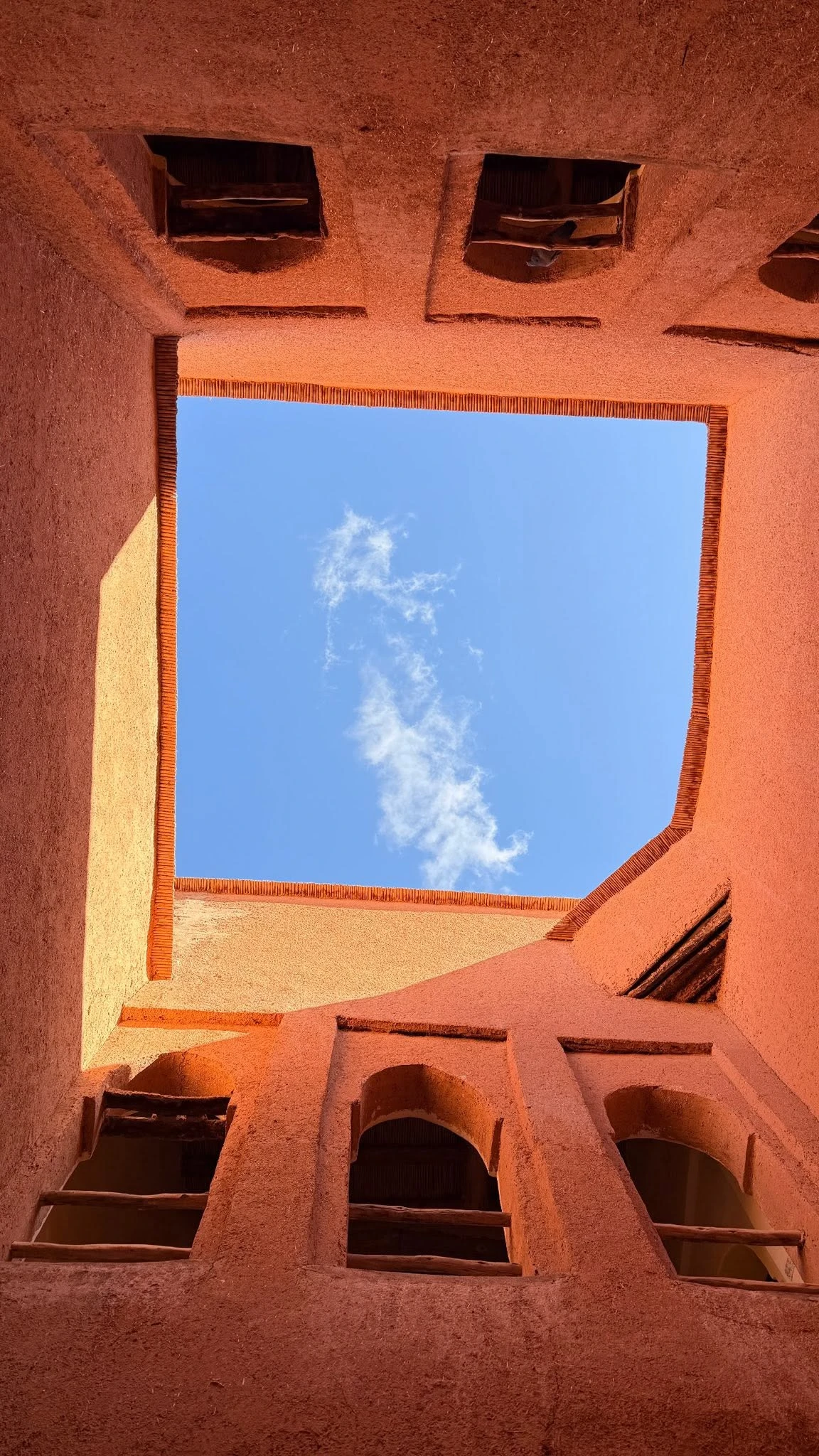
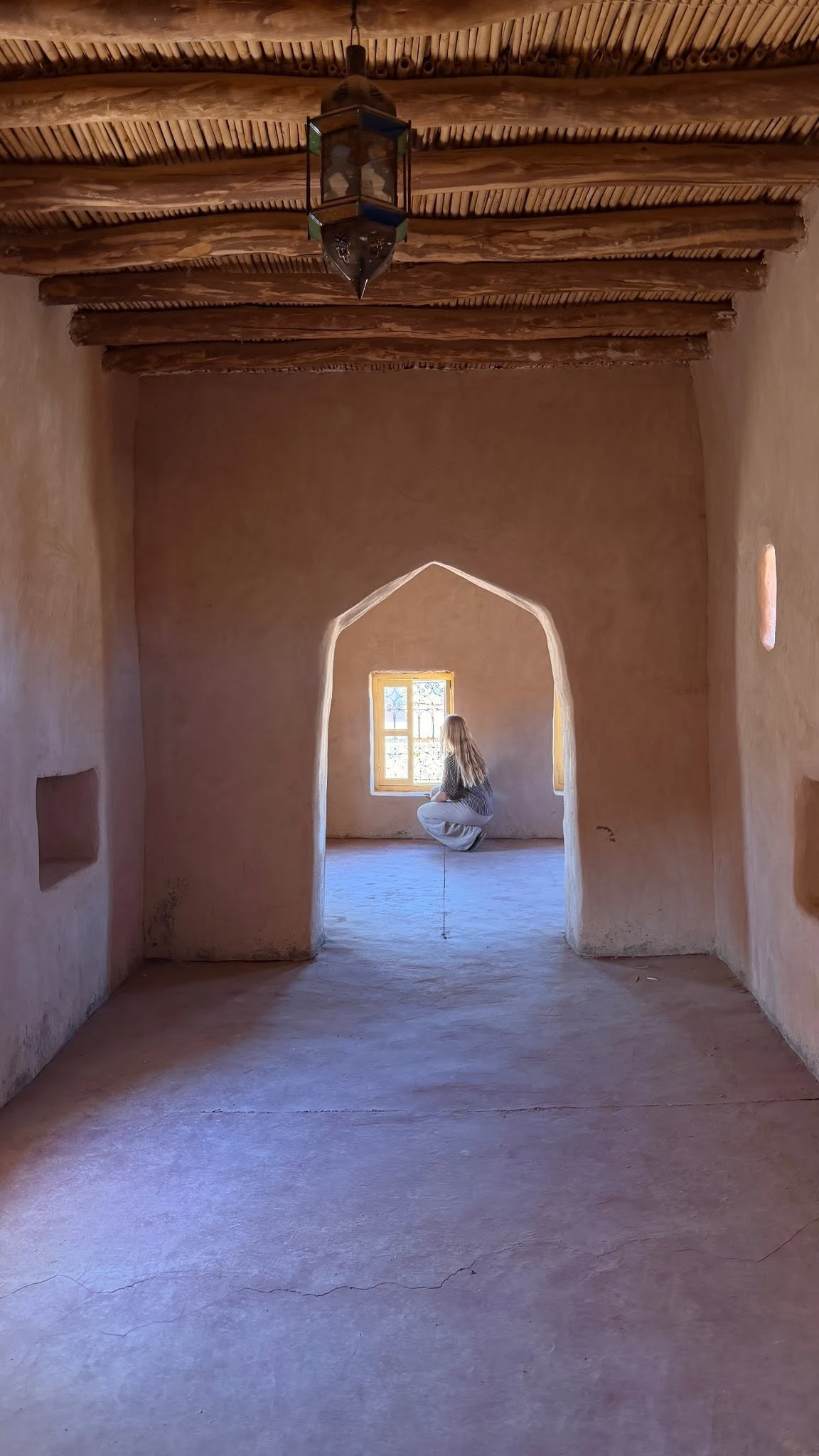
Windows are few, high and narrow, sometimes fitted with turned wooden grilles. They limit heat gain in summer and made the building far easier to defend.
Vertical living
Animals and stores at ground level, family rooms above, terraces at the top for sleeping in summer. The plan stacks functions instead of spreading them.
What to See Inside Taourirt Kasbah ↑
The visit follows a marked route through the restored wing. It is short in distance and slow in practice, because the corridors turn constantly and every second doorway opens onto something worth stopping for.
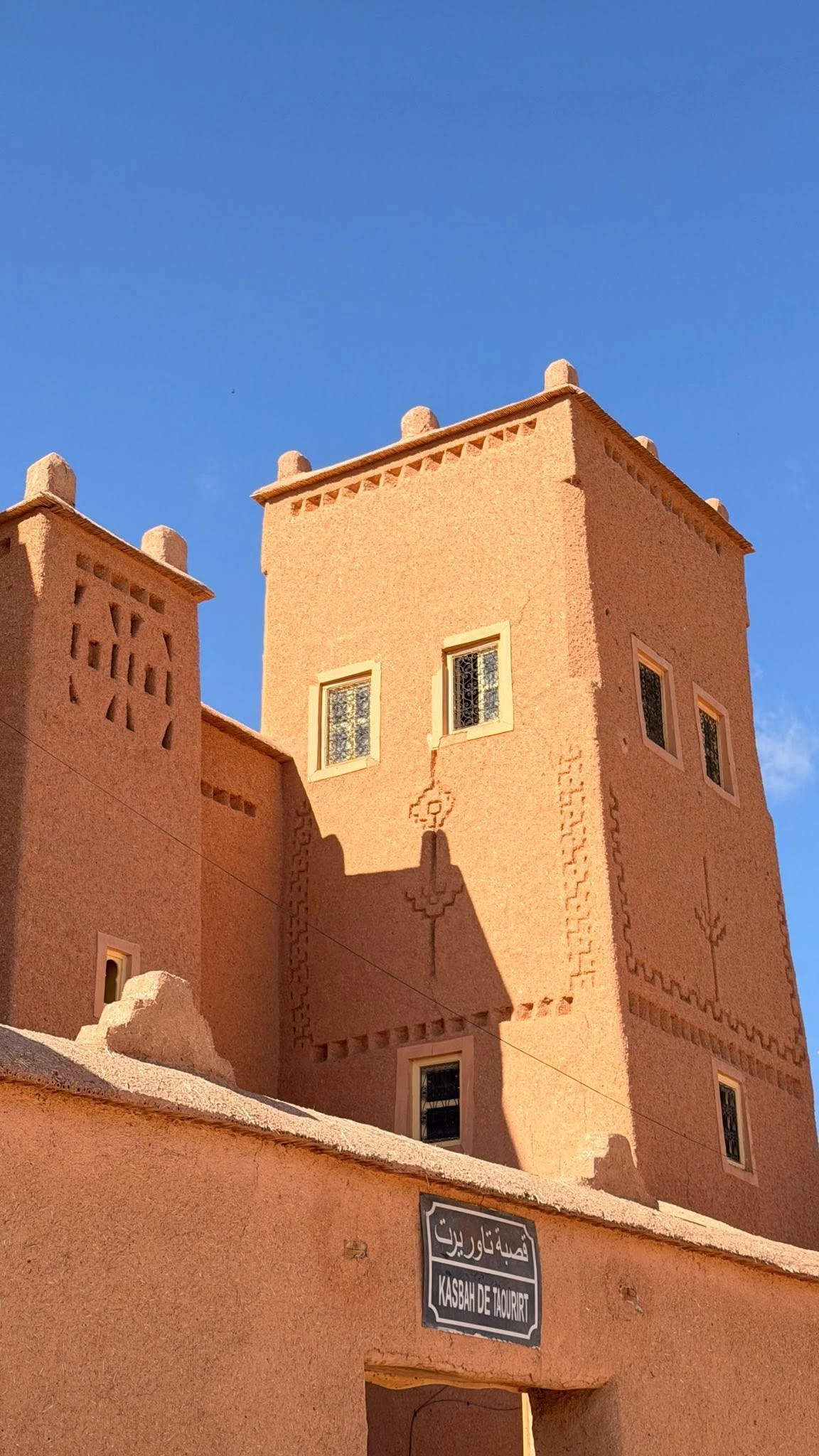
The gate and the first courtyard
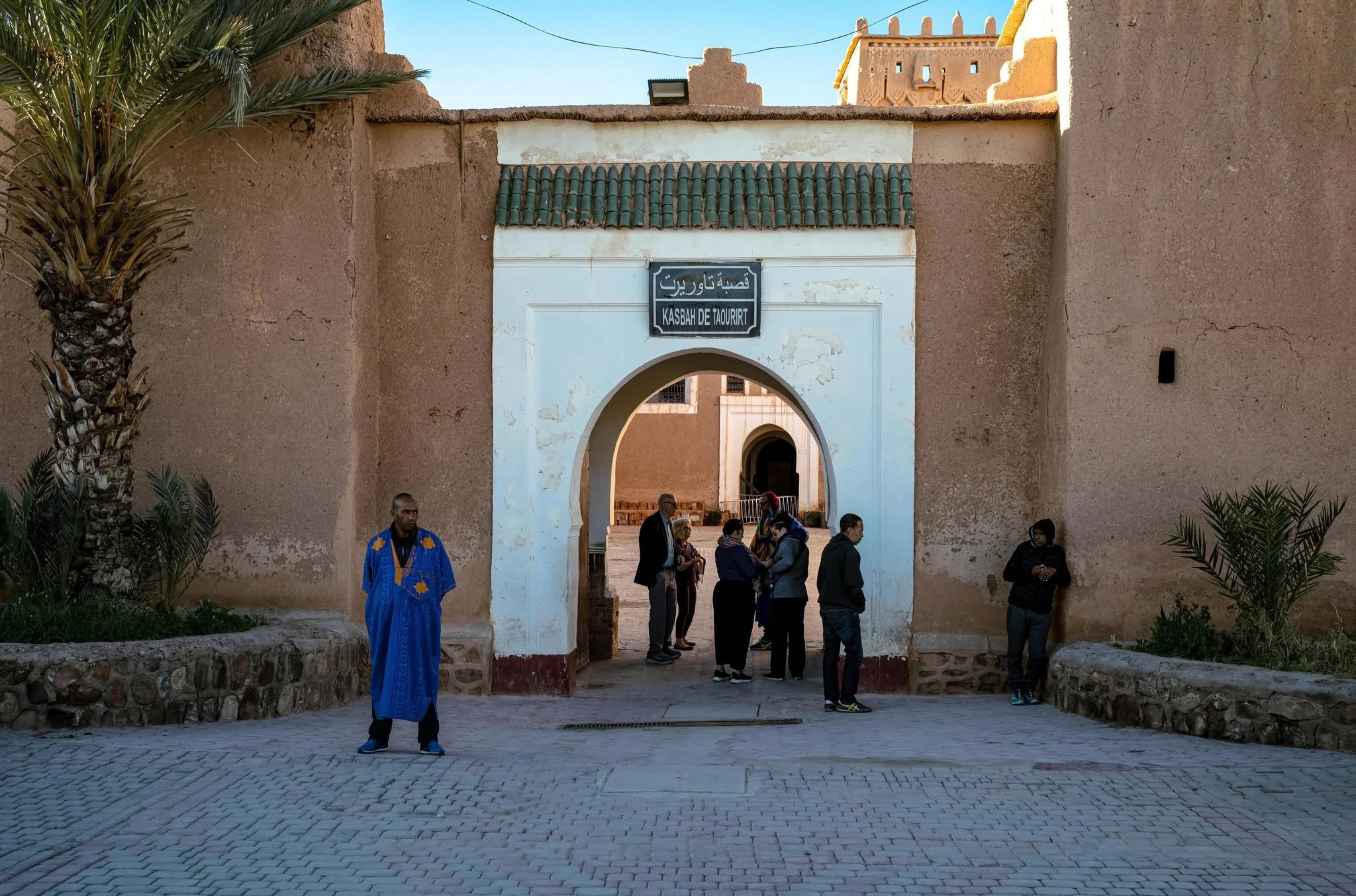
The entrance is deliberately modest, a narrow doorway under a heavy lintel that forces arrivals to slow down and come in one at a time. Beyond it, the first open space was once the market area of the kasbah, where goods changed hands under the eye of the household.
The reception rooms and private apartments
These are the rooms people remember. Low banquettes along the walls, painted ceilings overhead, carved plaster around the niches, and small windows throwing hard rectangles of light across the floor. Guides will point out which room served for receiving tribal delegations and which belonged to the women of the household.
The passages and stairs
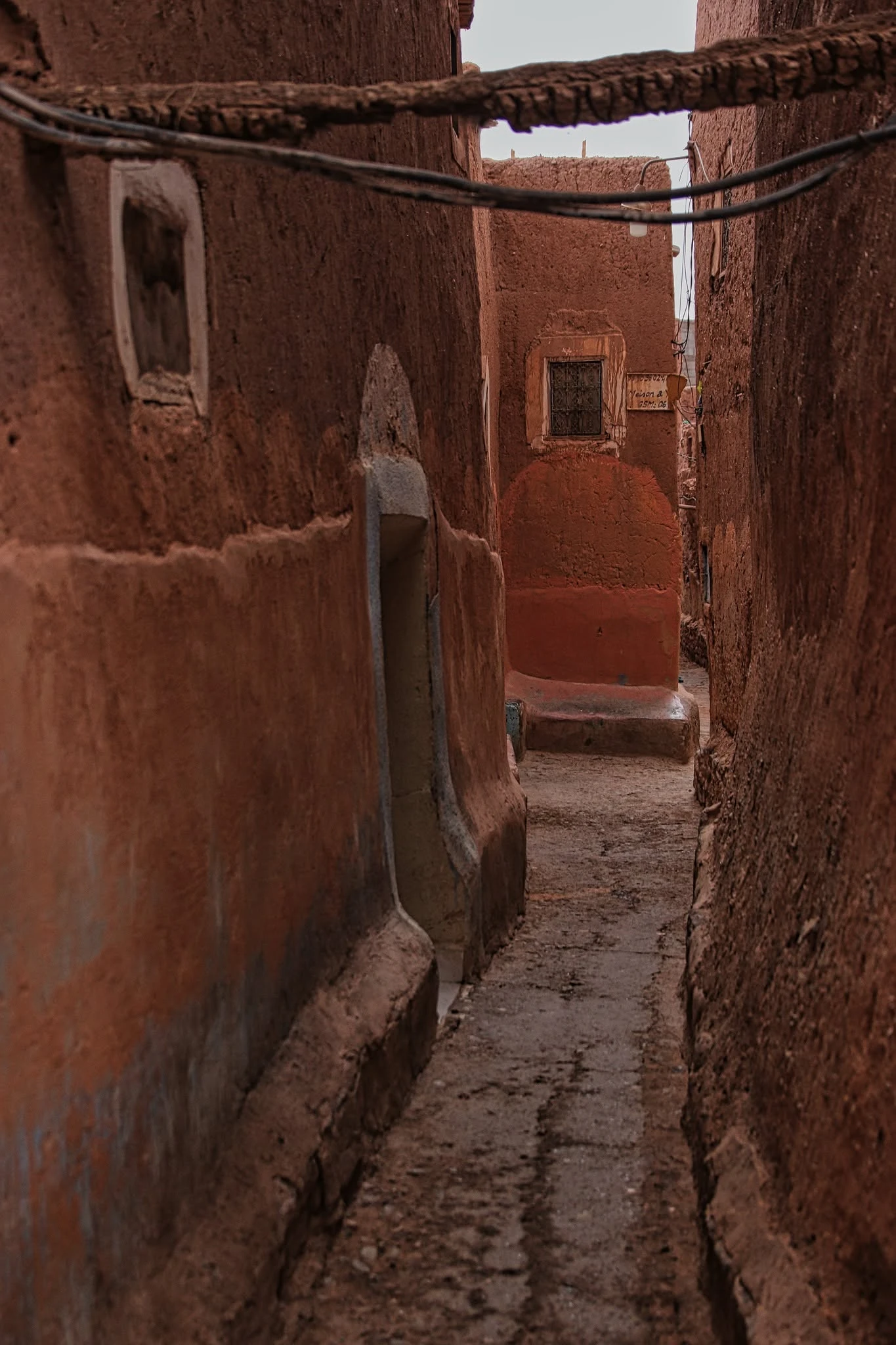
Between the grand rooms runs the working skeleton of the building: blind passages, sudden turns, steps worn into curves and low openings that make tall visitors duck. This is the part that feels least like a museum and most like the place people actually lived in.
The terraces
Wherever the route allows you onto a roof, take it. From the terraces you can read the whole layout of the kasbah, count the towers, and follow the line of the oued down towards the palm gardens with the Atlas closing the horizon behind.
Visiting With a Local Guide ↑
There is very little signage inside, and almost no furniture. Walked alone, the kasbah is a beautiful set of empty rooms. Walked with someone who knows it, it becomes a story about power, water, salt caravans and a family that ran the south of Morocco for two generations.
A Taourirt Kasbah guided tour usually runs between forty five minutes and an hour and a half depending on how many questions you ask. Official guides wait near the ticket desk, and rates are agreed before you start. If you would rather have the history connected to the rest of the region, a private guide covering the kasbah, the Cinema Museum and the old quarter of Ouarzazate in one morning gives a far more coherent picture than three separate visits.
How the roof terraces were used in summer, why so many rooms have no windows at all, where the household stored water and grain, and which sections are currently under restoration. Those four questions tend to open the best conversations.
Opening Hours, Entrance Fee and How to Visit ↑
| Practical point | What to expect |
|---|---|
| Opening hours | Daily, roughly from 8:30 or 9:00 in the morning until around 18:00, closing earlier in winter when the light goes. Hours shift with the season, so confirm locally the day before. |
| Entrance fee | A modest ticket bought at the door, generally in the range of 20 to 30 dirhams per adult, with reduced rates for children. Cash only. |
| Guided tour | Arranged at the entrance or booked in advance with a private guide. Agree the price and the duration before setting off. |
| How long to allow | Forty five minutes without a guide, up to an hour and a half with one. |
| Restoration works | Conservation is ongoing and some wings may be closed. The accessible route can be shorter than photographs online suggest. |
| Getting there | Walkable from most hotels in the centre, or a short petit taxi ride. Parking is available along the avenue. |
| Accessibility | Steep steps, uneven earth floors and low doorways throughout. The ground floor is manageable, the upper levels are not step free. |
Bring small notes for the ticket and the guide, wear shoes with grip for the polished steps, and keep your camera settings ready for low light. The interiors are much darker than the courtyards, and the contrast between the two catches most people out.
Best Time to Visit Taourirt Kasbah ↑
| Season | Conditions | Verdict |
|---|---|---|
| Mar to May | Warm days, cool evenings, clear light on the walls | Best overall |
| Oct to Nov | Comfortable temperatures and thinner crowds after the summer | Excellent |
| Dec to Feb | Bright days, cold mornings and nights, very quiet inside | Good |
| Jun to Aug | Heat regularly above 40C in the afternoon | Early or late only |
Within the day, the first hour after opening and the last two hours before closing are the ones to aim for. Tour buses from Marrakech tend to arrive in the middle of the morning, and midday light flattens the facade completely. Late afternoon does the opposite, turning the earth deep amber and pulling every brick lozenge on the upper walls into relief.
Things to Do Near Taourirt Kasbah ↑
Ouarzazate rewards a full day rather than a lunch stop. If you are drawing up a list of the best things to do in Ouarzazate, these sit within easy reach of the kasbah.
- The Cinema Museum, directly across the street, with sets and props from productions filmed in the region.
- Atlas and CLA studios, on the edge of town, where standing sets from historical epics can be toured.
- Ait Ben Haddou, thirty minutes west, the UNESCO listed ksar and the most photographed earthen village in Morocco.
- The Fint Oasis, a short drive south into a hidden palm valley that most visitors never see.
- Telouet, up in the Atlas, where the other Glaoui palace stands in a very different state of repair.
- The old quarter behind the kasbah, still inhabited, and the quickest way to understand how these earthen districts worked.
Is Taourirt Kasbah Worth Visiting? ↑
Yes, with the right expectations. This is not a furnished palace museum. It is a partially restored earthen complex where some wings are magnificent, some are bare, and some sit behind scaffolding. Judged as a piece of architecture and as the physical trace of the Glaoui period, it is the most significant thing to see in Ouarzazate and one of the finest historic kasbahs in Morocco.
Take a guide if you can. The gap between a guided and an unguided visit here is wider than at almost any other site in the south, simply because so little is labelled.
Combine it. An hour at Taourirt, an hour at the Cinema Museum and an afternoon at Ait Ben Haddou makes a genuinely strong day, and explains the region far better than any of the three on its own.
Frequently Asked Questions ↑
What is Taourirt Kasbah known for?
It is known as the principal Glaoui kasbah in Ouarzazate, a vast earthen complex of nearly three hundred rooms that served as a southern seat of the family who controlled the High Atlas passes until 1956, and as one of the best surviving examples of traditional Moroccan kasbah architecture.
How much is the entrance fee?
A small ticket bought at the entrance, typically between 20 and 30 dirhams for adults, with a reduced price for children. Bring cash, as cards are not accepted at the door.
What are the opening hours?
Open daily, broadly from around 9:00 to 18:00, with earlier closing in winter. Times vary with the season and with restoration work, so it is worth confirming on the day.
How long does a visit take?
Around forty five minutes on your own, and up to an hour and a half with a guide who takes you through the reception rooms and the terraces properly.
Do I need a guide to visit Taourirt Kasbah?
Not strictly, but it changes the visit completely. There is minimal signage inside, so without commentary the rooms tell you very little about who lived in them or why the building is shaped the way it is.
Can you photograph inside?
Yes, and the painted ceilings and carved plaster are the highlights. Interiors are dim, so a steady hand or a higher ISO setting helps.
Is Taourirt Kasbah suitable for children?
Older children usually enjoy the maze of passages and stairs. Steps are steep and often unprotected, so younger children need close supervision.
Is it the same as Ait Ben Haddou?
No. Ait Ben Haddou is a fortified village, a ksar, thirty minutes west of the city and listed by UNESCO. Taourirt is a single family complex inside Ouarzazate itself. Most travellers see both on the same day.
Ouarzazate is usually treated as a place to sleep between Marrakech and the dunes. Give it one unhurried morning instead, start at Taourirt Kasbah with someone who can explain what you are looking at, and the whole southern route makes a great deal more sense afterwards.