Nomadic life in Morocco: Discover the traditions of the Moroccan desert
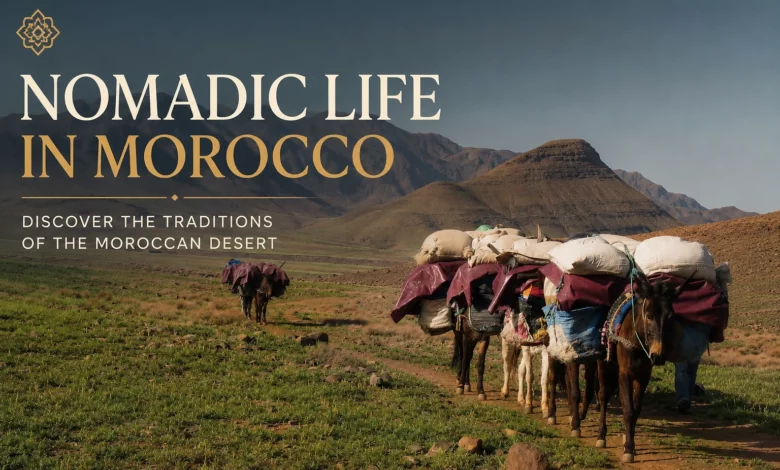
A family that owns almost nothing you would recognise as furniture, moves house four times a year, and can read the weather three days ahead from the behaviour of its goats. Nomadic life in Morocco is not a performance staged for visitors. It is a working answer to a hard landscape, refined over centuries by the Amazigh tribes of the Atlas, the Saghro and the Sahara, and it is still being lived today by a shrinking number of families who follow the grass instead of waiting for it.
- Who they areAmazigh and Sahrawi herding tribes
- Where they liveHigh Atlas, Jbel Saghro, Draa Valley, Sahara
- Rhythm of the yearTwo long migrations, up in summer and down in autumn
- Their homeA woven goat hair tent, and caves in deep winter
- Best season to meet themSpring and autumn
Who Are the Moroccan Nomads? ↑
Moroccan nomads are herding families, almost all of them Amazigh in the mountains and Hassani speaking in the far south. They are not a single people and they never were. The nomadic tribes of Morocco include the Ait Atta, who range across Jbel Saghro and the eastern High Atlas, the Ait Haddidou of the central Atlas, the Ait Merghad and Ait Izdeg further east, and the Sahrawi groups whose camel herding territory runs deep into the Sahara.
What links them is a method rather than an origin. Grazing in this country is seasonal and scattered, so instead of holding one plot of land and hoping it produces, these families keep moving their animals to wherever the rain has fallen. Everything else in the culture follows from that decision: the shape of the house, the size of the family group, the food, the crafts, even the rules of hospitality.
Fully nomadic families move continuously with no fixed base. Semi nomadic families keep a village house and send part of the household out with the herds. Transhumant families follow one fixed route between two seasonal pastures every year. Most Moroccan herders today fall into the second and third groups, which is why you will often meet a family living in a tent within sight of a stone house that belongs to them.
Where Nomadic Life in Morocco Still Exists ↑
The image most people carry is of dunes, but the majority of Moroccan desert nomads live on stony plateaus and mountain slopes rather than in sand. Sand holds no grazing. The families you are most likely to meet are in these regions.
- Jbel SaghroAit Atta winter pastures
- Central High Atlas and the Imilchil plateausSummer pastures
- Draa Valley and the Zagora hammadaCamel and goat herding
- Erg Chebbi and the Rissani plainsCamps near the dunes
- Dades, Todgha and the TafilaletSemi nomadic households
- Deep south towards the SaharaHassani speaking camel herders
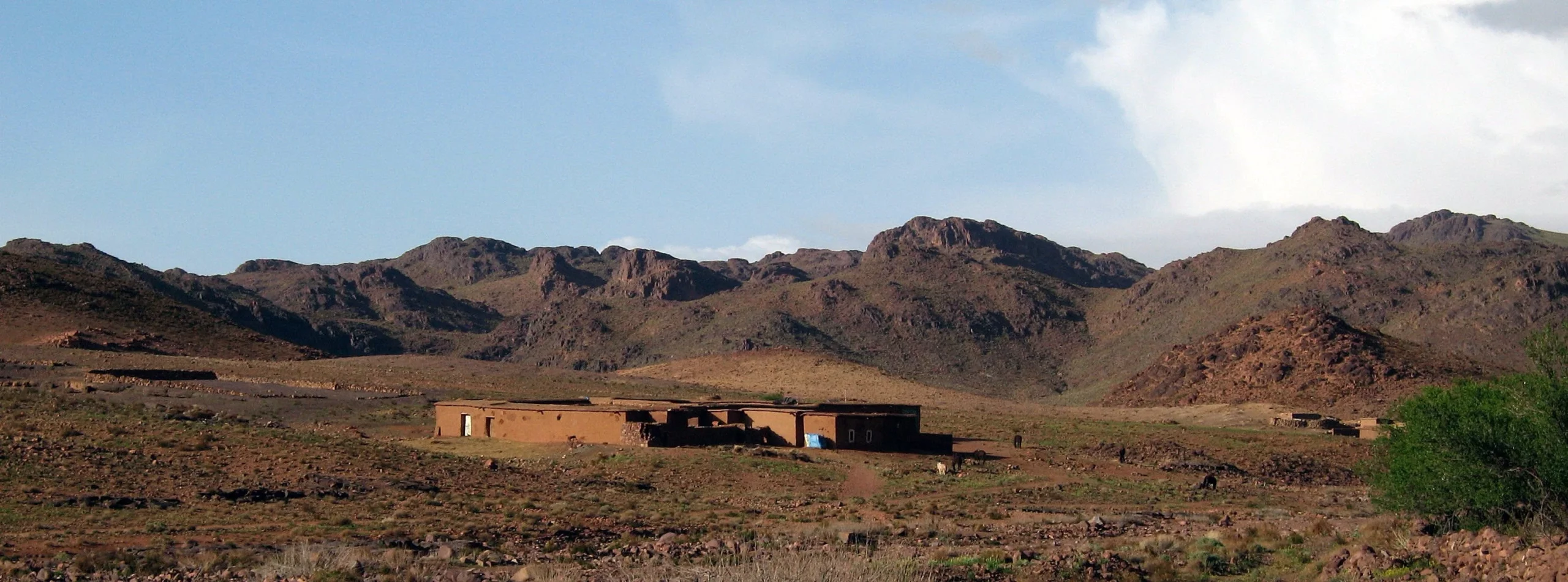
The Rhythm of the Nomadic Year ↑
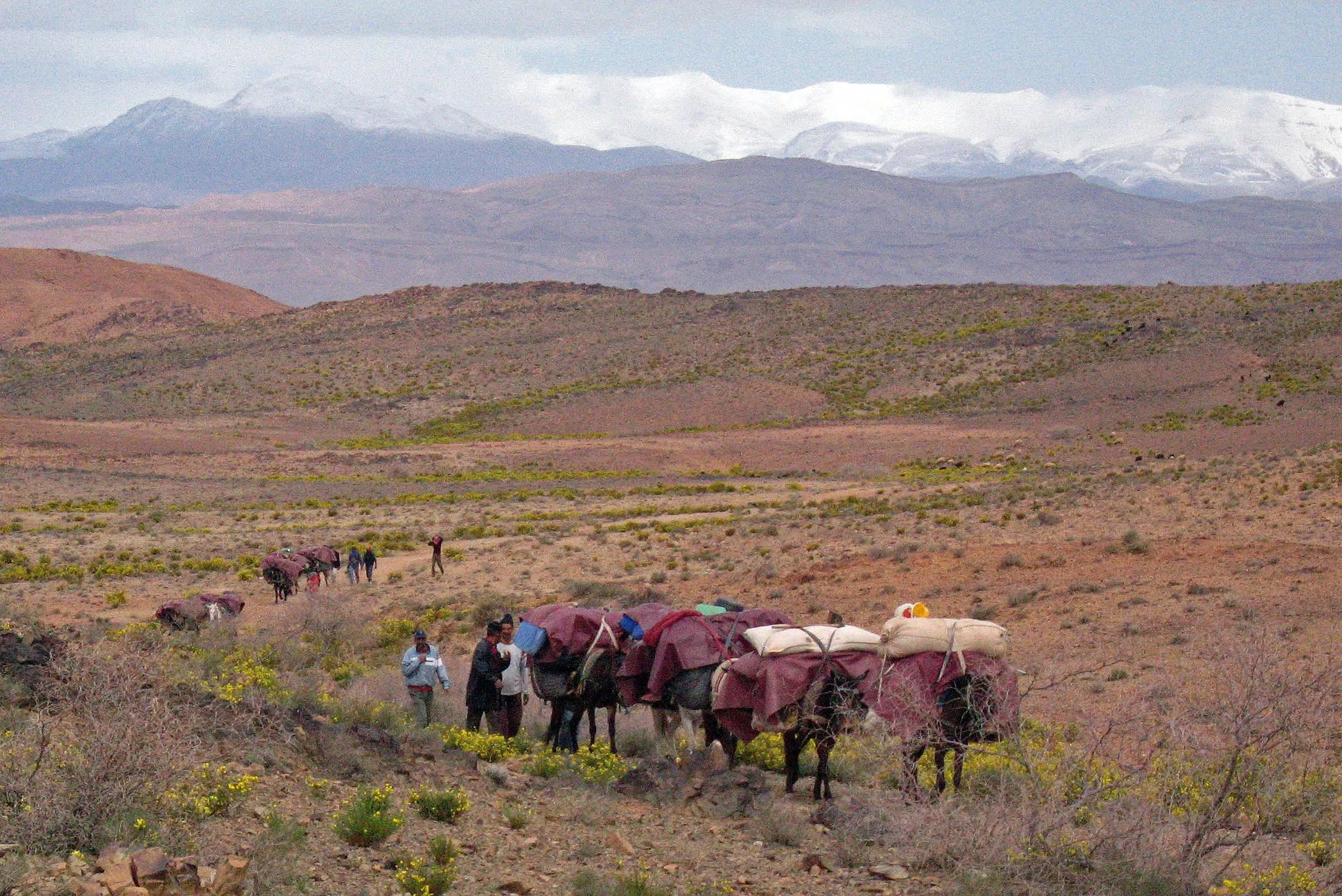
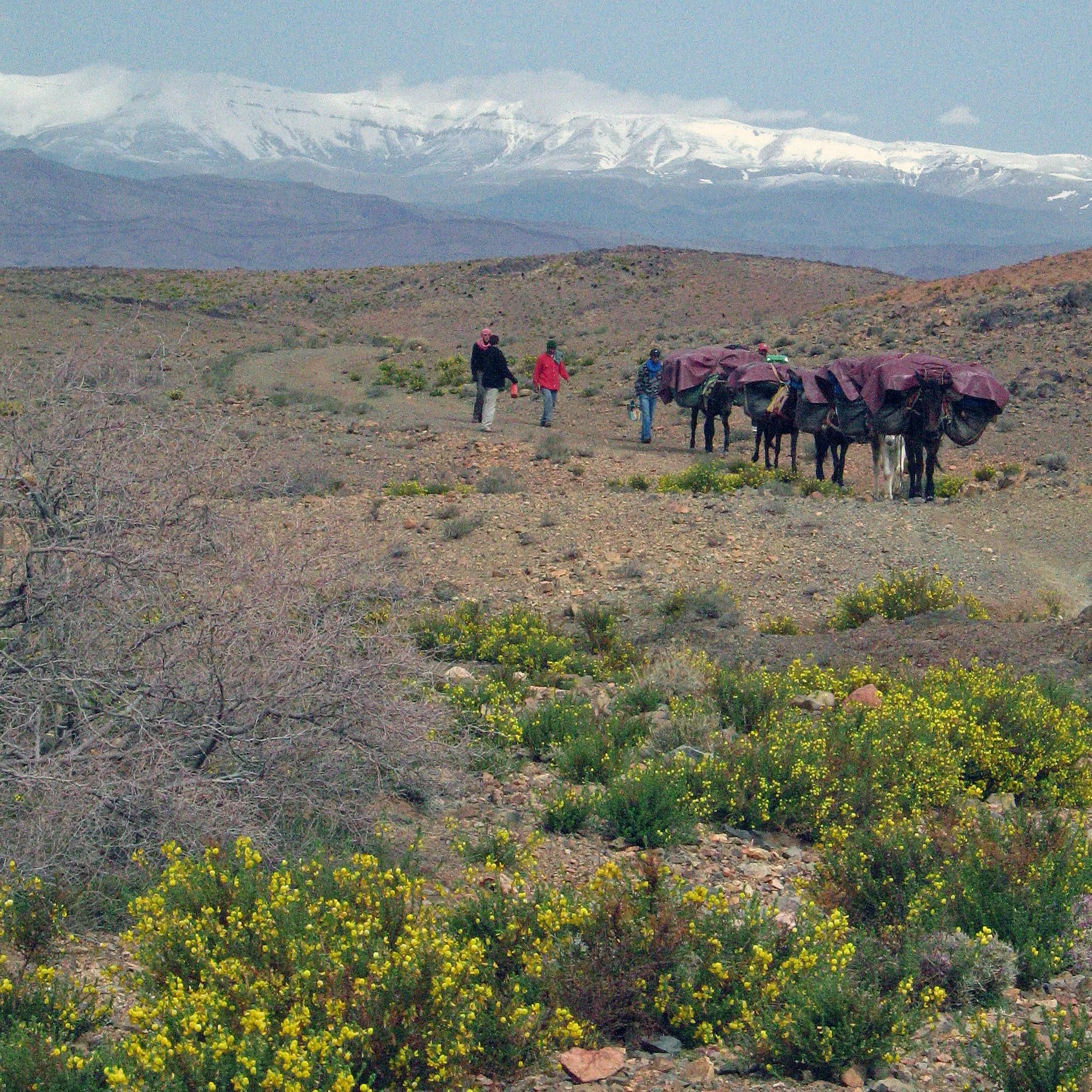
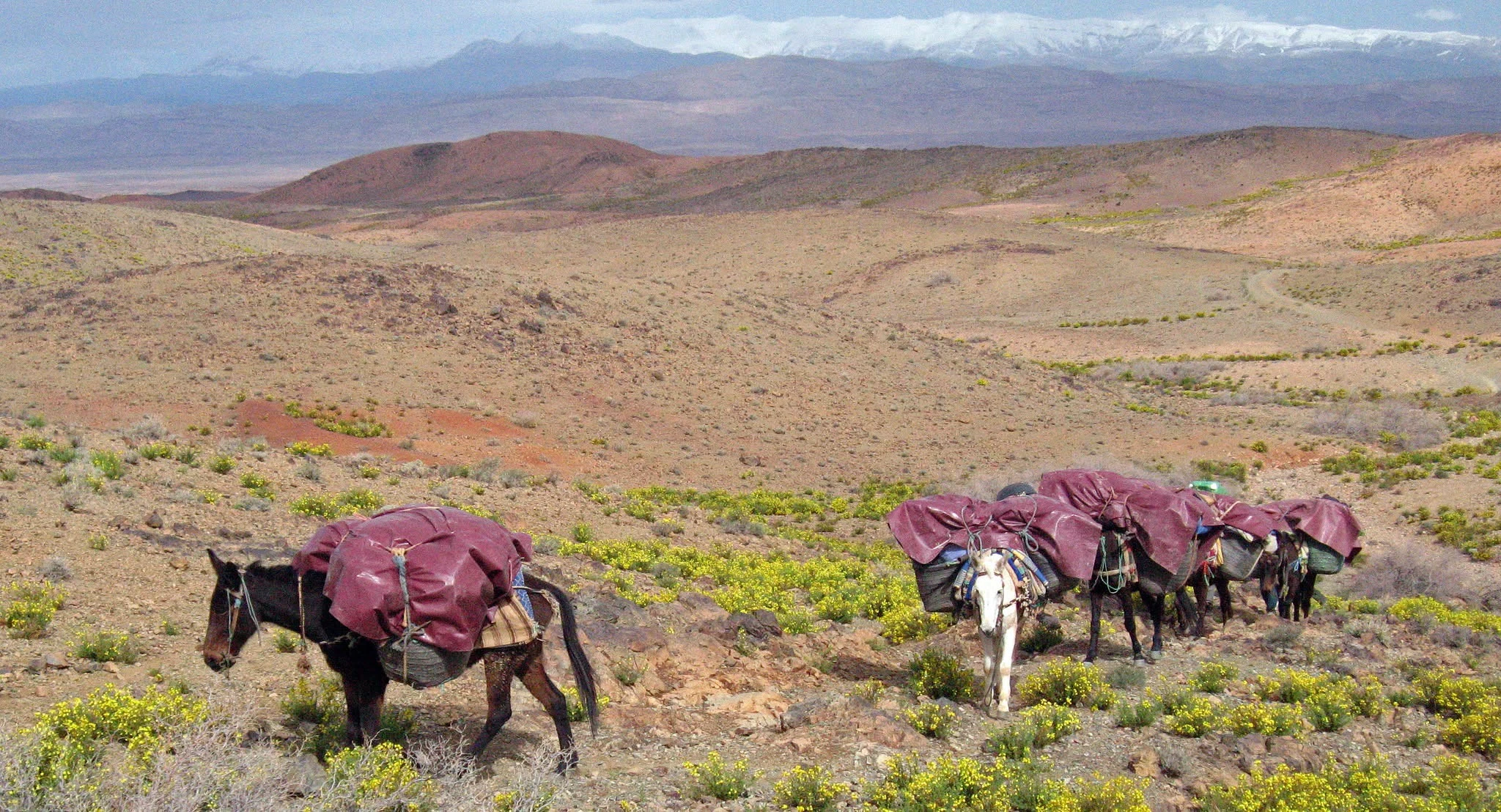
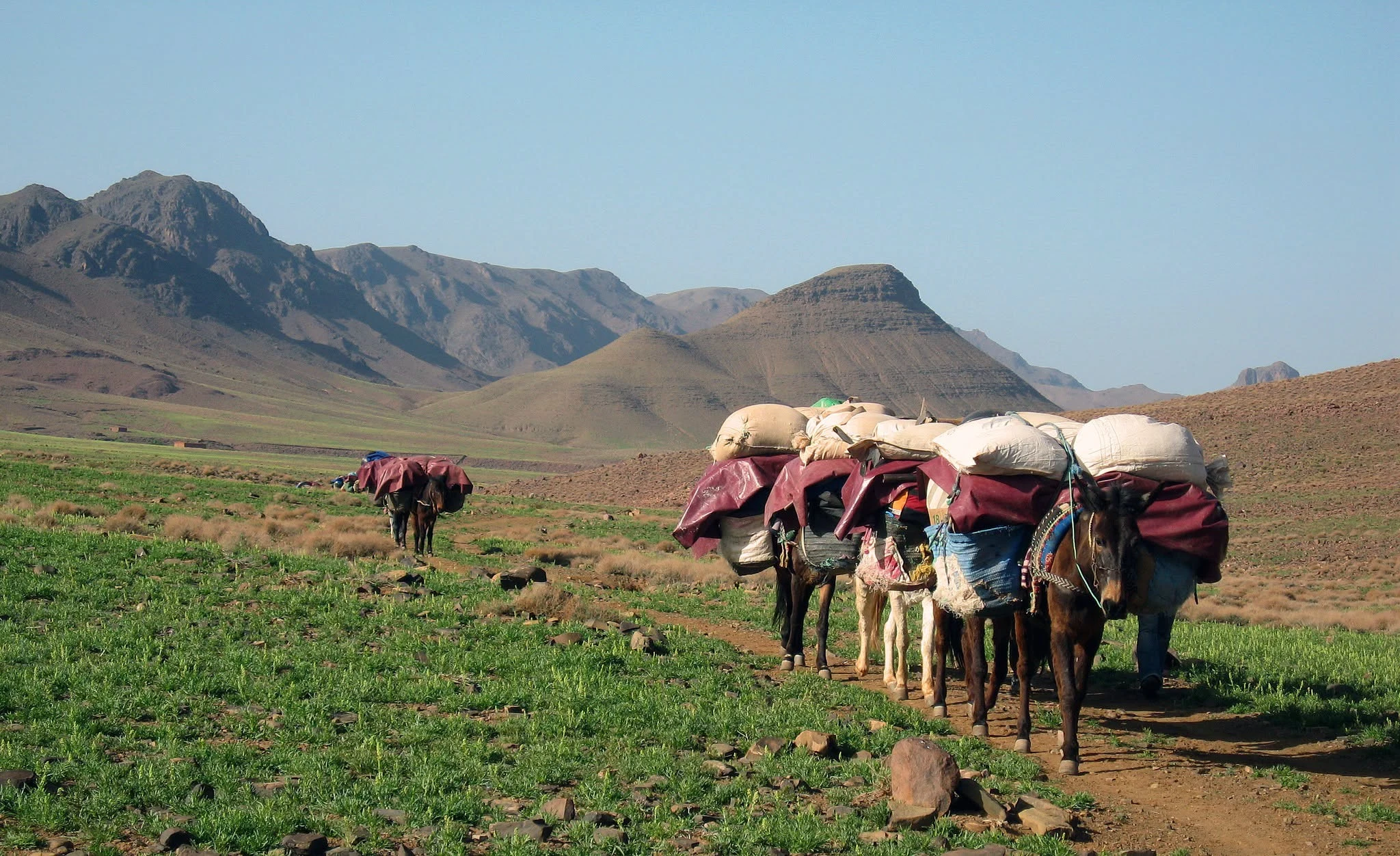
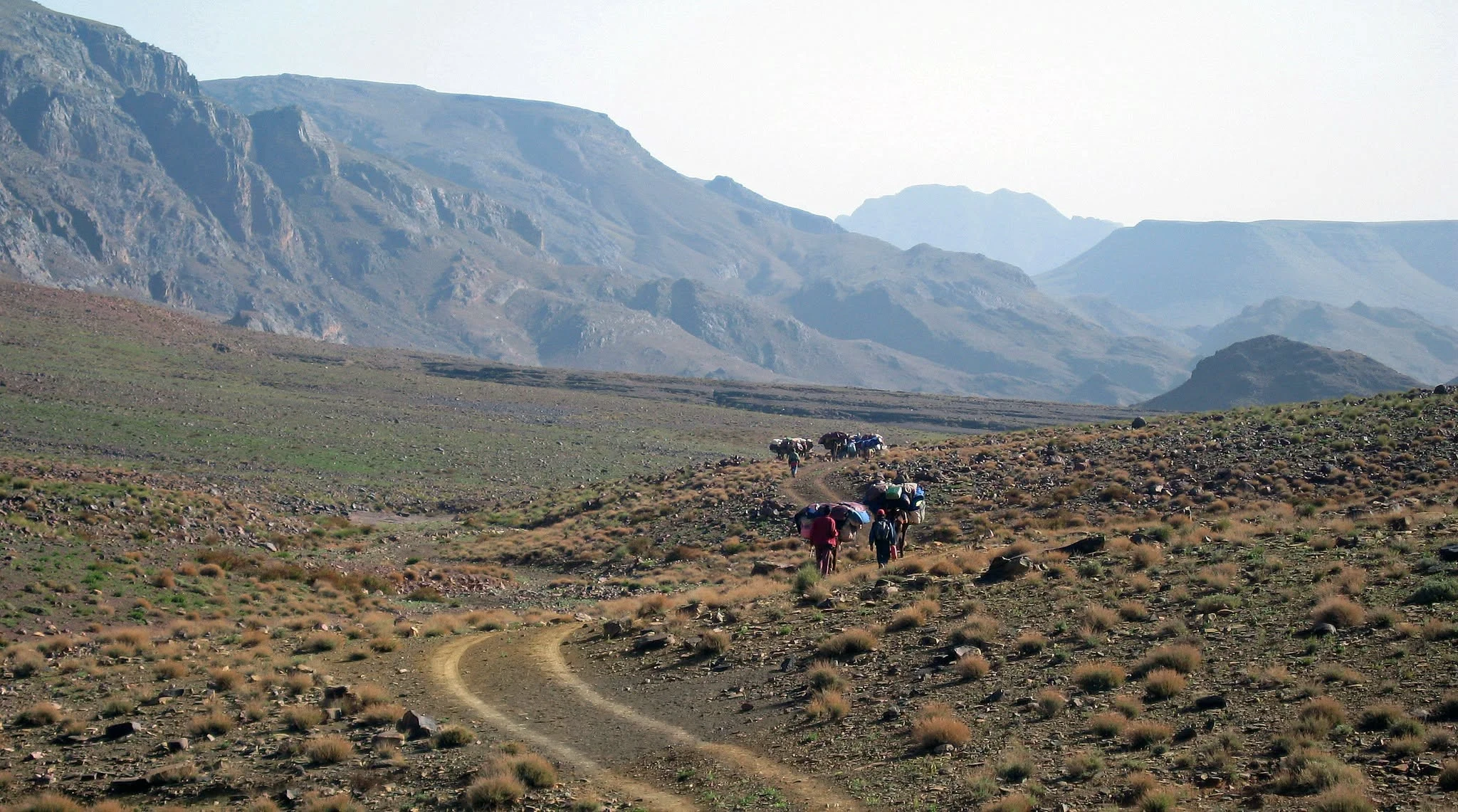
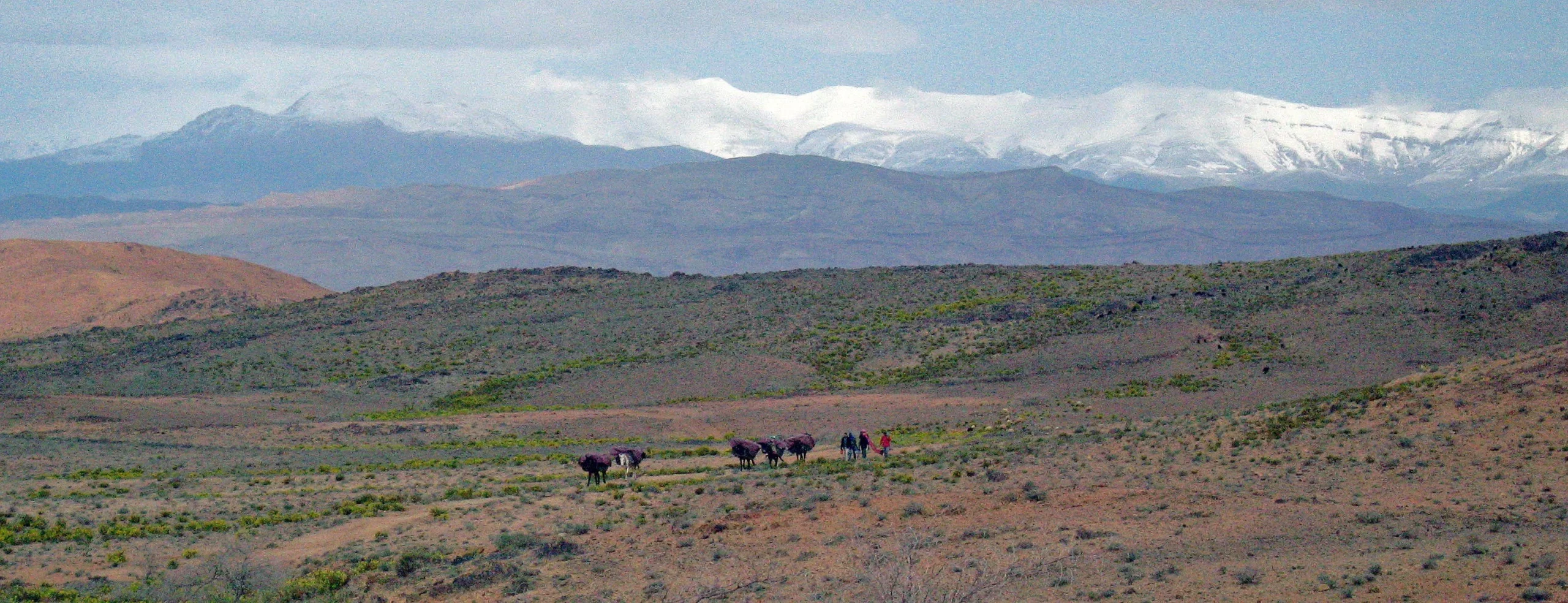
Ask a herder where he lives and the honest answer is a season, not a place. The year turns on two long migrations, one up into the mountains as the heat arrives and one back down before the snow closes the passes. The route is not improvised. Families use the same wells, the same passes and the same grazing rights their grandparents used, and disputes over them are settled by tribal custom as much as by paperwork.
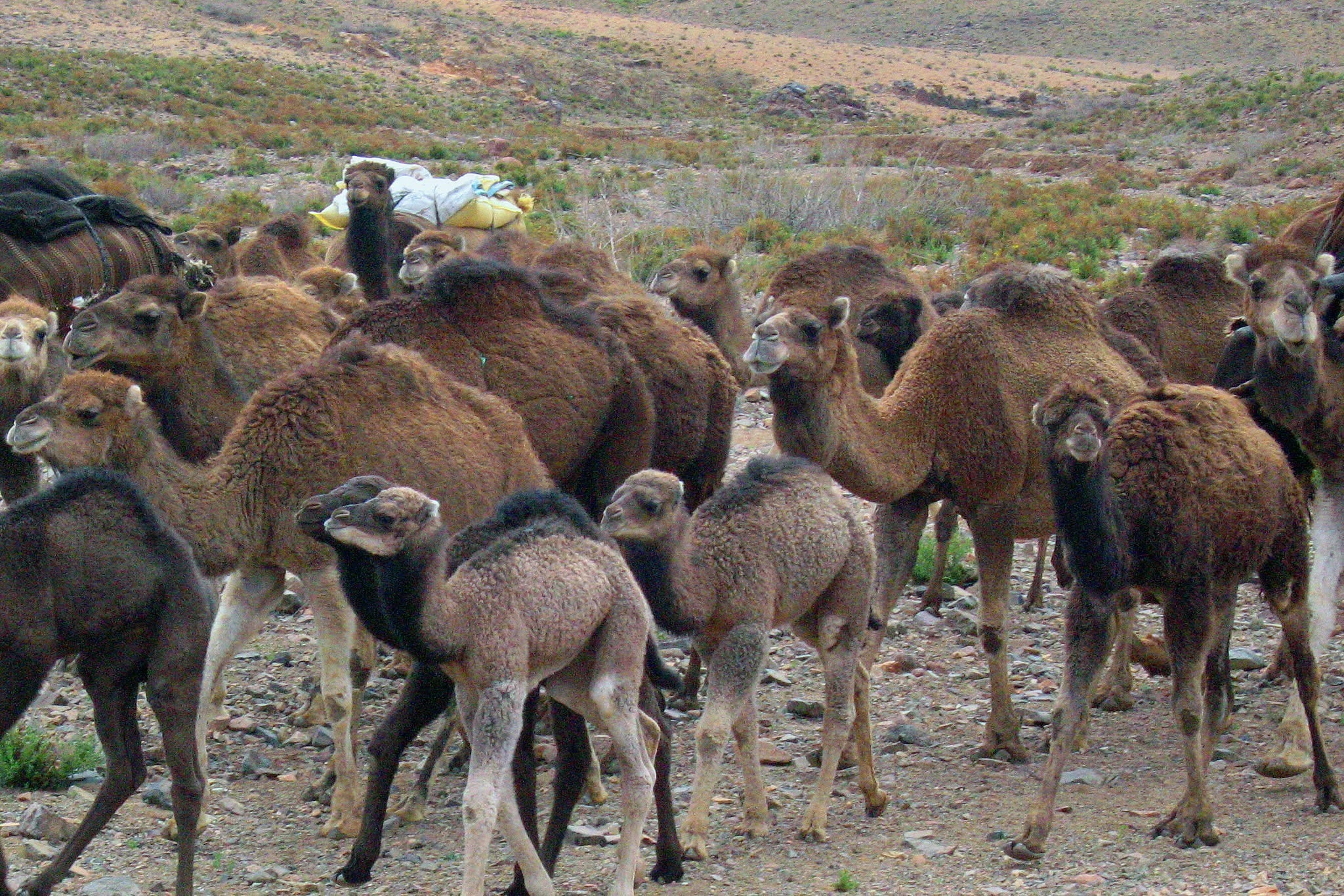
Camps sit low, in the Saghro and along the desert margins, where frost is rare and shrubs carry the herds. Kids and lambs are born, and the tents are pitched close together for shelter.
Rain turns the plateaus green for a few short weeks. This is the season of surplus milk, of butter and buttermilk, and the moment families prepare for the climb north.
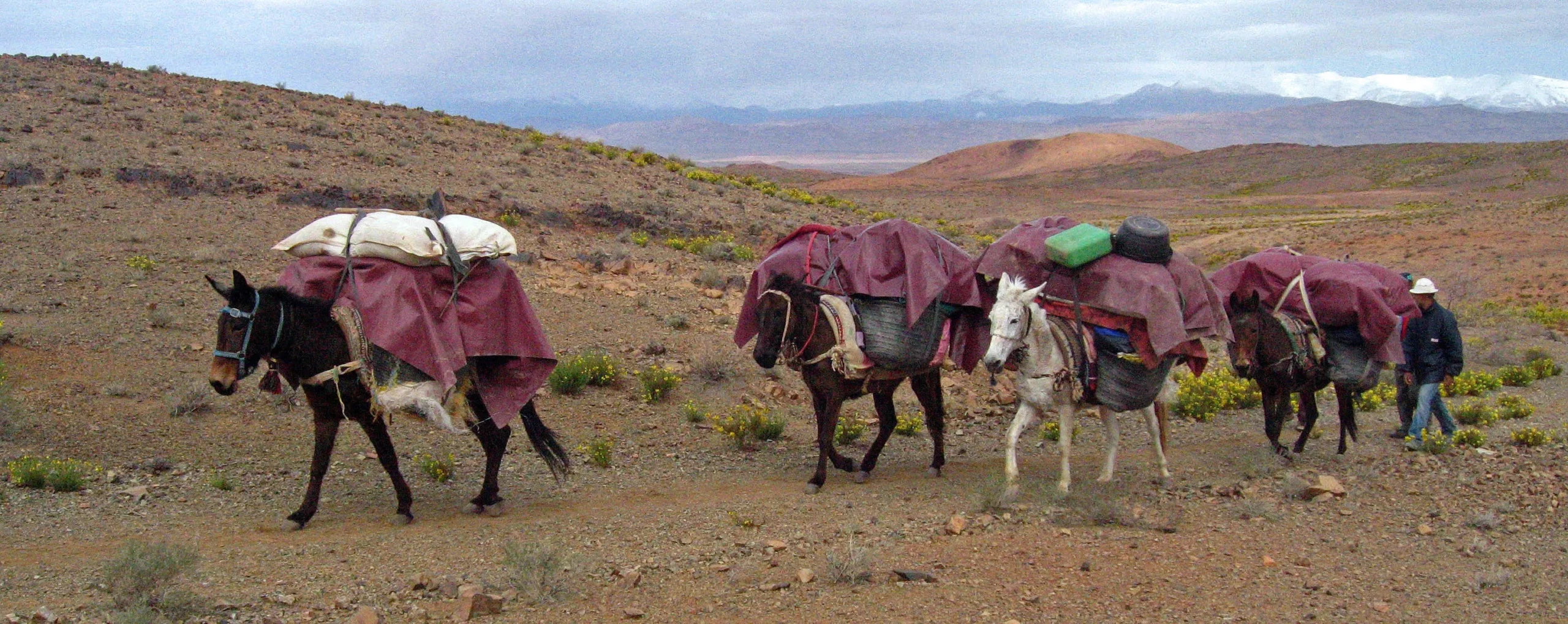
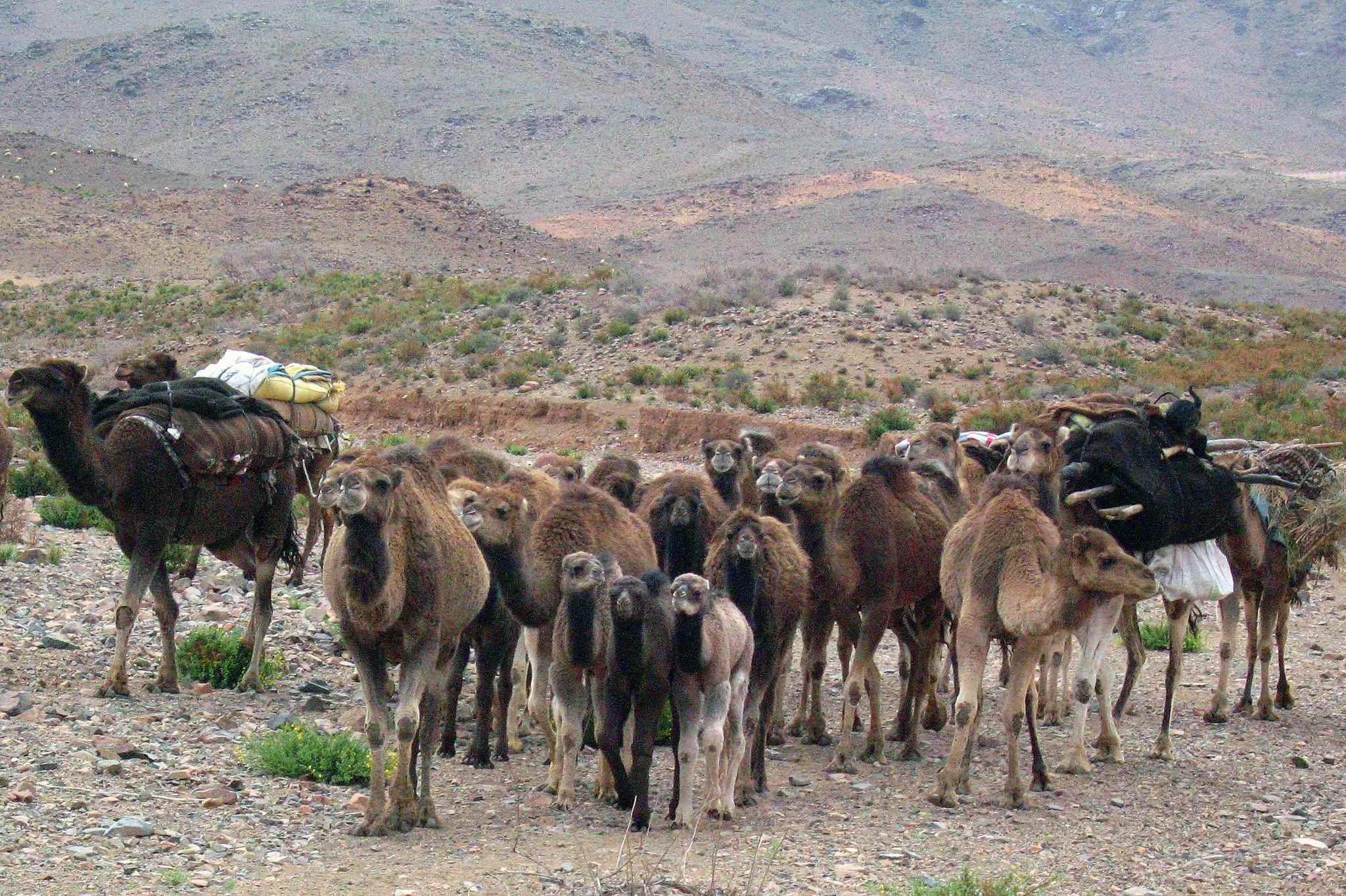
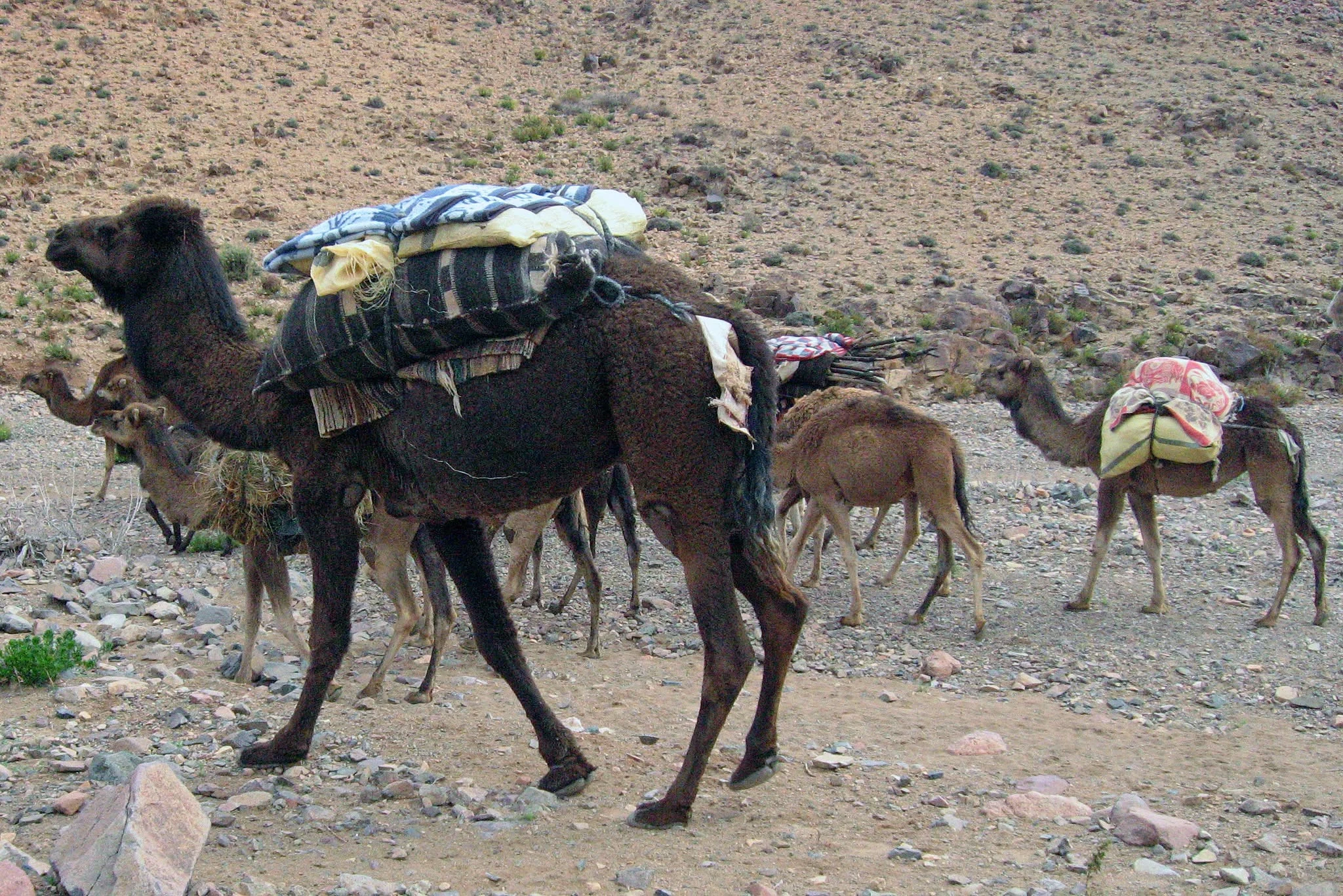
The move up to the high pastures. Tents are struck, loaded onto mules and camels, and the household walks for days to reach cooler ground above two thousand metres.
The descent. Animals are sold or traded at the seasonal souks, marriages are arranged between families who only meet at this time of year, and the cycle closes.
Inside the Tent ↑
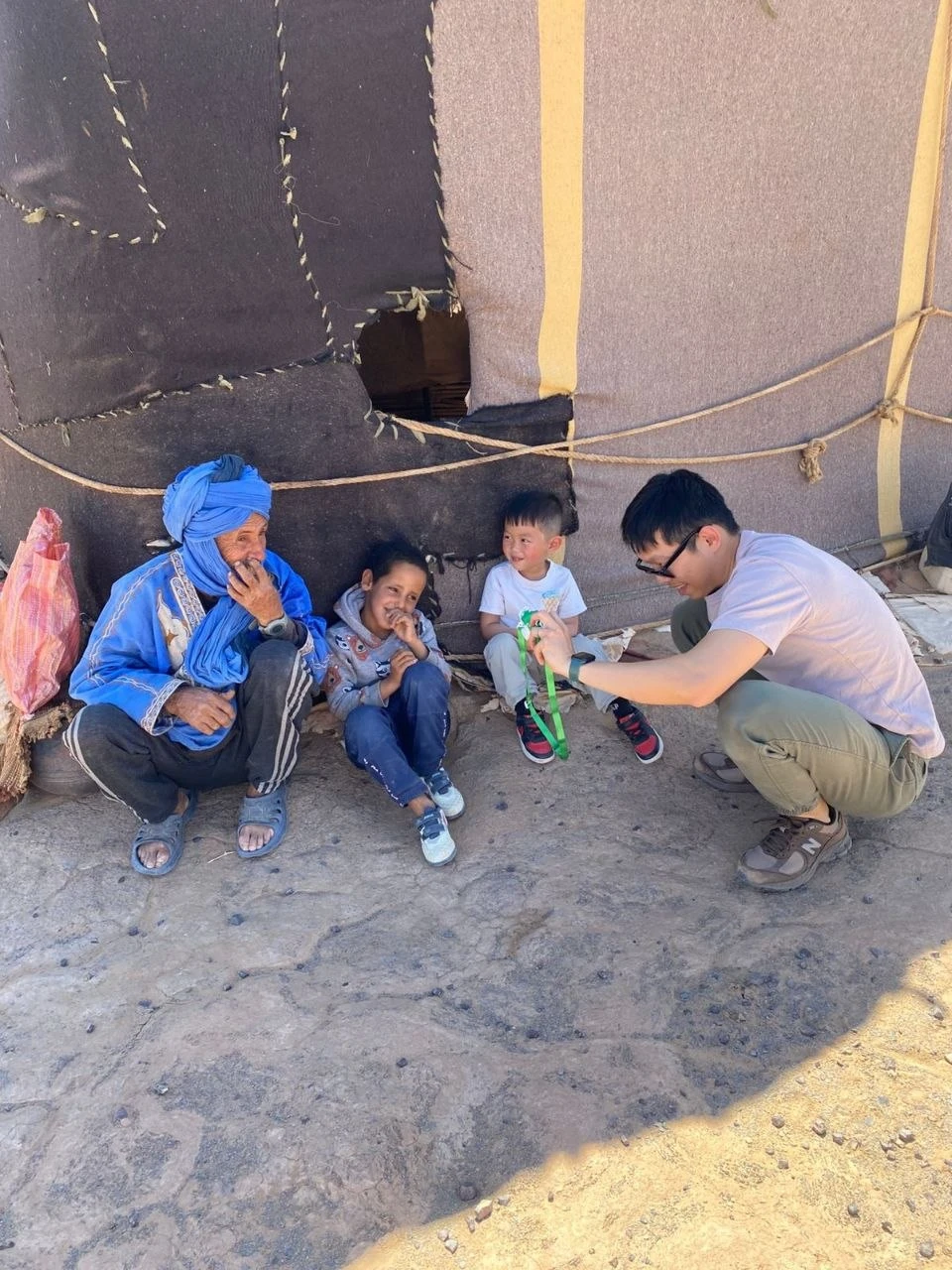
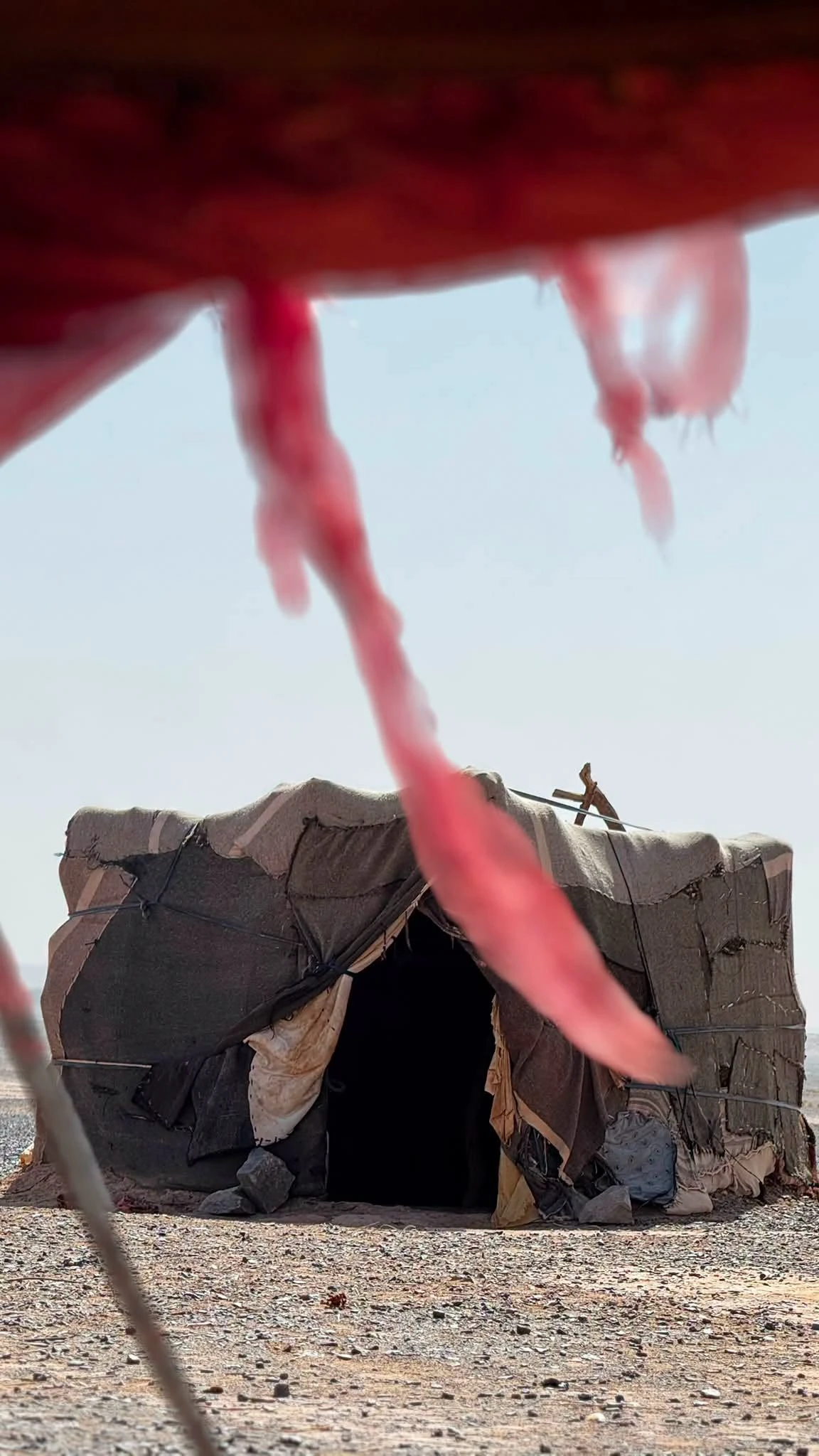
The nomad tent is the single most intelligent object in this culture. It is woven from goat hair and sometimes camel wool, in long strips sewn edge to edge, then stretched over wooden poles and pegged low against the wind. Dry goat hair leaves gaps that let hot air escape, and when rain hits it the fibres swell and close, so the same roof ventilates in summer and sheds water in winter.
Inside, a woven curtain divides the space. One side is for cooking, storage and the women of the household, the other for receiving guests. There is no furniture in the European sense. Carpets, cushions, a chest, a few sacks of flour and sugar, a teapot, a hand mill, and that is close to the whole inventory of a household that has to be packed onto animals in a morning.
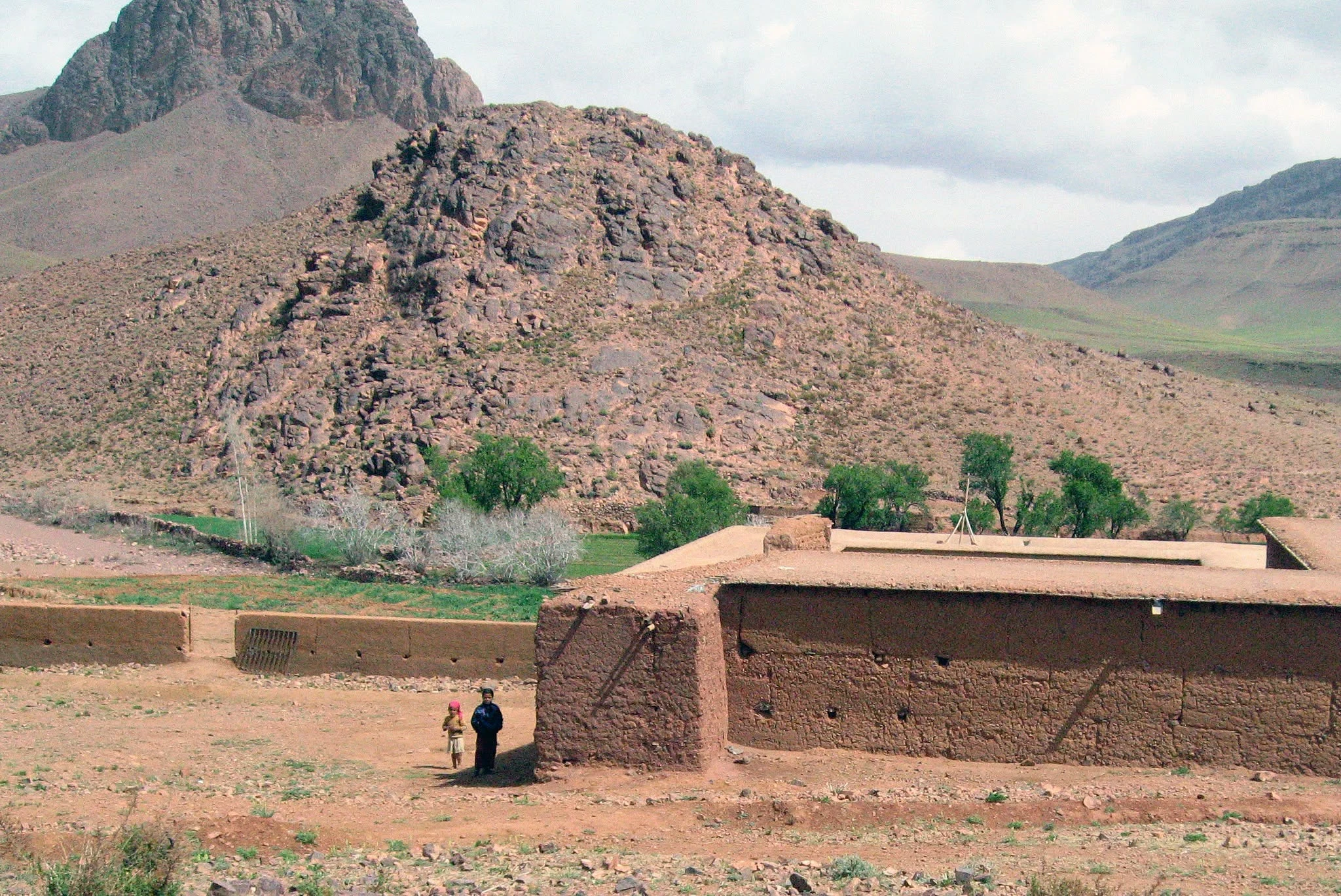
In the Saghro and parts of the Atlas, winter is spent in caves rather than tents. A shallow rock shelter walled in with dry stone holds heat far better than woven cloth, and families return to the same caves each year, leaving grinding stones and hearths in place between visits.
A Day in a Nomad Camp ↑
Life is organised around animals and water, in that order. Nothing about the day is decorative.
Before sunrise
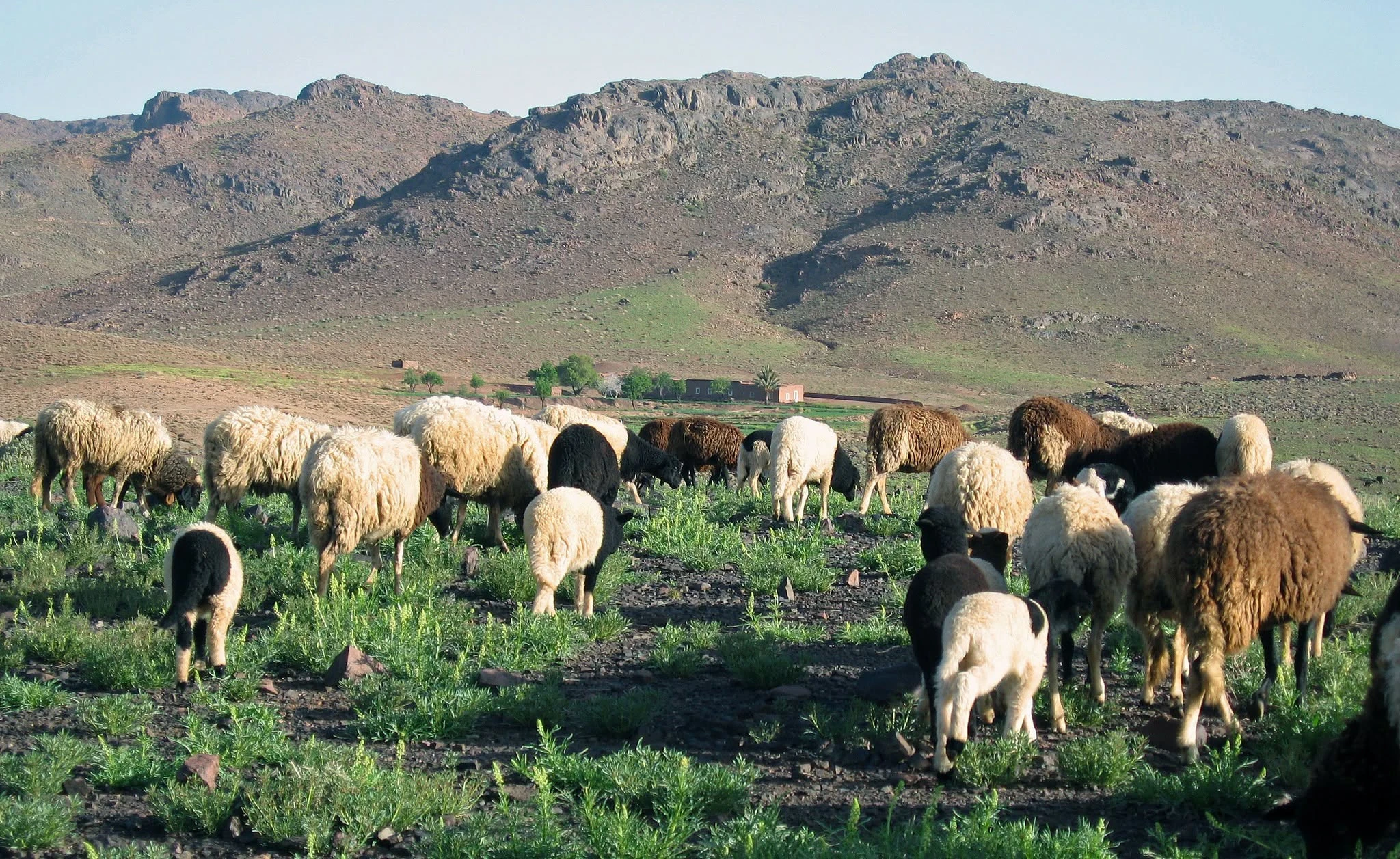
Milking, then the herds are separated. Goats and sheep leave with a shepherd, often a teenager, who will not return before late afternoon.
Morning
Water is fetched, sometimes from a well an hour away. Milk is churned into butter and buttermilk before the heat spoils it.
Midday
The quiet hours. Bread is baked, the tent is repaired, wool is spun, and everyone stays under cover while the sun is at its worst.
Late afternoon
The herds come back and are counted, injuries treated, and the newborn animals brought inside the camp for the night.
Evening
One shared meal, tea, and conversation that carries the news of other camps. Sleeping mats are laid out on the same carpets used all day.
All year
Watching the sky. The decision to move a camp is made on a reading of clouds, wind and grazing, not on a calendar.
What Moroccan Nomads Eat and Drink ↑
The diet is built from what the herd gives and what can be carried without spoiling. Milk, buttermilk, clarified butter and dried cheese come from the animals. Flour, tea, sugar, salt and oil are bought in bulk at seasonal souks. Meat is eaten rarely, usually for a guest, a feast or when an animal is injured.
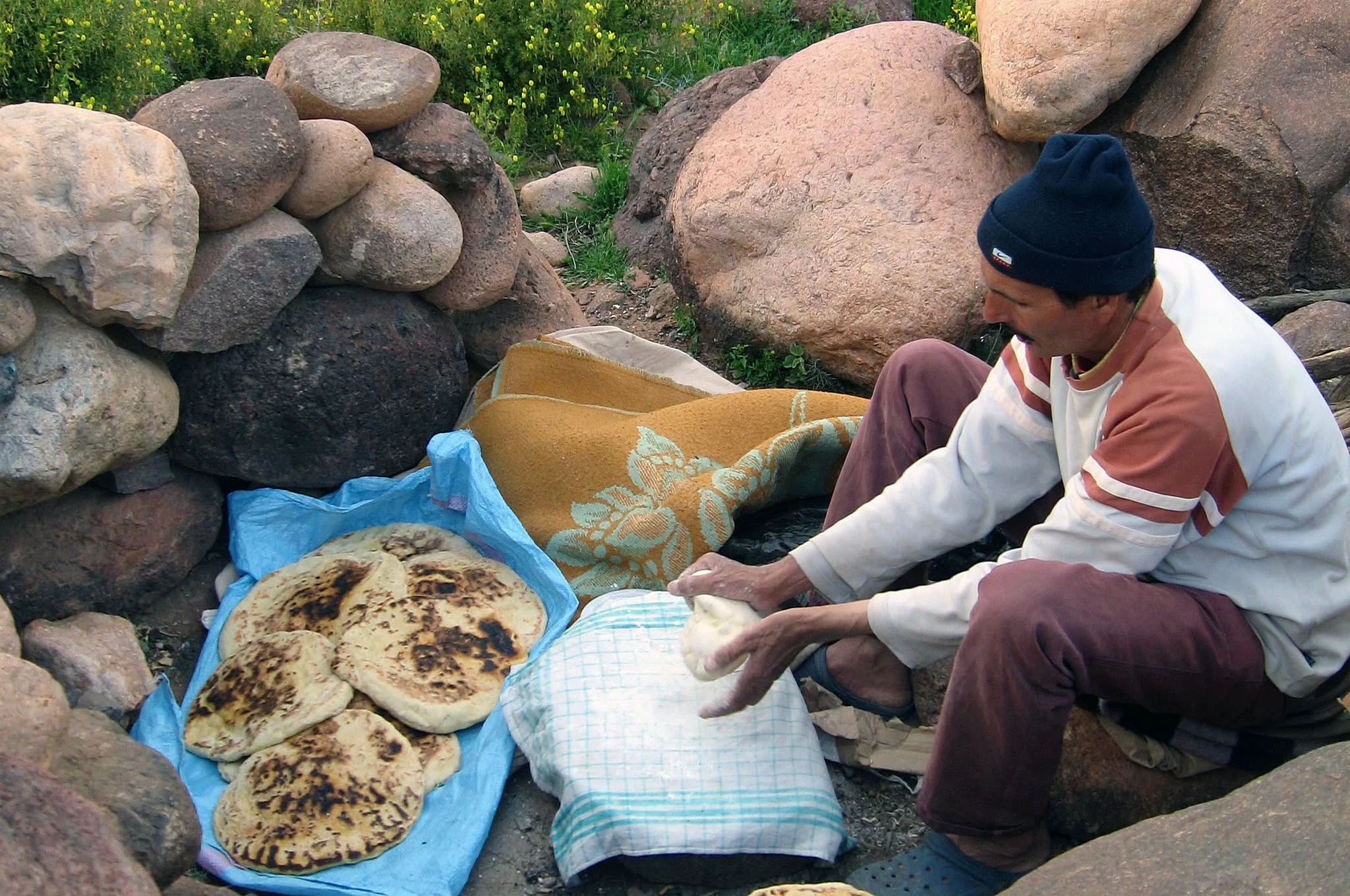
Bread does the heavy lifting. Dough is flattened and baked in a covered pan, on hot stones, or buried directly in sand and embers, which is where the desert version gets its faint crust of ash. Tea follows every arrival, every departure and most decisions, poured from height into small glasses and served three times by custom.
Wealth here is not counted in what a family owns, but in how many animals came through the last dry year alive.
A herding proverb, in spirit if not in wordsThe Women Who Hold It Together ↑
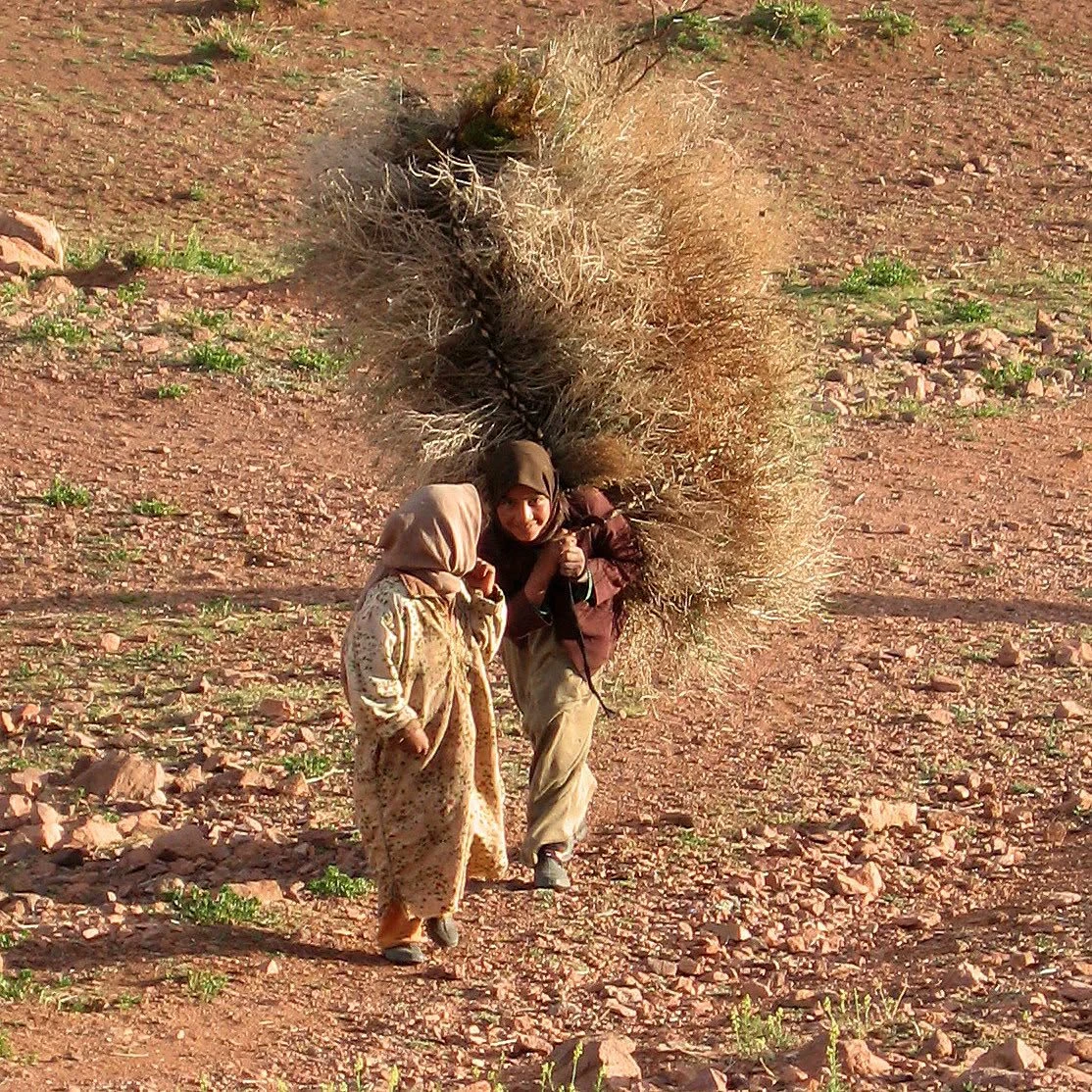
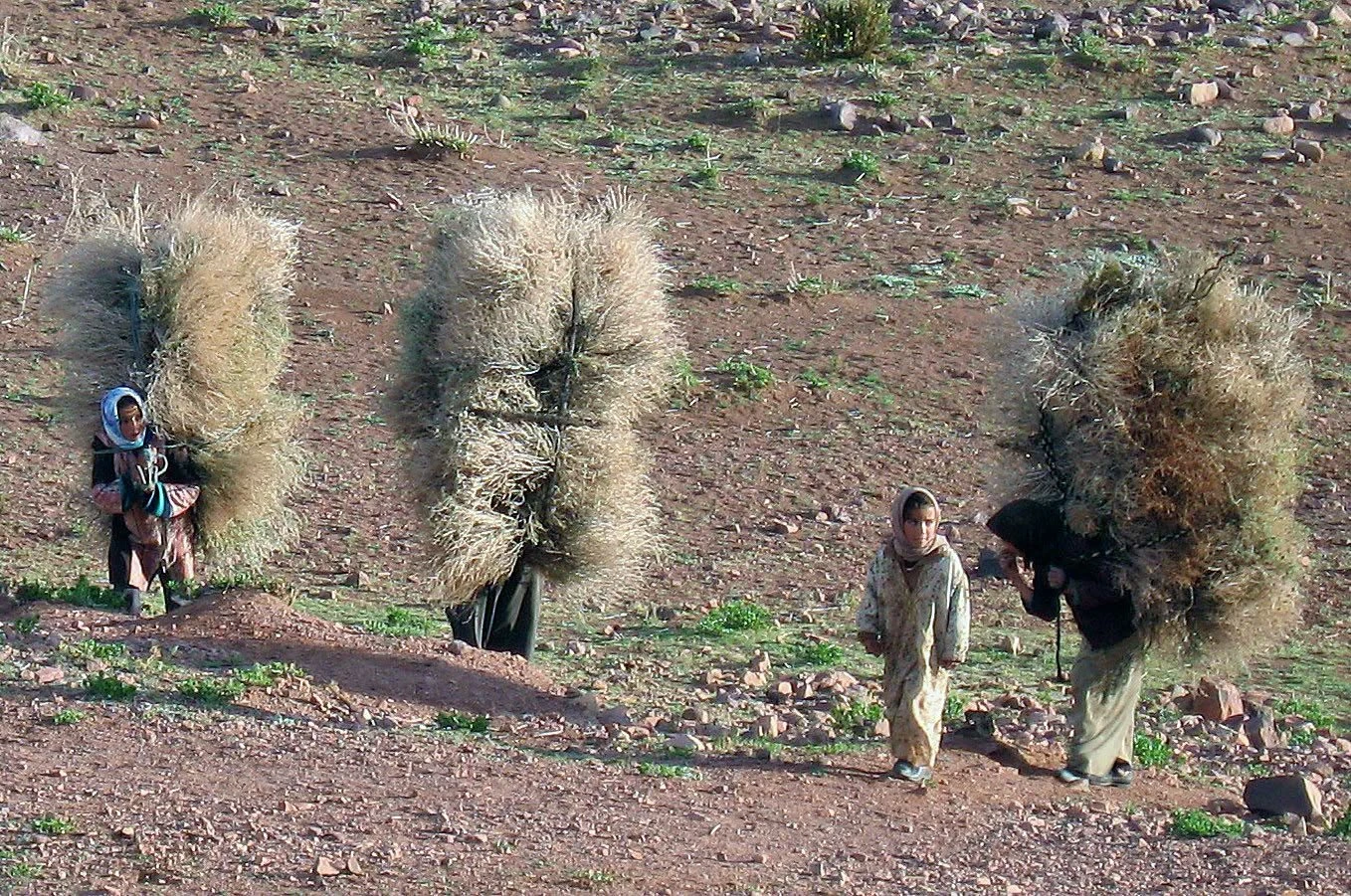
Any honest account of nomadic culture in Morocco has to start with the workload of women. They weave the tent that shelters the family and repair it every season. They milk, churn, bake, fetch water and firewood, cut and carry fodder, raise the children and treat the sick animals. When the camp moves, they dismantle and rebuild the house.
They also carry the craft tradition. The flatweaves, blankets and saddle bags sold today in the souks of Rissani, Zagora and Midelt were developed as portable, hard wearing household goods, and the patterns identify tribes and families as clearly as a signature. Buying directly from a weaving family, when the chance comes up, sends the money where the work was done.
Customs, Hospitality and Oral Culture ↑
Hospitality in the desert began as insurance. In a place where a traveller without water dies within a day, the obligation to feed and shelter a stranger protects everyone, because next season it may be your son on the road. That logic still shapes the welcome you receive, and it is why refusing tea reads as a small insult rather than a polite decline.
The rest of the culture is oral. Genealogies, grazing rights, water agreements, remedies, songs and stories are held in memory and passed down by repetition. Traditional customs of Moroccan nomads also include large seasonal gatherings, the best known being the late summer moussem on the Imilchil plateau, where Ait Haddidou families meet, trade animals and arrange marriages after months apart in the pastures.
A Way of Life Under Pressure ↑
It would be dishonest to describe all of this in the present tense without saying that it is disappearing. Successive dry years have thinned the grazing that the whole system depends on. Wells that once ran through summer now fail in spring. Herds shrink, and a herd below a certain size cannot support a family.
What pulls families out
- Repeated drought and the loss of reliable pasture
- Schooling, which requires children to stay in one place
- Wage work in towns, mines and the tourism sector
- Health care that is only available in fixed settlements
What holds them in
- Land and grazing rights held collectively by the tribe
- Herding knowledge that has no equivalent value in a town
- Attachment to a way of living that is independent, not poor
- Seasonal income from wool, animals and visitors
The result is a spectrum rather than a clean disappearance. Many households now split, with grandparents and one adult keeping the herd while the children live in a village and attend school. Understanding that mix matters when you visit, because it explains the solar panel next to the tent and the phone charging beside the teapot. These are not contradictions. They are how the system survives.
How to Meet Nomadic Families Respectfully ↑
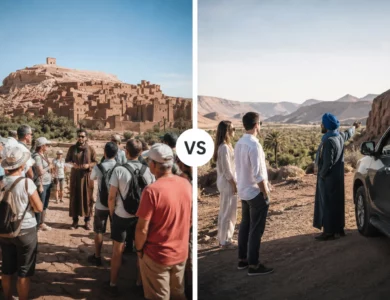
Authentic nomadic experiences in Morocco depend entirely on how the visit is arranged. A camp is a home, not an attraction, and the difference between a good encounter and an awkward one comes down to who introduced you and how long you stay.
Do
- Go with someone the family already knows and trusts
- Accept the tea, and sit long enough to drink it properly
- Ask before photographing anyone, especially women and children
- Bring something useful: tea, sugar, flour, oil, or school supplies
- Dress modestly, with shoulders and knees covered
Avoid
- Turning up unannounced at a camp you spotted from the road
- Handing money or sweets directly to children
- Walking into the family side of the tent uninvited
- Treating the visit as a photo stop of ten minutes
- Promising to send photos or help and then forgetting
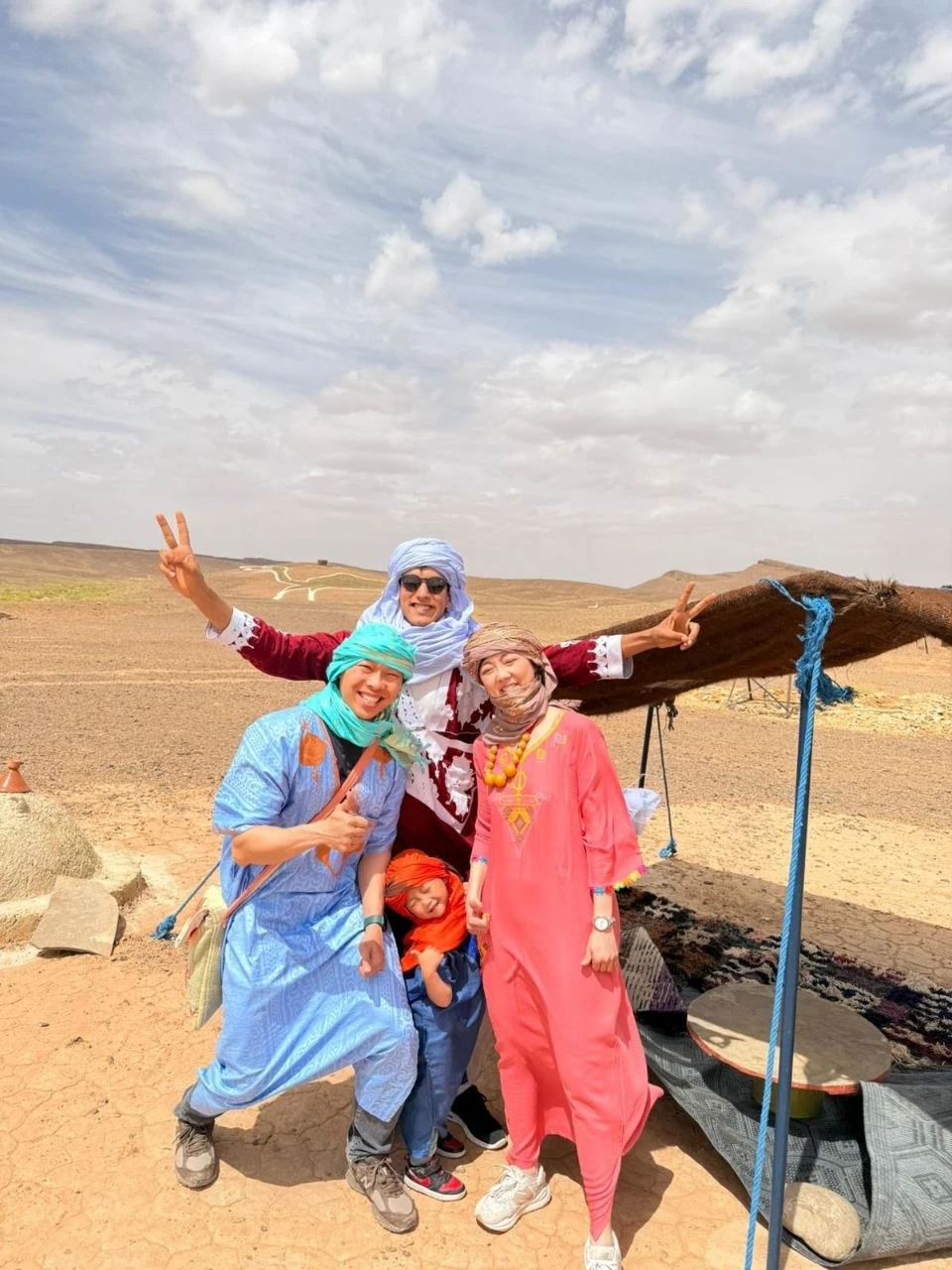
Language is the first reason. Most herding families speak Tamazight or Hassaniya, some Darija, and rarely any English or French. A guide from the same valley also knows which families welcome visitors, what the household actually needs, and how to keep the exchange balanced rather than one sided.
Where and When to Experience Nomadic Culture ↑
| Season | What is happening | Verdict |
|---|---|---|
| Mar to May | Green pastures, newborn animals, camps at their most active | Best overall |
| Jun to Aug | Families high in the Atlas, extreme heat on the desert margins | Mountains only |
| Sep to Nov | The descent, seasonal souks and gatherings | Excellent |
| Dec to Feb | Camps low and close together, very cold nights, few visitors | Good, with warm layers |
For most travellers the practical way to visit nomadic communities in the Moroccan desert is to build the encounter into a route you are already driving. The Draa Valley towards Zagora, the road between Boumalne Dades and Nekob under Jbel Saghro, and the plains around Rissani and Merzouga all pass close to camps. In the mountains, the tracks around Imilchil and the eastern High Atlas reach summer pastures where the tents are pitched from June onwards.
Frequently Asked Questions ↑
How many nomads are left in Morocco?
Far fewer than a generation ago. Successive censuses have recorded a steep fall in the fully nomadic population, and most herding households today are semi nomadic, keeping both a tent and a fixed house. Exact figures vary by definition, since a family that moves twice a year may or may not be counted as nomadic.
What language do Moroccan nomads speak?
Tamazight in its regional forms across the Atlas and the pre Sahara, and Hassaniya in the far south. Many men also speak Darija from trading at souks. English and French are rare in the camps.
Where do nomads get their water?
From wells, springs and seasonal riverbeds, often at a distance from the camp. Water is carried in jerrycans by donkey or mule, and the location of reliable water is one of the main factors deciding where a camp is pitched.
Can you stay overnight with a nomadic family?
Sometimes, when it is arranged in advance through a guide the family knows. Expect very simple conditions: no electricity beyond a small solar panel, no bathroom, meals shared from a common dish, and sleeping on carpets in the guest side of the tent.
Is it safe to visit nomad camps?
Yes, with the ordinary precautions of desert travel. The real risks are environmental rather than social: heat, dehydration, cold nights and unmarked tracks. Do not drive off road alone without local knowledge.
What should I bring as a gift?
Practical staples are always appropriate. Tea, sugar, flour, cooking oil, batteries or school notebooks are useful. Ask your guide what the specific family needs rather than guessing.
Are the desert camps for tourists the same thing?
No. Fixed tourist camps in the dunes are hospitality businesses built in a nomadic style. They can be excellent, but meeting a working herding family is a different experience and needs to be arranged separately.
Is visiting nomads ethical?
It can be, when the family agrees in advance, receives a fair share of what you pay, and the visit is not a ten minute photo stop. Handled that way it becomes a small seasonal income and a reason for younger members to value what they know.
Morocco is easy to travel through and harder to understand. Kasbahs and dunes explain the scenery, but the herding families moving across the same ground explain how people actually made a life here before roads and wells arrived.
Spend an afternoon in a camp with someone who can translate more than the words, and the rest of the south stops looking empty. It starts looking like territory that has been read, used and argued over for a very long time.